Seville is the capital of Andalusia and the hottest big city in Spain, a place where the afternoon shuts down and the evening runs long. It sits on the Guadalquivir river in the south of the country, and its old centre stacks three layers of history on top of each other: Roman ruins underfoot, a Moorish palace and minaret still standing, and the churches and mansions of the empire that followed.
It is also a city of neighbourhoods as much as monuments. The Alcazar and the cathedral draw the crowds, but the trip works because of the smaller things: a plate of salmorejo at a bar in Triana, an orange tree in a courtyard in Santa Cruz, the walk along the river at dusk. Most visitors give Seville two or three days and spend the first one learning that the heat sets the schedule.
This guide gives you the numbers that matter for 2026 with the source attached, because ticket prices and entry systems on the major monuments change often. Opening hours, ticket prices, train times, the airport bus fare, and a daily budget range, plus the mistakes that cost first-timers the most time. Every figure is checked against an official 2026 page, and the ones worth rechecking before you book are linked as you go. If you are planning the wider trip, compare all seven countries in the country index.
Plan and book
3 partners- Flights
Find a direct route into Seville from wherever you start, or compare it with flying into Madrid.
Search flights - Trains
Compare the Madrid to Seville high-speed train and onward legs to Cordoba and Granada in one search.
Compare trains - Where to sleep
Rooms in Santa Cruz, El Arenal, and Triana, sorted by area, price, and review score.
Find a room
The Alcazar
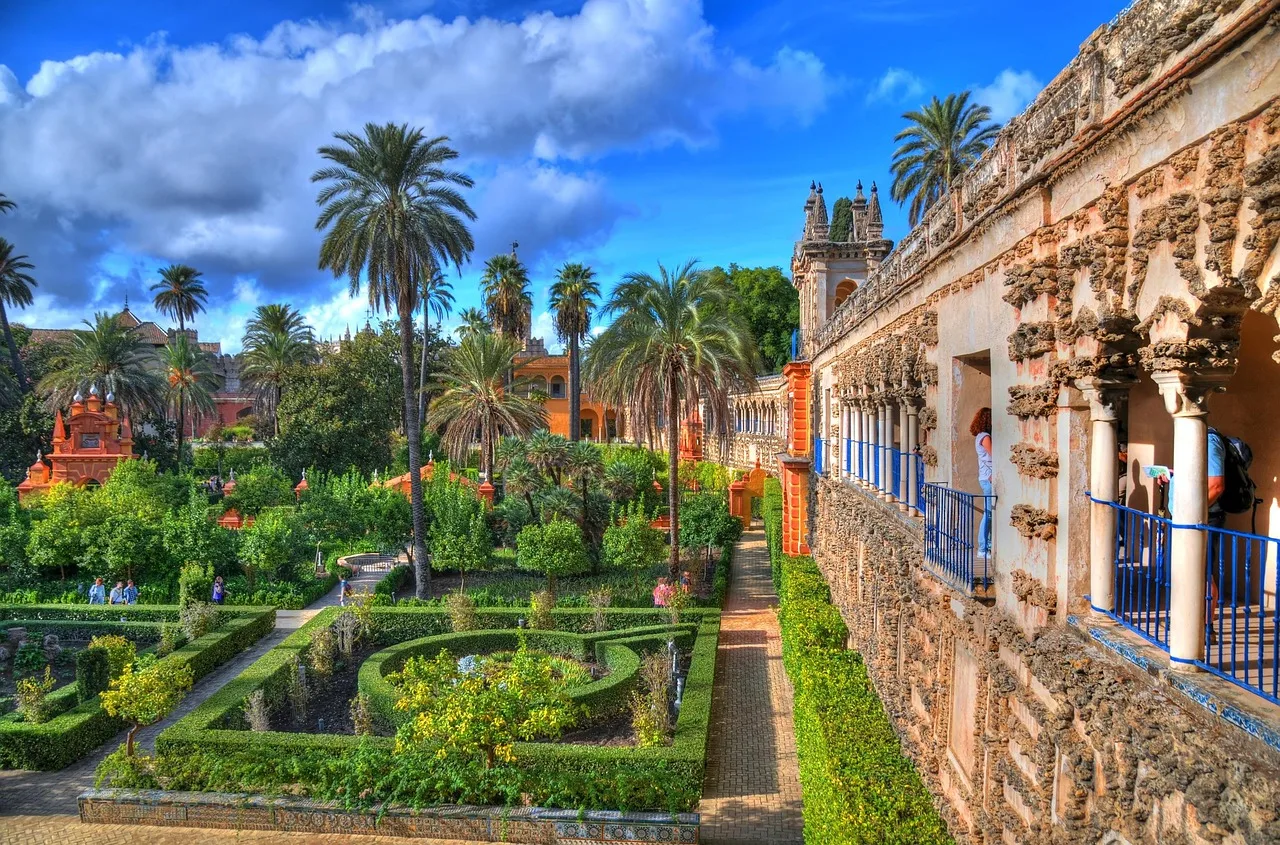
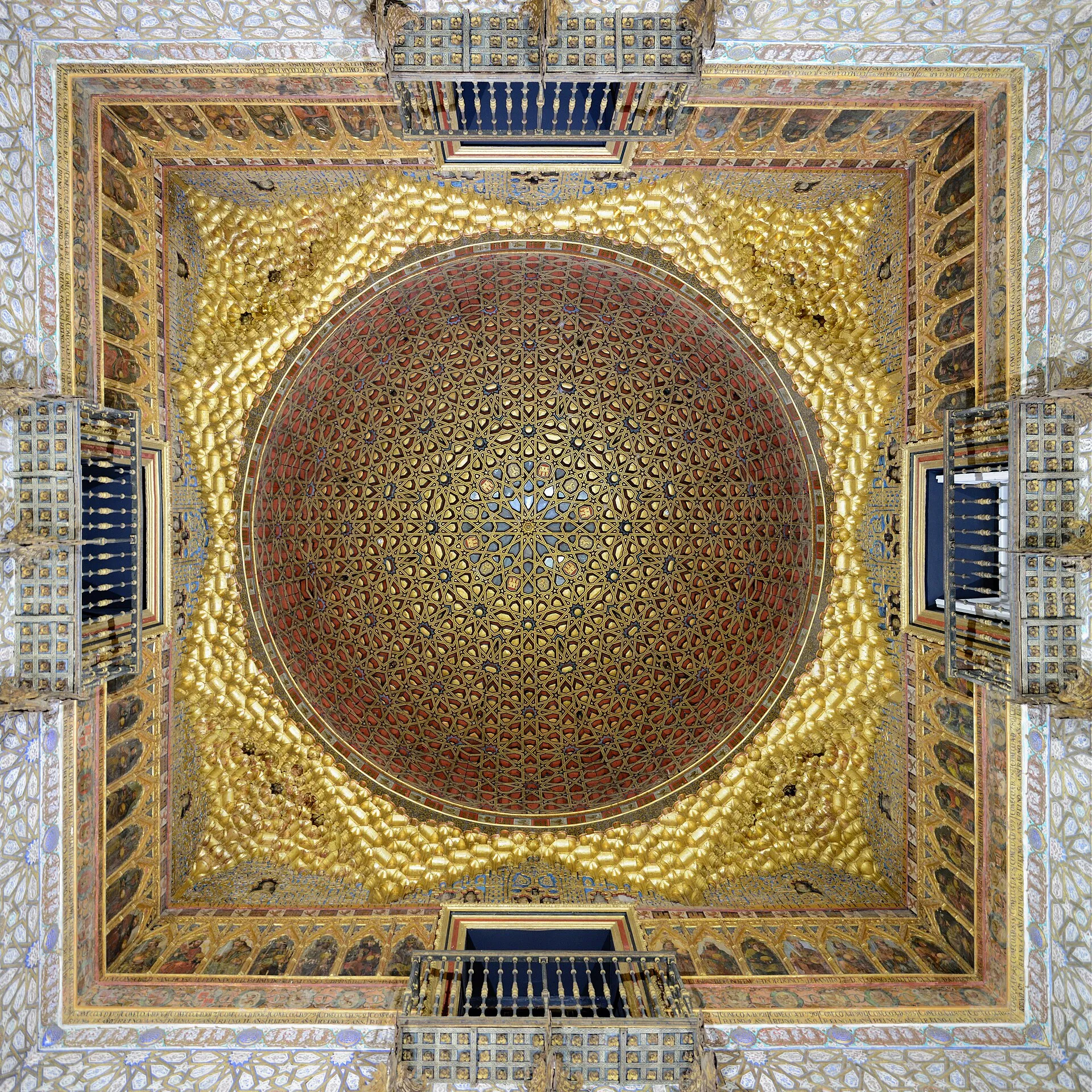
The Real Alcazar is the reason many people come, and it earns the reputation. It is a working royal palace, the oldest still in use in Europe, first built as a fortress in the tenth century and rebuilt as a palace in the thirteenth. The rooms run from Mudéjar plasterwork to Gothic and Renaissance additions, and the gardens behind them are a small green city of palms, pools, and peacocks. UNESCO listed the site in 1987 alongside the cathedral and the Archivo de Indias.
The general ticket is 15.50 EUR, and access to the Cuarto Real Alto, the upper rooms still used by the royal family, costs extra and needs a separate timed slot. Opening hours change with the season: from April 1 to September 30 the monument runs 09:30 to 19:00, and from October 1 to March 31 it runs 09:30 to 17:00. It closes on January 1, August 15, and December 25. Tickets are nominative, tied to a half-hour entry window, and the palace sells out on weekends and through spring, so book on the official Patronato site before you travel and bring the same ID you booked with.
The practical advice is to take the first morning slot, go straight for the Patio de las Doncellas while it is still quiet, then slow down in the gardens as the tour groups arrive. Two hours is a comfortable visit, three if you like gardens.
The cathedral and the Giralda
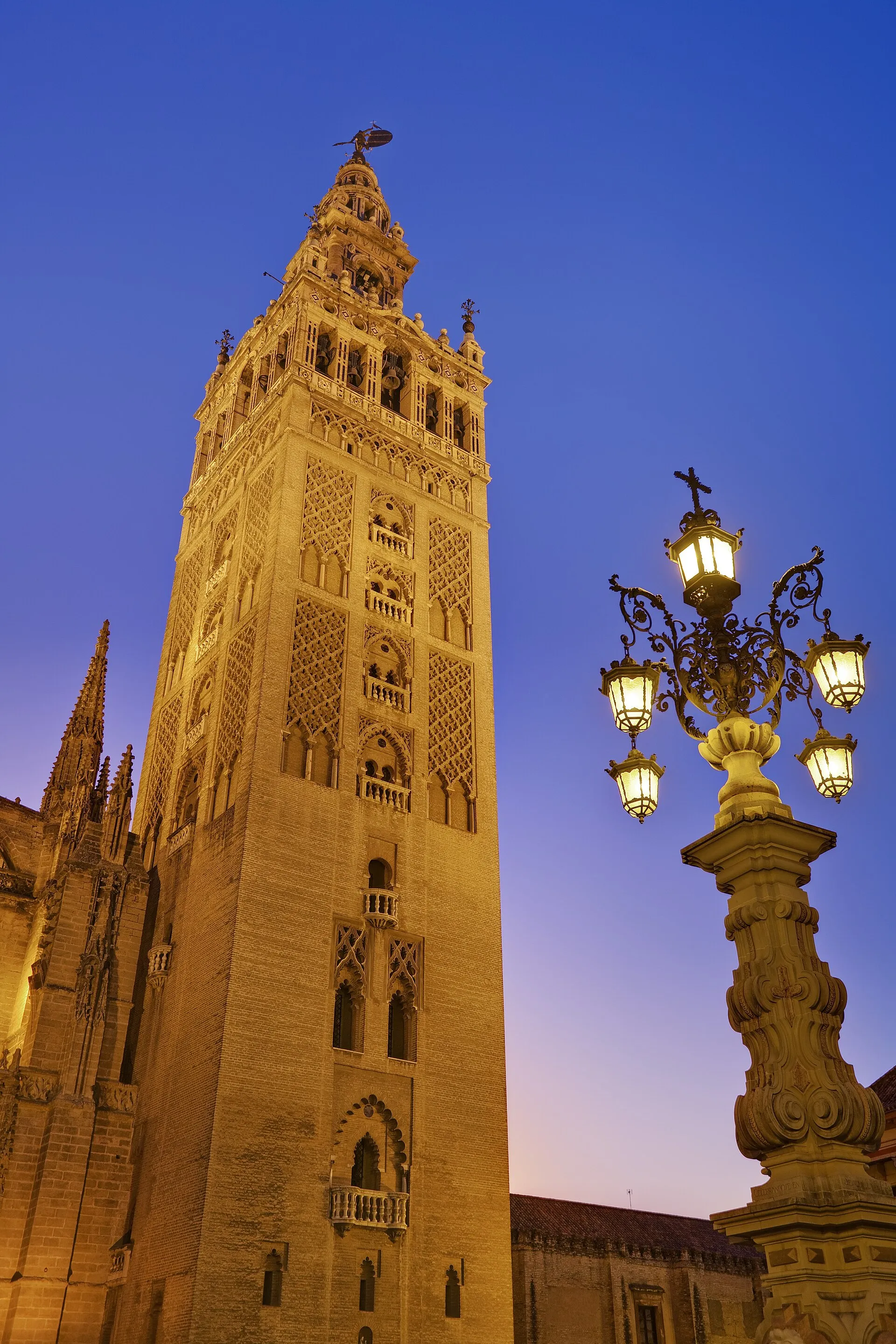
The Cathedral of Seville is the largest Gothic cathedral in the world, built between 1401 and 1506 on the site of the city’s Almohad mosque. The Giralda, its bell tower, was the mosque’s minaret, and the Patio de los Naranjos still keeps the shape of the mosque courtyard. Inside, the scale is the point: the main altarpiece is the largest in Christendom, and the tomb of Christopher Columbus stands in the nave.
From January 1, 2026 the cultural visit costs 13 EUR online or 14 EUR at the ticket office, with a reduced rate of 7 EUR online and 8 EUR at the door for over-65s, students up to 25, and some other categories. An audioguide is 5 EUR, and a guided tour of the cathedral and Giralda is 20 EUR online or 21 EUR at the office. The cathedral publishes its current schedule and rates on the official site. The Giralda is climbed by 35 ramps rather than stairs, which is why it is easier than it looks, and the view over the white roofs is worth the queue. There is also a free public visit on Sundays from 16:30 to 18:00, but it needs an online reservation and capacity is limited.
Book the cathedral online as well, and give it about 75 minutes. Pair it with the Alcazar on the same day only if you start early, because both monuments are best before the heat and the crowds.
Santa Cruz and the old city
Santa Cruz is the old Jewish quarter, a knot of lanes and small squares that is now the most photographed part of the city. It is genuinely beautiful and genuinely busy, so the trick is to walk it early or late and to duck into the quieter patios. The Plaza de Doña Elvira, the Hospital de los Venerables, and the lanes around Calle Agua reward a slow wander more than a route.
Two free or cheap stops sit on the edge of the quarter. The Torre del Oro, the riverside watchtower, is free with a voluntary 3 EUR contribution, and the Archivo de Indias, the archive of the Spanish empire, is free to enter. Further north, the Metropol Parasol, known to everyone as Las Setas, is the modern counterpoint: the largest wooden structure in the world, with a rooftop walkway over the old town. The general ticket starts at 16 EUR and includes the 360-degree viewpoint, the multisensory film, and the Aurora light show, and it is open daily from 09:30 to 00:30 with the last access at 23:45, according to setasdesevilla.com. Go up for sunset if you can.
Plaza de Espana and Maria Luisa Park
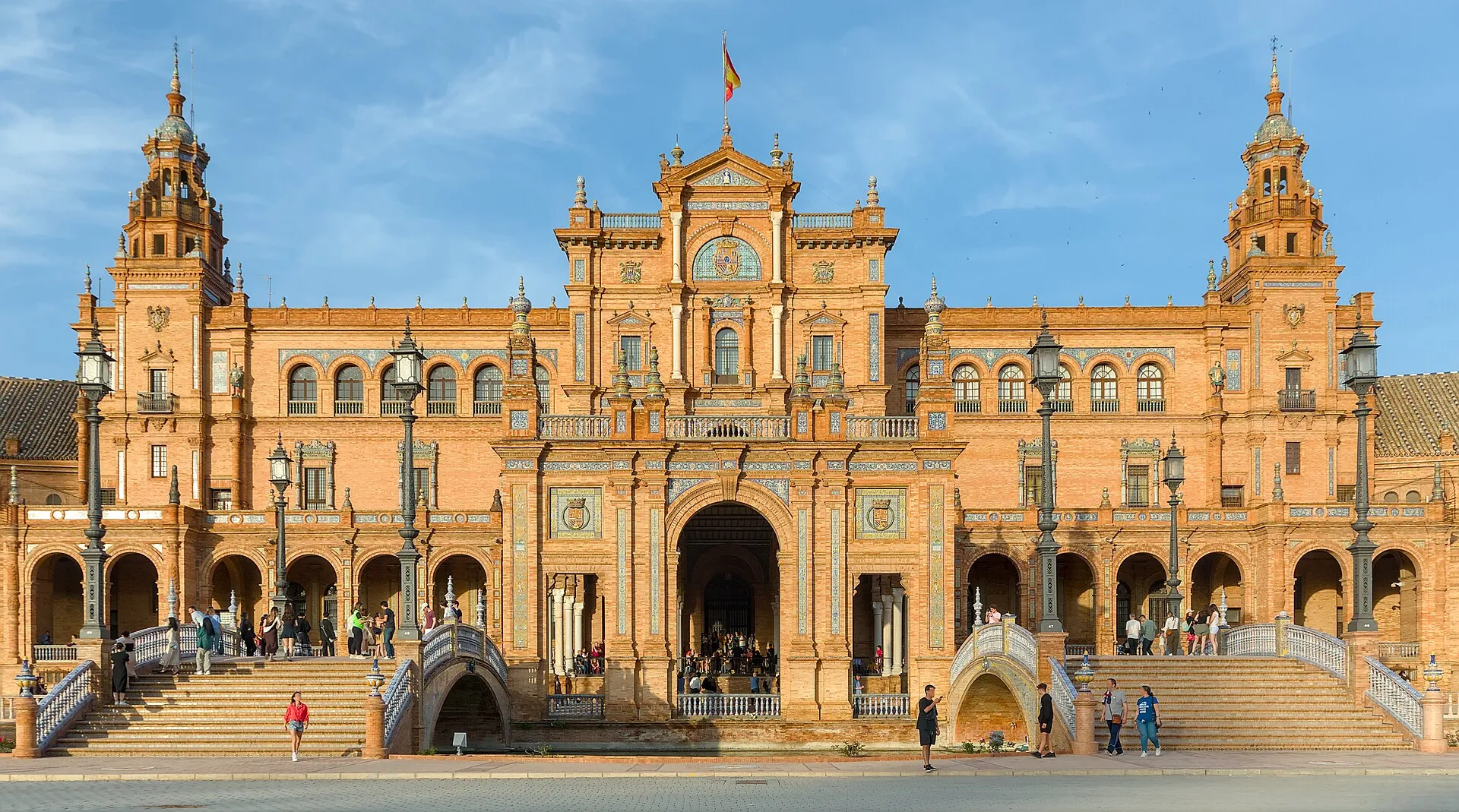
Plaza de Espana is the set piece of the 1929 Ibero-American Exposition, a 200-metre semicircle of brick, tile, and ceramic benches, one alcove for each Spanish province. It is free, open daily from 08:00 to midnight, and it is the one sight where the photographs undersell the scale. The rowboats on the canal and the tiled bridges are the clichés, and they are worth it once.
The plaza sits inside Maria Luisa Park, the green lung of the old city, which is also free and shaded by palms and plane trees. Come in the morning for photos without the crowds, or in the late afternoon for the light. The whole area is a good place to spend two hours with no ticket and no queue.
Triana and the river
Cross the Puente de Isabel II and the tone changes. Triana is the old pottery and sailor quarter on the west bank, a working neighbourhood with a market, ceramic workshops, and a long line of bars along Calle Betis facing the painted houses of the centre. It is where a lot of Sevillian everyday life happens, and it is the best place in the city to eat and drink without the monument markup.
The river itself is the evening promenade. Walk the Paseo de Cristóbal Colón on the east bank or the Calle Betis on the west, and stop when something looks good. In summer this is also the practical answer to the heat: the city opens up after 20:00, and the riverside is where it goes.
Food and tapas
Seville eats standing at the bar, and the tapas culture is the point rather than a gimmick. Order a few plates at a time and move on if you like. The local classics are salmorejo, a cold tomato and bread soup thicker than gazpacho; espinacas con garbanzos, spinach with chickpeas and cumin; pescaito frito, small fried fish; and plenty of jamón ibérico and local cheese. Seafood and grilled meat fill the rest of the menu.
Prices stay reasonable if you avoid the terraces on the cathedral square. A tapas plate is often 2.50 to 5 EUR, a full racion 6 to 12 EUR, and a menu del día at lunch runs about 12 to 18 EUR including a drink. The best areas to eat are Triana, the Alameda de Hércules, and the streets around the market rather than the tourist core.
Flamenco
Seville is one of the homes of flamenco, and seeing a proper performance is worth an evening. The tablaos range from large tourist shows to small rooms where the audience is close enough to hear the singers breathe. A standard show costs roughly 18 to 35 EUR and lasts about an hour, and the smaller venues in Triana have the better reputation. Book a day or two ahead in spring.
If you only have one night, choose a small tablao over the biggest venue. The difference is not the dancing, which is excellent in both, but the distance between the performer and the room.
Getting there
Seville has its own airport, San Pablo (SVQ), with direct flights from many European cities, and the train is the other obvious route. The high-speed AVE from Madrid to Seville takes about 2 hours 20 to 2 hours 30, and the route runs up to around 32 trains a day, so it works as a day of travel rather than a trip of its own. Fares start from roughly 13 EUR when booked well ahead, and tickets include a free Cercanías transfer in Madrid and Seville, which many travellers miss. Book on Renfe or compare operators with Omio.
From the airport, the EA airport bus is the cheap option at 6 EUR one way or 8 EUR for a same-day return, running every 12 to 20 minutes during the day and taking about 35 minutes to Plaza de Armas via Santa Justa station, according to Aena. A taxi is a regulated flat fare of about 26 EUR in the daytime and 29 EUR at night and on weekends. Once you are in the centre, Seville is a walking city, and Santa Justa station is about a 15-minute walk from the edge of the old town.
Where to stay
Base yourself in the old city and walk everywhere. Santa Cruz and El Arenal put you beside the Alcazar and the cathedral, and they are the most convenient and the most expensive, with small streets that taxis cannot always reach. Triana is across the river, cheaper, and more local, with the best bar scene and a 15-minute walk to the centre. The Alameda de Hércules and Macarena are the budget and nightlife answer, and Nervión around Santa Justa suits early trains and modern hotels.
If you are arriving by train and leaving by train, a hotel near Santa Justa is the low-stress choice, but it trades away the atmosphere of the old town. For a first visit of two or three nights, stay in Santa Cruz or El Arenal and accept the higher price.
Day trips
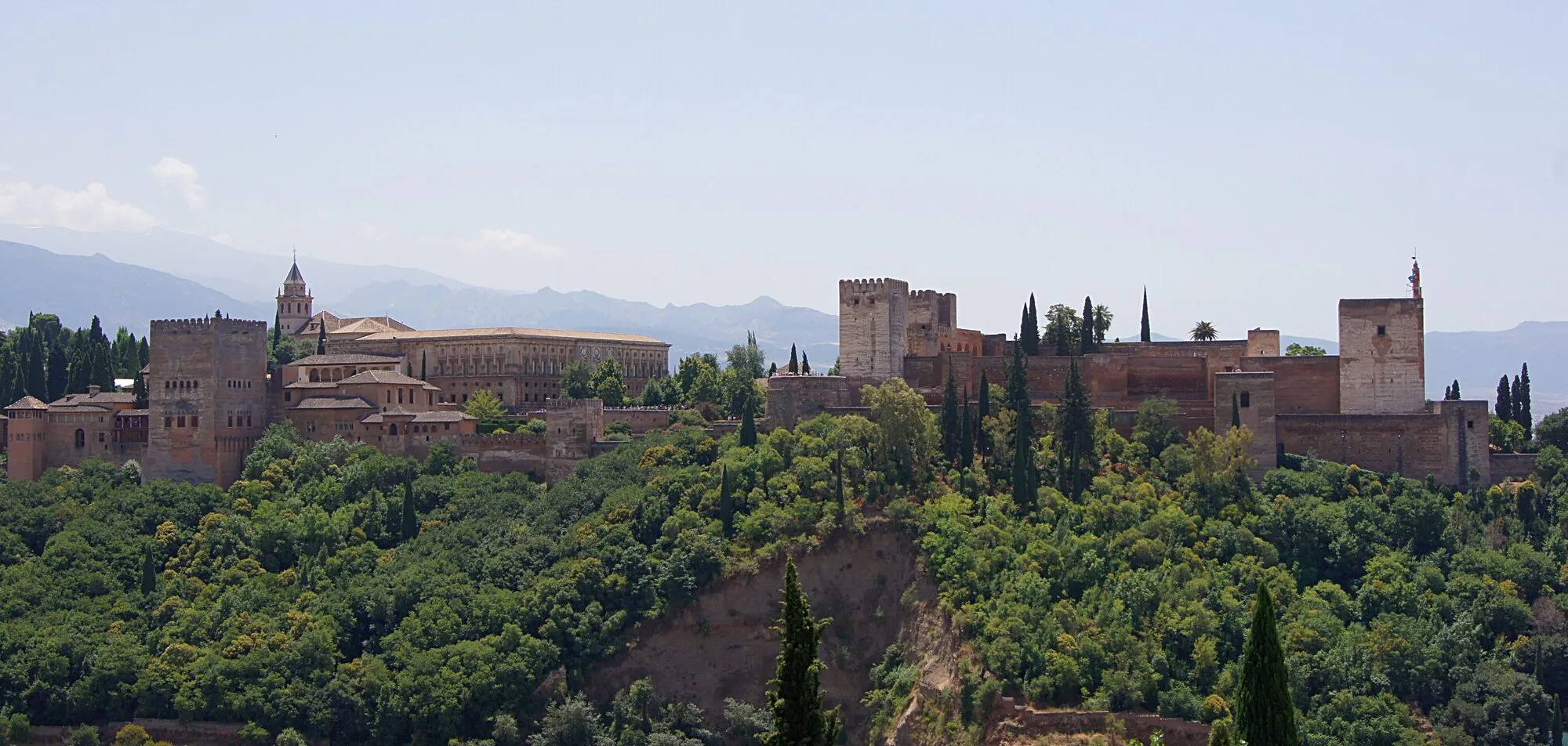
Seville is a strong base for the rest of Andalusia, and the rail network makes two cities easy. Cordoba is 40 to 50 minutes away and holds the Mezquita, the mosque-cathedral that alone justifies the trip. Granada is around 2 hours 35 by train and holds the Alhambra, which needs a timed ticket booked well in advance; the Granada guide covers the tickets and the timing. Cadiz, on the Atlantic, is about 1 hour 24 by train and is the oldest city in western Europe in its own telling. Ronda and the white villages are better by car or bus, and the Roman ruins of Italica sit just outside the city on a local bus.
The honest scheduling note: Cordoba and Cadiz work as genuine day trips, while Granada is better with a night because the Alhambra deserves a full morning or afternoon and the round trip eats the rest of the day. For the rest of the region, browse all the guides.
What a day costs
Planning figures for 2026, per person per day and excluding flights and accommodation: a backpacker day runs 50 to 70 EUR, a comfortable budget day 80 to 120 EUR, and a mid-range day 130 to 190 EUR. The mid-range number is the honest one for most first-timers once you add the Alcazar, the cathedral, a flamenco show, and a proper dinner with wine. These ranges are planning estimates built from the ticket, transport, and food prices cited in this guide, not an official index.
The season moves the numbers more than the daily budget does. March to May and October give the best mix of weather and crowds, with warm days and manageable queues. July and August are the reason the city is famous for heat: temperatures regularly push past 40°C, and the sensible rhythm is sightseeing before noon and after 19:00. Semana Santa and the Feria de Abril fill the city and raise hotel rates sharply, so book early if either is the draw.
Practical information
| Getting around | Seville is a walking city and the old centre is largely flat. The metro is thin, with one line useful to visitors, so most trips are on foot or by short taxi rides. The Cercanías train connects Santa Justa with the centre and the airport area. Buy single bus tickets from the driver and keep small cash. |
|---|---|
| When to go | March to May and October are the comfortable months. June and September are hot but workable with early starts. July and August regularly pass 40°C, and many small bars and shops close in the afternoon. Semana Santa and Feria de Abril are spectacular and crowded, with peak accommodation prices. |
| Money | Spain uses the euro. Cards work almost everywhere, including most bars and taxis, but keep a little cash for small purchases and market stalls. Tipping is not expected; rounding up or leaving a euro or two on a good meal is normal. |
| Health and safety | Seville is a safe city, with the usual caution for pickpockets in Santa Cruz, on the cathedral square, and on crowded buses. The real risk in summer is heat: carry water, use the siesta hours, and treat late afternoon as the start of the day, not the end. Tap water is safe to drink. |
| Sightseeing rhythm | Book the Alcazar and the cathedral before you travel, with a morning slot for the Alcazar. Give the monuments the early morning, the Plaza de Espana and the river the late afternoon, and the tablao or the tapas bars the night. Always carry your passport or ID, because entry to the Alcazar is tied to the named ticket. |
Disclosure. This blog post contains affiliate links. If you book through them, Mediterranean Vibes may earn a small commission at no extra cost to you; it is how the site stays up.