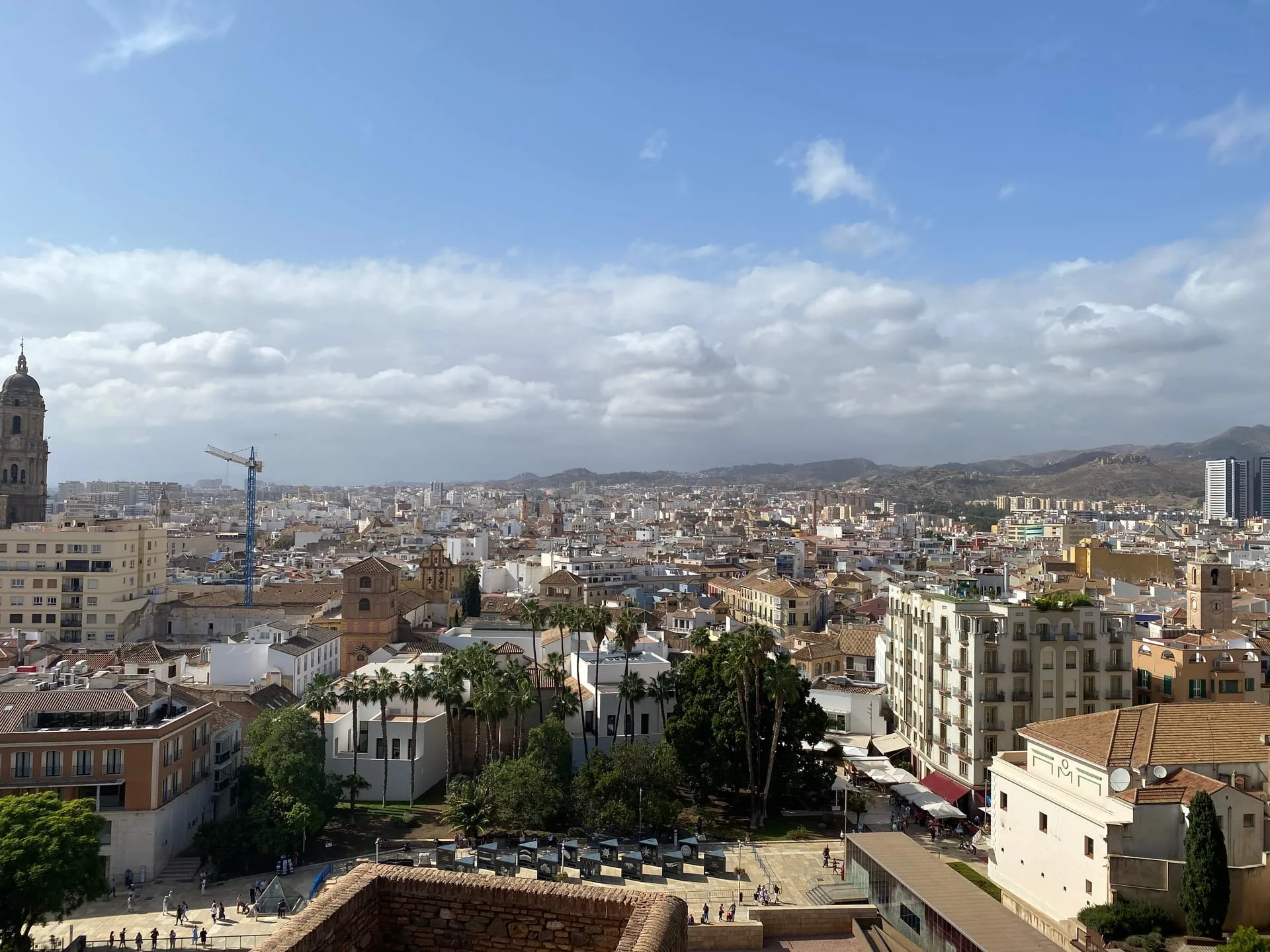
Málaga is the gateway to the Andalusian coast and the best single base for it. The airport, the high-speed AVE, the Cercanías commuter trains, and the long-distance buses all meet in the city, so you can sleep in one place, walk to dinner, and still reach the beaches and the white villages without moving hotels. The old city sits between two Moorish fortresses above a working port, which is a rarer combination than it sounds for a city this easy to travel through.
It is also not just a transfer point. Málaga has a Roman theatre that predates the Alcazaba, a cathedral that took two centuries to build, the house where Picasso was born, one of Spain’s best small museums, and a food scene built on fried fish and grilled sardines. Most visitors arrive on the way to somewhere else and then spend two days here without planning to.
This guide gives you the numbers that matter for 2026 with the source attached, because ticket prices, fares, and the airport transfer change more often than the guidebooks. What the Alcazaba and the cathedral cost, which beaches are worth the train ride, how to reach Nerja, Frigiliana, Ronda, and the Caminito del Rey, plus the daily budget and the timing that keeps a summer day bearable. Every figure is checked against an official 2026 page, and the ones worth rechecking before you book are linked as you go. If you are planning the wider trip, compare all seven countries in the country index.
Plan and book
3 partners- Flights
Find a direct route into Málaga from wherever you start, and compare the summer fares early.
Search flights - Trains
The Madrid to Málaga high-speed train, plus onward legs to Seville, Granada, and Córdoba in one search.
Compare trains - Where to sleep
Rooms in the Centro, Soho, La Malagueta, and Pedregalejo, sorted by area, price, and review score.
Find a room
The old city and the Alcazaba
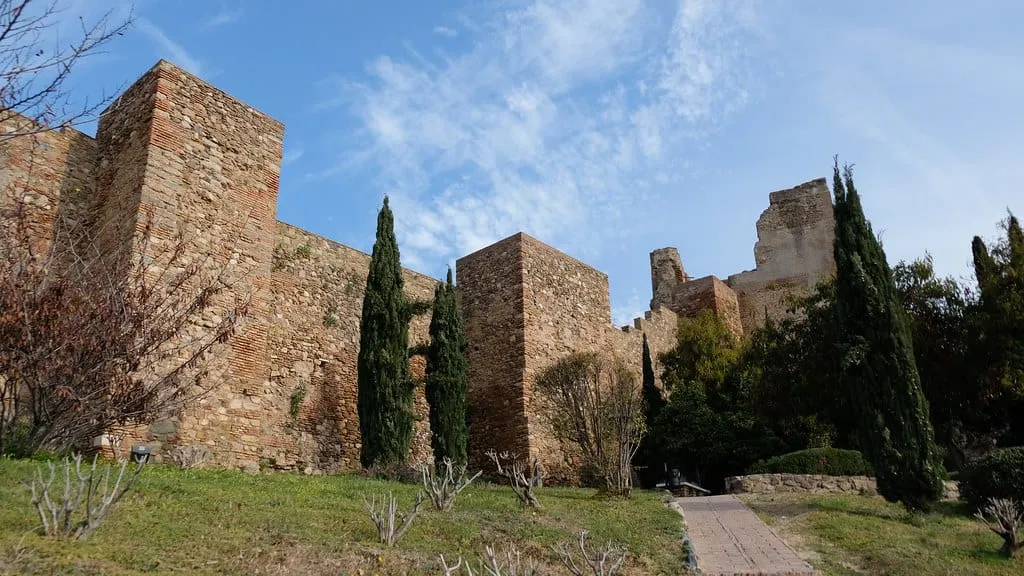
The Alcazaba is the place to start, because the view from it explains the whole city. It is the Moorish fortress on the hill above the Roman theatre, built from the eleventh century on the site of an older citadel, and it is one of the best-preserved Alcazabas in Spain. General admission is 7 EUR, and the combined ticket for the Alcazaba and Gibralfaro Castle above it is 10 EUR. Reduced tickets are 3 EUR and 5 EUR for students, over-65s, pensioners, large families, and people with a disability of at least 33 per cent, with the current prices and hours on the official Alcazaba and Gibralfaro page. Tickets are sold at the door, and the walk up through the gardens is part of the visit.
Below it, the Roman theatre is free to look at and worth ten minutes on the way down. The city was founded by the Phoenicians in the first millennium BC, and its layers show up at street level rather than behind glass. The cathedral a few streets inland is the other big interior: entry is 10 EUR with an audio guide, or 15 EUR with the virtual reality experience, per the official cathedral site. The rooftop walk has been closed for restoration, so check before you plan around it.
The Museo Picasso Málaga is the one paid museum to put first, in the Buenavista Palace on Calle San Agustín, a few minutes from the cathedral. The full-access ticket is 13 EUR, or 11 EUR reduced, and it is free in the last two hours before closing on Sundays, on Andalusia Day, and on a couple of other dates, according to the museum’s own visit page. Book online in summer, because the timed slots fill. Picasso was born a short walk away at Plaza de la Merced, where his childhood home is now a small foundation.
Beyond the monuments, the city is for walking. Calle Larios is the polished shopping spine between the port and the old town, the Soho quarter behind the Alameda has the street art, and the Muelle Uno gives the harbour a long promenade of terraces that works best at sunset. The Centre Pompidou Málaga sits in the cube at the end of the port, and the La Concepción botanical garden north of the centre is the quiet half-day if the heat pushes you inland.
The beaches
Málaga is a city with beaches rather than a beach resort, and the two easiest are La Malagueta and La Caleta, both a short walk east of the port and both sandy. They are city beaches in the honest sense: busy, lined with chiringuitos and sunbeds, and convenient when you want a swim without a train ride. A sunbed and umbrella at a beach club runs roughly 10 to 20 EUR for the day depending on the row.
For better food and a calmer afternoon, take the Cercanías C1 east to Pedregalejo and El Palo, two old fishing neighbourhoods where the promenade is lined with chiringuitos that grill sardines on bamboo skewers over open fires, the local espetos. Lunch of fried fish and a cold drink here is one of the best value meals on the whole coast. The beach itself is pebbles in places, so bring shoes for the water.
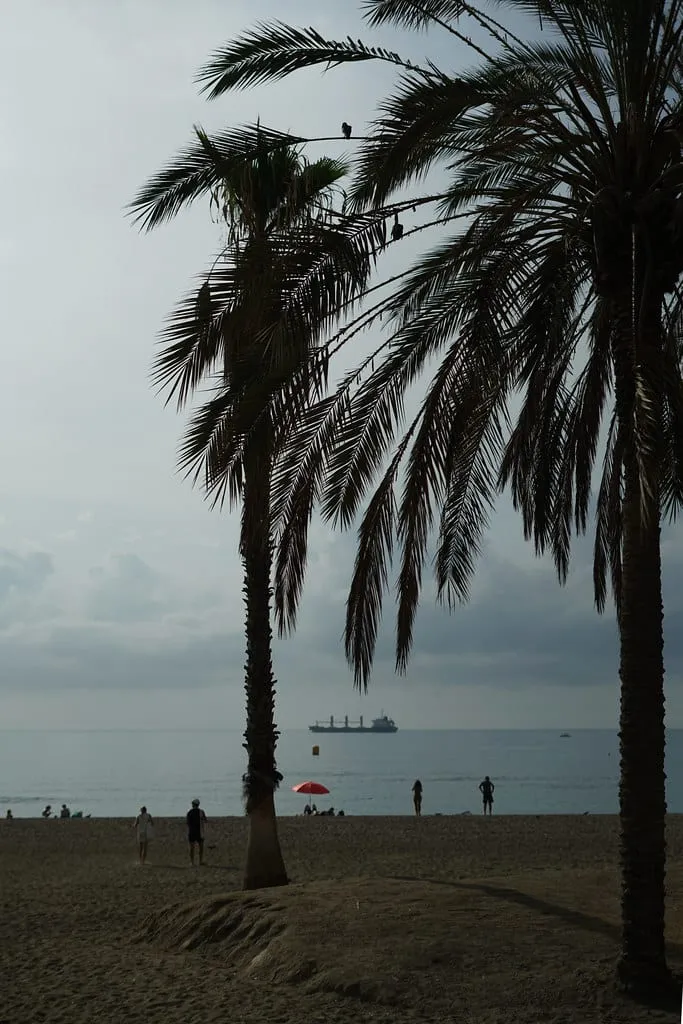
West of the city, the C1 train runs along the coast to Torremolinos, Benalmádena, and Fuengirola, which is the simplest way to reach a traditional beach resort with sandy coves and a long promenade. La Carihuela in Torremolinos keeps an old fishing-village feel and has some of the best beach restaurants on this stretch. The water is warmest from July to September and bracing in May and October, and July and August bring the crowds and the peak prices.
Nerja, Frigiliana, and the coast
Nerja is the best day trip on the eastern Costa del Sol, about an hour east of Málaga by bus, and it earns the reputation. The Balcón de Europa is a cliff-edge promenade in the centre of town, with a view down to the coves and, on a clear day, across to the African coast. Playa de Burriana is the main beach, and the smaller coves toward Maro are quieter and clearer. Buses run from Málaga’s bus station several times a day with ALSA.
The Cueva de Nerja, the cave system a few kilometres east at Maro, is the other reason to come. It holds one of the longest stalactites in the world and Palaeolithic paintings, and it is a genuine monument rather than a tourist gimmick. The 2026 general admission is 16 EUR, rising to 18 EUR online and 20 EUR in the summer period when bought at the cave itself, with reduced rates for children, students, and over-65s, per the official Cueva de Nerja site. Check the opening hours, because the schedule shifts between the standard season and the summer, Christmas, and Easter periods.
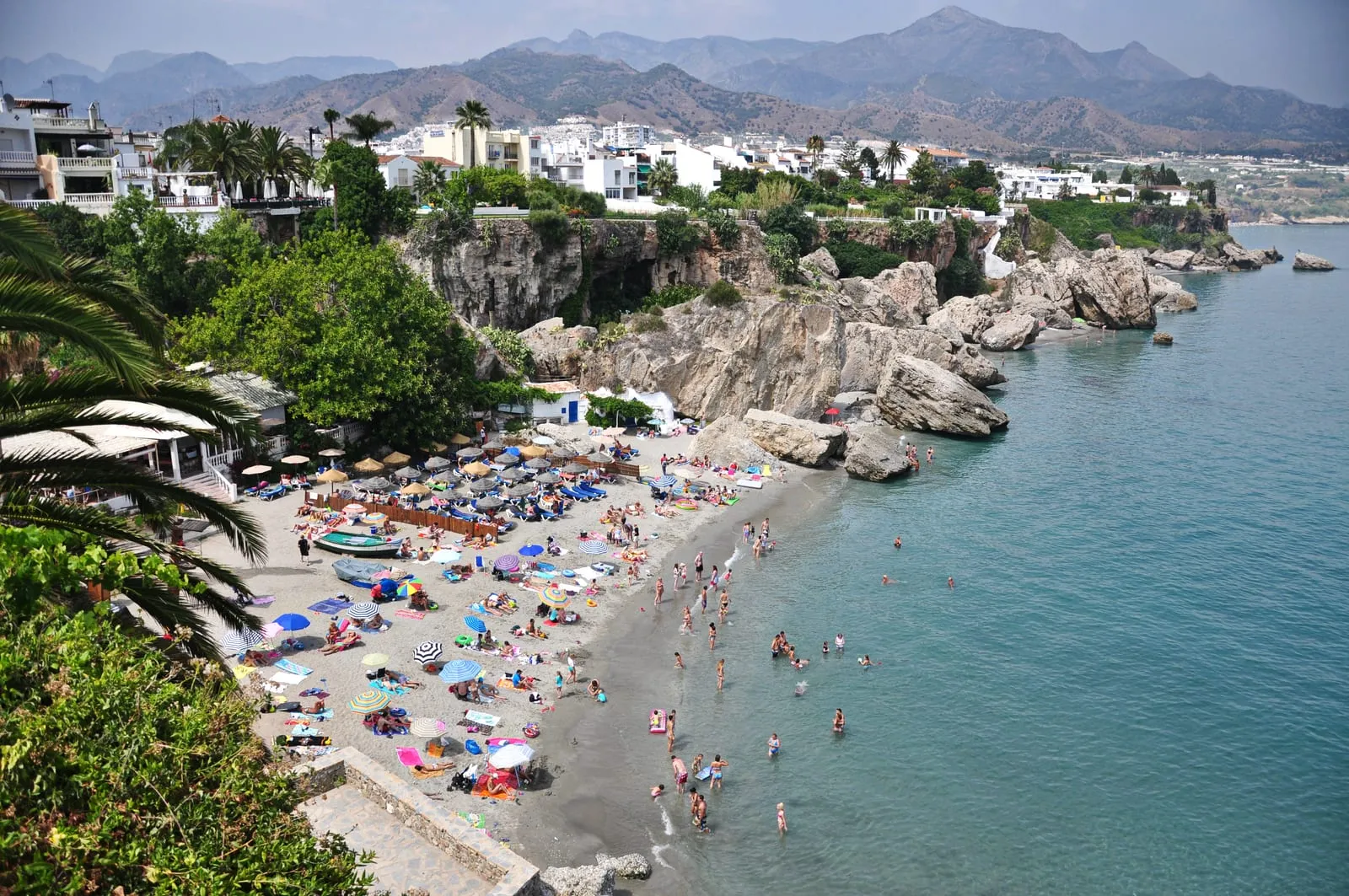
Six kilometres above Nerja, Frigiliana is one of the best-preserved Moorish white villages in Andalusia, a knot of cobbled lanes, flowered balconies, and a hilltop lookout over the coast. It is small, so two hours is enough, and the local bus from Nerja runs up the hill. Further west, Marbella has a small, handsome old town and the polished marina at Puerto Banús, Estepona has a flower-filled centre and a long beach, and Mijas Pueblo is the white village above Fuengirola that is easiest to reach without a car, on a frequent bus from the coast.
Ronda and the Caminito del Rey
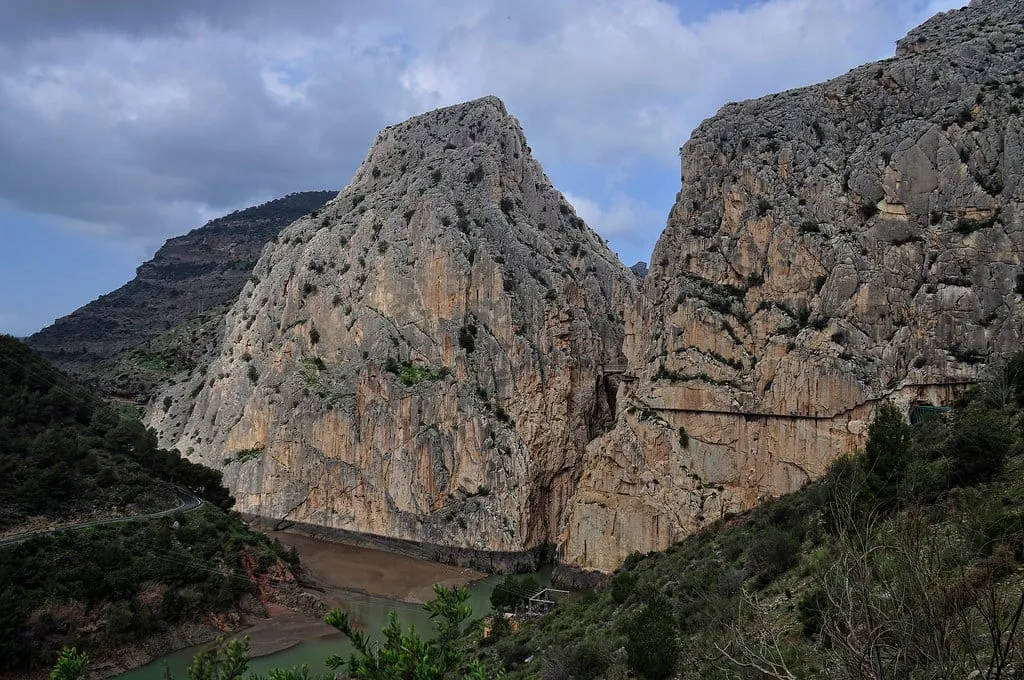
The Caminito del Rey is the walk that draws people inland, a boardwalk pinned to the wall of the Desfiladero de los Gaitanes gorge above the Guadalhorce river. The standard ticket is 10 EUR, an official guided visit is 18 EUR, and the shuttle bus between the two ends costs 2.5 EUR, with parking at the reception centre at 2 EUR a day, per the official Caminito del Rey booking platform. Children under 8 are not allowed on the trail, and everyone over 8 needs original ID to prove their age. Tickets are timed and sell out weeks ahead in spring and autumn, so book as soon as your dates are fixed.
The easiest way there without a car is the Cercanías C2 train from Málaga María Zambrano to El Chorro, about 45 minutes, and then the shuttle bus to the northern access. It is a half-day trip and pairs well with a stop in the white town of Álora on the way back. Wear shoes with grip and carry water, because there is little shade and no shortcut off the boardwalk.
Ronda is the other inland day trip, and the more dramatic one. It sits on a plateau split by a 100-metre gorge, crossed by the Puente Nuevo, and its Plaza de Toros is one of the oldest bullrings in Spain. It is about two hours from Málaga by ALSA bus, or a slow and scenic train ride, and it is better with a night than as a rushed round trip. If you only have a day, a small-group tour removes the driving and the parking, both of which are genuinely difficult in the town. Setenil de las Bodegas, with its houses built under the rock overhang, is a worthwhile stop on the same loop.
Getting around
The Cercanías commuter trains do most of the work. Line C1 runs west along the coast from Málaga Centro Alameda to the airport, Torremolinos, Benalmádena, and Fuengirola, and Line C2 runs inland to Álora for the Caminito del Rey. Fares are by zone and a single airport ride is 1.80 EUR, with a rechargeable card that cuts the price of repeated trips. Buy tickets from the machines at the station, and keep them, because you scan them to enter and to leave.
Inside the city, the metro has two lines and is useful for reaching the western suburbs, but most of the historic centre is walkable and the metro does not run through it. The EMT city buses fill the gaps, and contactless bank cards work on both. For the coast beyond the Cercanías line, ALSA buses run to Nerja, and the bus station next to María Zambrano is the hub for Ronda, the white villages, and the rest of Andalusia.
A car is not needed for Málaga, the Cercanías coast, or the city beaches, and it is a liability in the centre, where parking is scarce and much of the old town is pedestrian. Hire one only if Ronda, the white villages, or a slow run along the coast is central to your trip, and expect tight roads and paid parking when you get there. For everything else, the train and the bus are faster, cheaper, and far less stressful.
Málaga food
Málaga eats fried fish and grilled sardines, and it does both better than almost anywhere else in Spain. The espeto, a sardine skewered on a cane and cooked over a driftwood fire, is the local signature, and the chiringuitos of Pedregalejo and El Palo are where it is done properly. Pescaito frito, a plate of small fried fish, is the other staple: order it by the mixed plate and share. Away from the sea, look for porra antequerana, a thick cold tomato soup, and ajoblanco, a chilled almond and garlic soup from the same region.
The tapas culture is quieter here than in Granada, but the bars around the Mercado Central de Atarazanas and the Plaza de la Merced are the place to graze. A tapa is usually 2.50 to 5 EUR, a full racion 6 to 12 EUR, and a menu del día at lunch runs about 12 to 18 EUR with a drink. Málaga is also wine country: the sweet Moscatel wines from the Axarquía hills are served chilled, and Cartojal is the local tipple at every summer fair. Finish with a plate of almonds or a piece of the local sponge cake, and drink the local white with the fish.
Getting there
Málaga Costa del Sol airport (AGP) is about 8 kilometres southwest of the centre, and the Cercanías C1 train is the simplest way in. It costs 1.80 EUR, takes about 12 minutes to Málaga Centro Alameda, and runs every 20 minutes from early morning until around midnight, per the University of Málaga guide and the Renfe timetable. The A Express bus is the cheaper bus alternative into the centre, and a taxi is around 25 to 30 EUR.
By rail, Málaga is on the Spanish high-speed network. The AVE from Madrid Puerta de Atocha to Málaga María Zambrano takes about 2 hours 30 to 2 hours 50, with frequent direct services and fares that start low when booked well ahead, according to Renfe. The ticket includes a free Cercanías connection at both ends, which many travellers miss. Seville is about 2 hours away by high-speed train and Granada about 1 hour 20, so the city slots easily into an Andalusian loop; our Seville guide and Granada guide cover the other two ends.
Where to stay
Base yourself in the Centro Histórico for a first visit. It puts the Alcazaba, the cathedral, the Picasso museum, and the port all within a fifteen-minute walk, and the Cercanías station at Centro Alameda is on the edge of it. Soho, just south of the Alameda, is the same area with a younger restaurant scene and slightly lower prices. La Malagueta is the beachfront option, five minutes from the sand and ten from the old town, and it suits anyone who wants to swim before breakfast.
Pedregalejo and El Palo, east of the centre on the C1 line, are the local, seafood-led alternative, with a relaxed promenade and better-value guesthouses. If the beach matters more than the city, the C1 towns west of Málaga are a real option: Torremolinos and Benalmádena have the most hotels and the easiest access to both the sand and the Málaga sights. Around María Zambrano station is the practical choice for an early train, at the cost of atmosphere.
What a day costs
Planning figures for 2026, per person per day and excluding flights and accommodation: a backpacker day runs 50 to 70 EUR, a comfortable day 80 to 120 EUR, and a mid-range day 130 to 190 EUR. The comfortable number is the honest one for most first-timers once you add the Alcazaba, the cathedral, a Picasso ticket, a long seafood lunch, and a train or two. These ranges are planning estimates built from the ticket, transport, and food prices cited in this guide, not an official index.
The season moves the numbers more than the daily budget. May, June, September, and October are the good months, with warm sea, comfortable days, and crowds you can still outwalk in the morning. July and August are hot, around 30 to 31 degrees, and the busiest of the year, so the sensible rhythm is the beach or the mountains in the middle of the day and the old town in the evening. Winter is mild and quiet, with shorter hours at some sights and the odd rainy week. For the wider country, the Spain guide covers Seville, Granada, and the rest of Andalusia.
Practical information
| Getting around | The Cercanías C1 links the centre, the airport, and the western beach towns, and the C2 climbs inland to Álora for the Caminito del Rey. Fares are by zone, with the airport ride at 1.80 EUR. Inside Málaga, the metro has two lines and the centre is walkable. ALSA buses leave from beside María Zambrano for Nerja, Ronda, and the rest of Andalusia. A car is only needed for Ronda, the white villages, and some coastal coves. |
|---|---|
| When to go | May, June, September, and October give the best mix of warm sea and manageable crowds. July and August are hot, around 30 to 31 degrees, and the busiest. Winter is mild and quiet, with some sights on shorter hours and a few chiringuitos closed. Book the Caminito del Rey and the Nerja Caves ahead in spring and autumn. |
| Money | Spain uses the euro. Cards work almost everywhere, including the transport machines, bars, and taxis, but keep a little cash for markets and small chiringuitos. Tipping is not expected; rounding up or leaving a euro or two on a good meal is normal. Museum tickets are cheaper for EU students, over-65s, and large families with ID. |
| Health and safety | Málaga is a safe city, with the usual caution for pickpockets around the port, the Alameda, and the crowded beaches in summer. The real risk is the sun: carry water, use high-factor cream, and keep the middle of the day for the sea or the shade. Tap water is safe to drink, and the sea is clean at the city beaches. |
| Sightseeing rhythm | Give the Alcazaba and Gibralfaro the early morning, the cathedral and Picasso museum the middle of the day, and the port and the old town the evening. Save Nerja, Frigiliana, and the Caminito del Rey for full days, and book the Caminito and the Nerja Caves in advance. Carry ID for the named or reduced museum tickets. |
Disclosure. This blog post contains affiliate links. If you book through them, Mediterranean Vibes may earn a small commission at no extra cost to you; it is how the site stays up.