Portugal
Atlantic rollers and Moorish hills
About Portugal
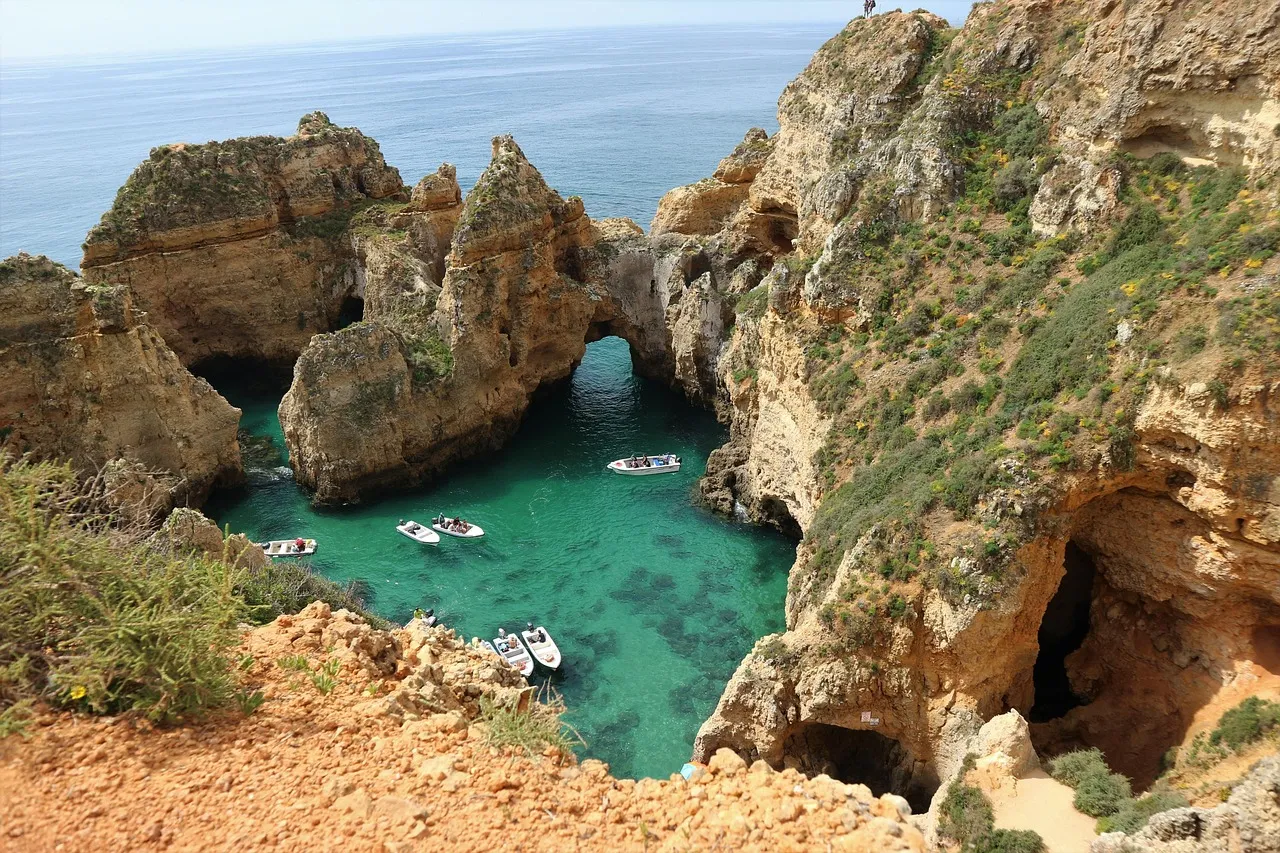
Portugal faces the Atlantic rather than the Mediterranean proper, but its southern coast belongs to the same warm, easy holiday world: sandstone cliffs, sheltered coves, and fishing towns turned into beach bases. Lisbon stacks its hills with trams and tiled facades, and Porto pours the country's wine a few hours north.
It is the lightest and cheapest corner of Western Europe's warm belt, and the sea is colder than it looks. The country rewards slow travel, and the train between Lisbon and Porto makes the two cities one easy trip. English is widely spoken, which keeps navigating simple for a first visit.
When to go
May, June, and September give the best mix of sun and manageable crowds. April to June and September to October are mild and less crowded, while July and August are the peak, around 28 to 30 degrees Celsius in Lisbon, and the busiest. Porto is a wet city, and November to January are the rainiest months, so pack for rain outside summer. The Algarve stays warm longest, but the Atlantic is bracing even in high summer.
Getting around
Lisbon is the hub. The metro red line stops inside the airport and reaches the centre in 20 to 25 minutes for 1.90 EUR, plus a one-off 0.50 EUR Navegante card, and the 24-hour pass at 7.25 EUR covers metro, buses, and trams. High-speed trains link Lisbon and Porto in about 2 hours 39 on the Alfa Pendular, with advance fares from roughly 11 to 20 EUR. Porto airport connects to the centre on metro Line E in about 25 to 30 minutes for 2.30 EUR, and Cascais and Sintra are easy train day trips from Lisbon.
What it costs
Planning figures for 2026, per person per day and excluding flights and accommodation: a backpacker day runs about 50 to 70 EUR, a comfortable day 95 to 130 EUR in Lisbon and 100 to 160 EUR in Porto, and a mid-range day 150 to 210 EUR. The comfortable number covers the big monuments, a fado night or a cellar tour, and a proper dinner with wine. Prices are in euros, and cards are accepted almost everywhere.
Where to stay
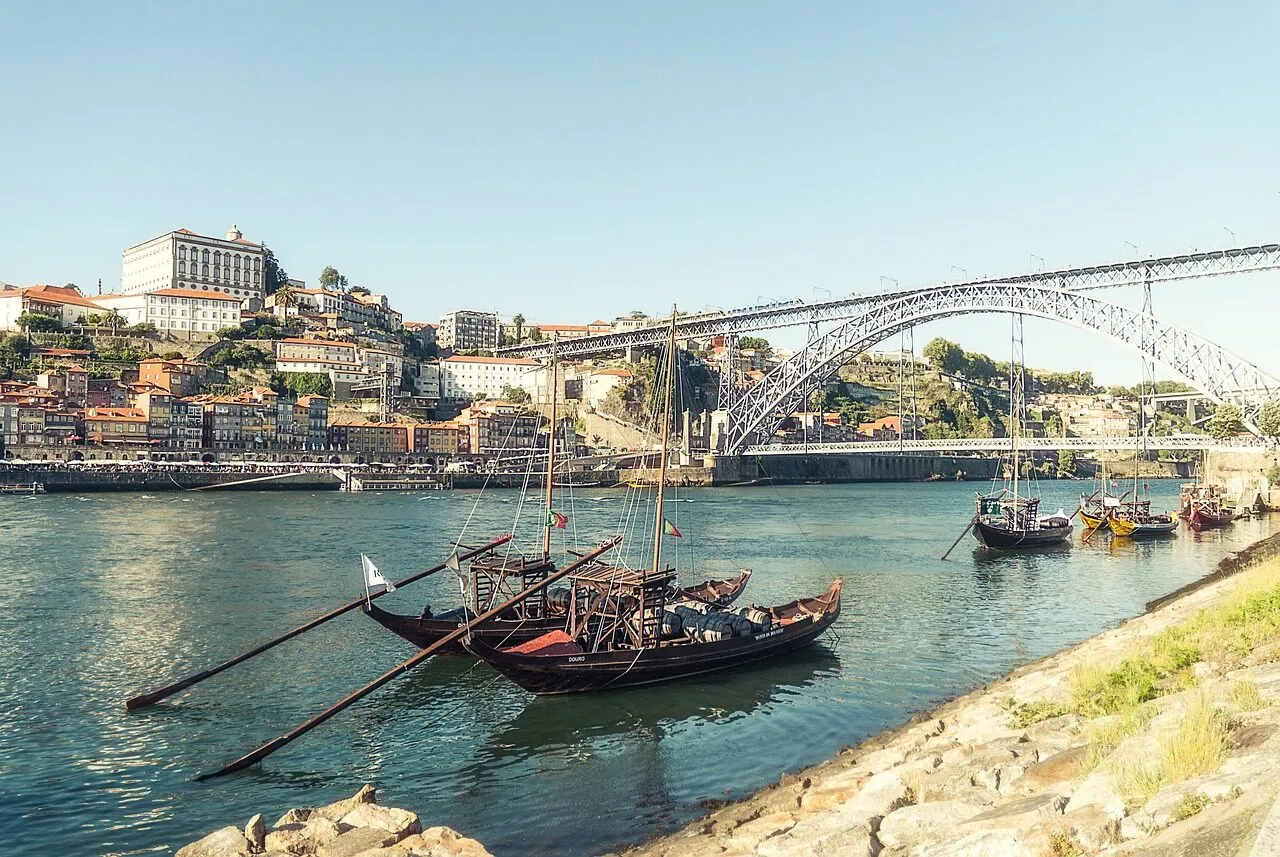
In Lisbon, Baixa and Chiado are the flat, convenient centre, Alfama and Mouraria are atmospheric but steep, and Bairro Alto is for nightlife and noise. For a beach base, Cascais and Estoril have hotels and a train line back into the city. In Porto, the Ribeira is the atmospheric choice on the water, the Baixa around Aliados is the practical centre, and Gaia across the bridge has the port lodges and the best views back at the city.
Practical information
| Getting around | Metro, buses, and trams cover Lisbon and Porto, and high-speed trains link the two cities in under three hours. City centres are hilly, so expect steps and check whether your building has a lift. |
|---|---|
| When to go | May, June, and September for the best weather and crowds. July and August are the peak and the hottest, and Porto is at its wettest from November to January. |
| Money | Euro. Cards are accepted almost everywhere. Tipping is a small round-up or a euro or two, and a fixed menu at lunch is often the best value. |
| Language | Portuguese. English is widely spoken, more so than in neighbouring Spain. Lunch is the main meal, and a pastel de nata with coffee is a daily habit rather than a treat. |
| Safety | Portugal is one of the safer countries in Europe for normal travel. The Atlantic coast has strong currents and colder water than the Mediterranean, so swim where lifeguards are posted and mind the waves. |
Points of interest
- Lisbon - seven hills, trams, fado, and a riverfront city
- Algarve coast - Lagos, the golden cliffs, and the empty west
- Porto - port wine lodges and a riverside old town
- Sintra - a fairytale palace on a forested ridge
- Azulejos and pastel de nata - tiled walls and custard tarts
Read next