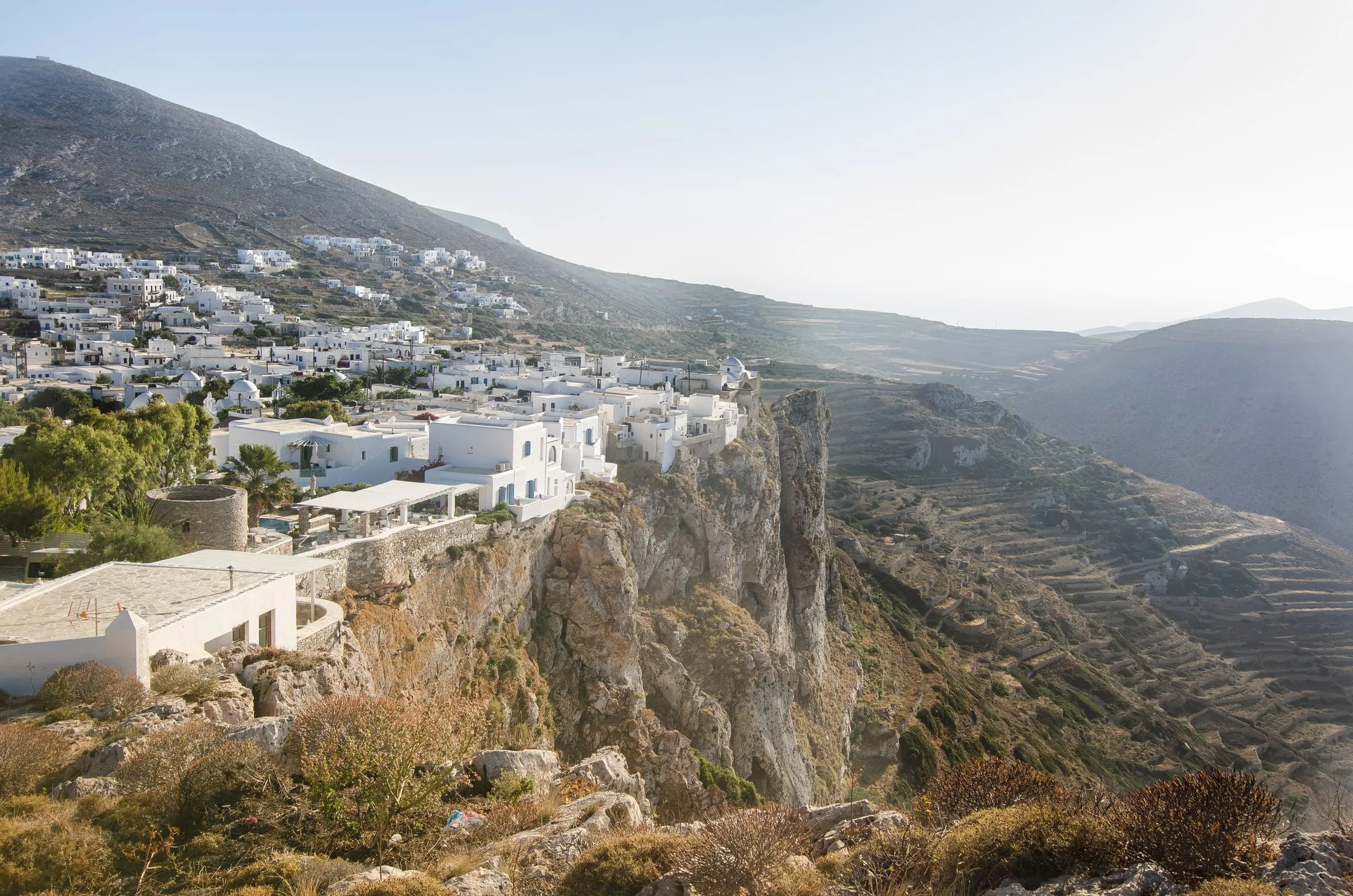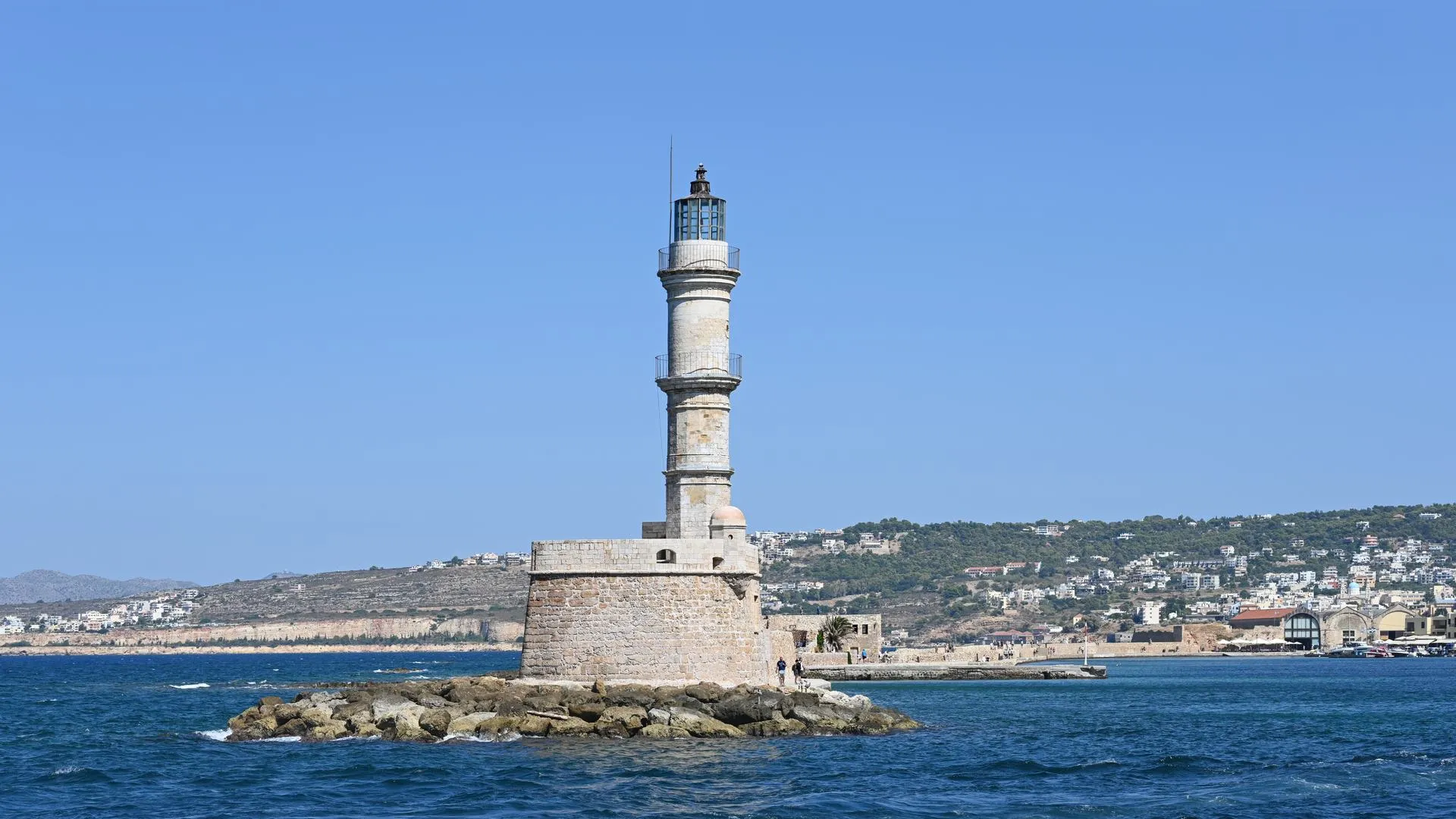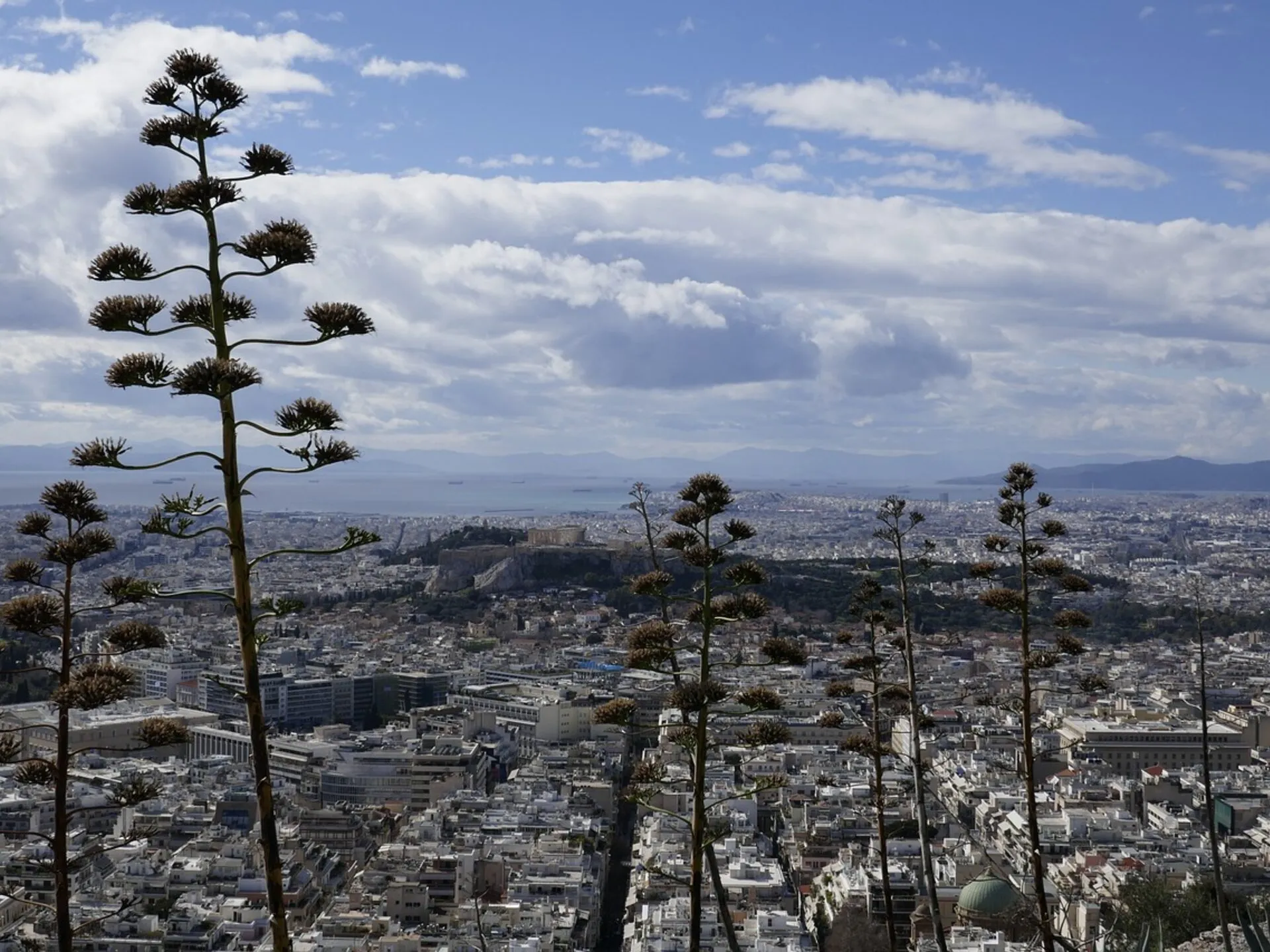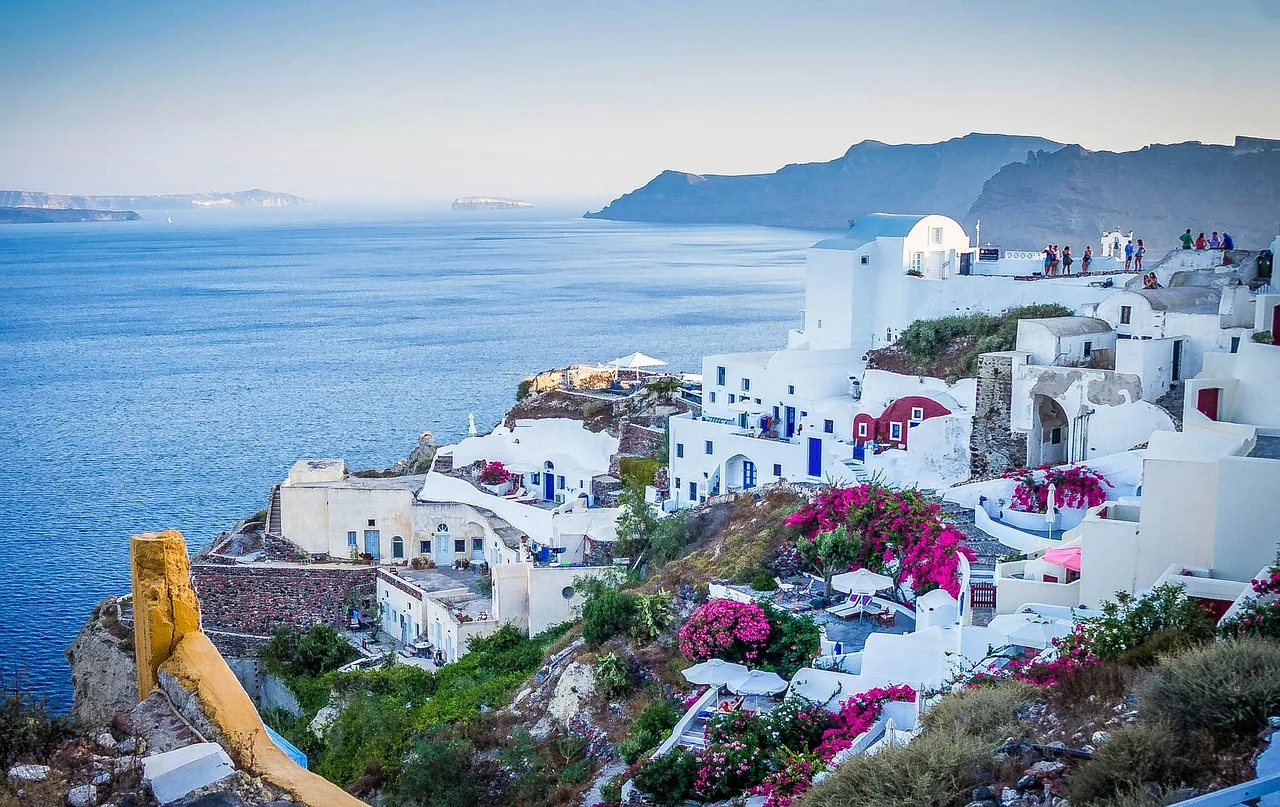
Santorini is the prettiest place in the Aegean and one of the most crowded, and both halves of that sentence are true. The island is what remains of a volcano that blew itself apart, leaving a flooded crater called the caldera and a thin arc of white villages balanced on its rim. No photo prepares you for how close the cliffs are, or how much of the island’s identity is tied to one viewpoint and the hour before sunset.
It is also not a beach island, and most disappointment stories start there. The caldera side has no sand to speak of; the real beaches sit on the far coast as black strips of volcanic sand reached by a short bus ride. First-timers come for the villages, the sunset, and the volcano tour, and the honest planning question is how to see them without fighting the crowds the whole way.
This guide gives you the numbers that matter for 2026 with the source attached, because prices on the island move faster than the guidebooks. Ferry times and fares, museum tickets, bus prices, the real length of the famous hike, and a daily budget range, plus the two or three mistakes that cost first-timers the most time and money. Every figure is checked against an official 2026 tariff or operator page, and the ones worth rechecking before you book are linked further down. It assumes a first visit of three or four days, the standard length of a Greek island first visit. If you are planning the wider trip, compare all seven countries in the country index.
Plan and book
3 partners- Flights
Find the Athens to Santorini hop or a direct route into JTR from wherever you start.
Search flights - Ferries and trains
Book the Athens to Santorini leg and compare it with island hops in one search.
Compare routes - Where to sleep
Rooms on the caldera rim and the beach coast, sorted by area, price, and review score.
Find a room
The caldera walk
The single best thing on the island is free and needs no ticket: the path along the caldera rim from Fira to Oia. It runs about 10.5 km and takes most people 3 to 4 hours, with roughly 328 m of climb and almost no shade, which is why AllTrails rates it moderate rather than easy. The first third crosses Firostefani and Imerovigli, where the cliff views are the best on the route. It then opens onto a wilder stretch of stone, low scrub, and scattered goats, and drops you into the back lanes of Oia.
Start early, carry a litre of water per person minimum, and walk it south to north. Fira to Oia means you finish downhill into the sunset village instead of dragging yourself up the last climb in the heat, and it puts you in Oia at the hour the postcards are taken. The trail is unmarked in places; the rough rule that keeps you honest is to keep the sea on your left and the island’s main road within earshot on the right. Sneakers are plenty, gloves are not needed, and a hat earns its space in August.
Oia and the sunset
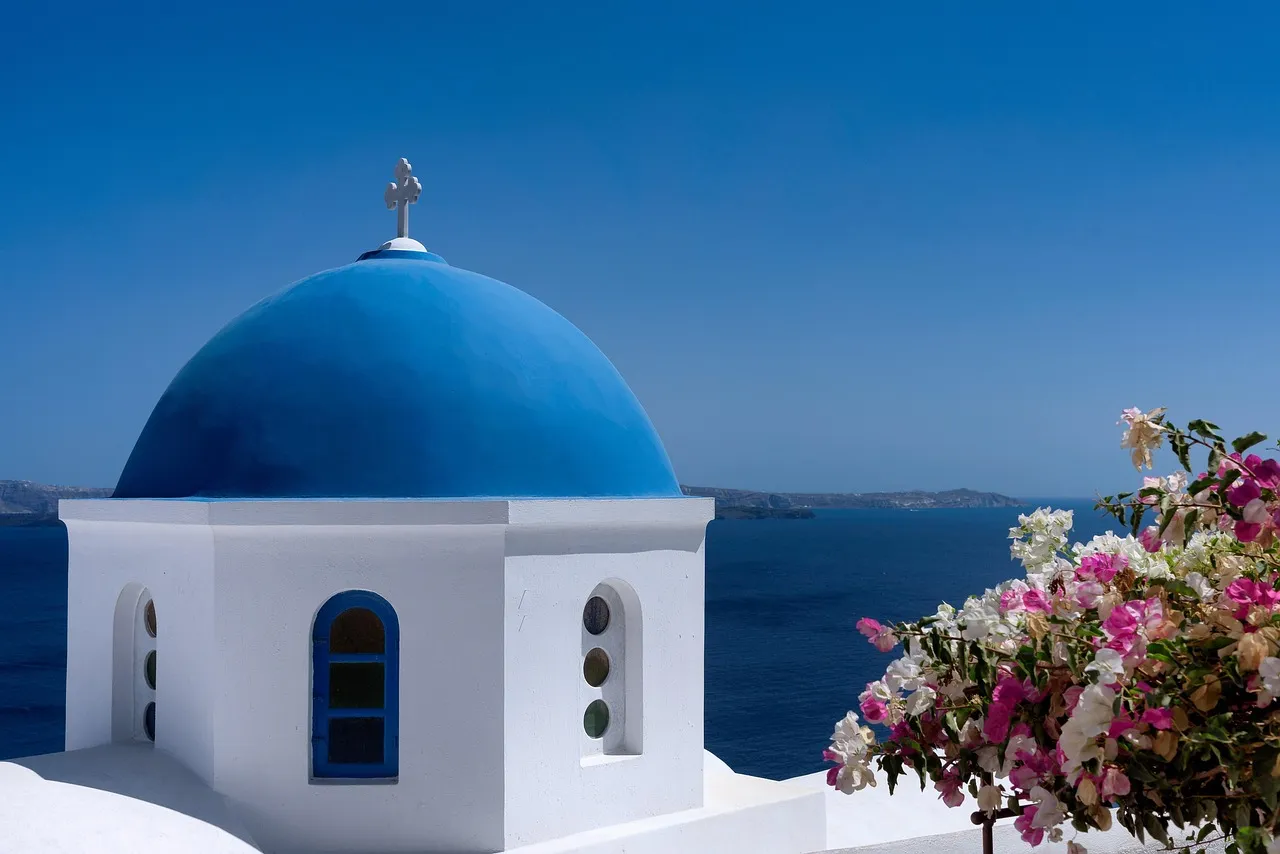
Oia is the postcard village and the sunset house, and it feels like both. By late afternoon in July and August the lanes narrow to a shuffle and the ruined castle viewpoint fills from midafternoon; the famous caldera sunset is shared by several hundred strangers shoulder to shoulder. Go anyway, but go on the island’s terms: walk the town in the morning while it is nearly empty, buy the postcards and the jewellery then, and come back for sunset as a spectator rather than a hunter.
The alternatives, in order of honesty. Stay on for a drink at any caldera-front terrace at the north end, where the crowd thins out ten minutes after the disc drops. Or skip the castle entirely and watch the same light from Imerovigli, which is quieter and only a short bus ride away. The one thing to never do is plan the sunset around dinner in Oia, because the terrace tables with the good view are booked weeks ahead and cost accordingly.
The beaches
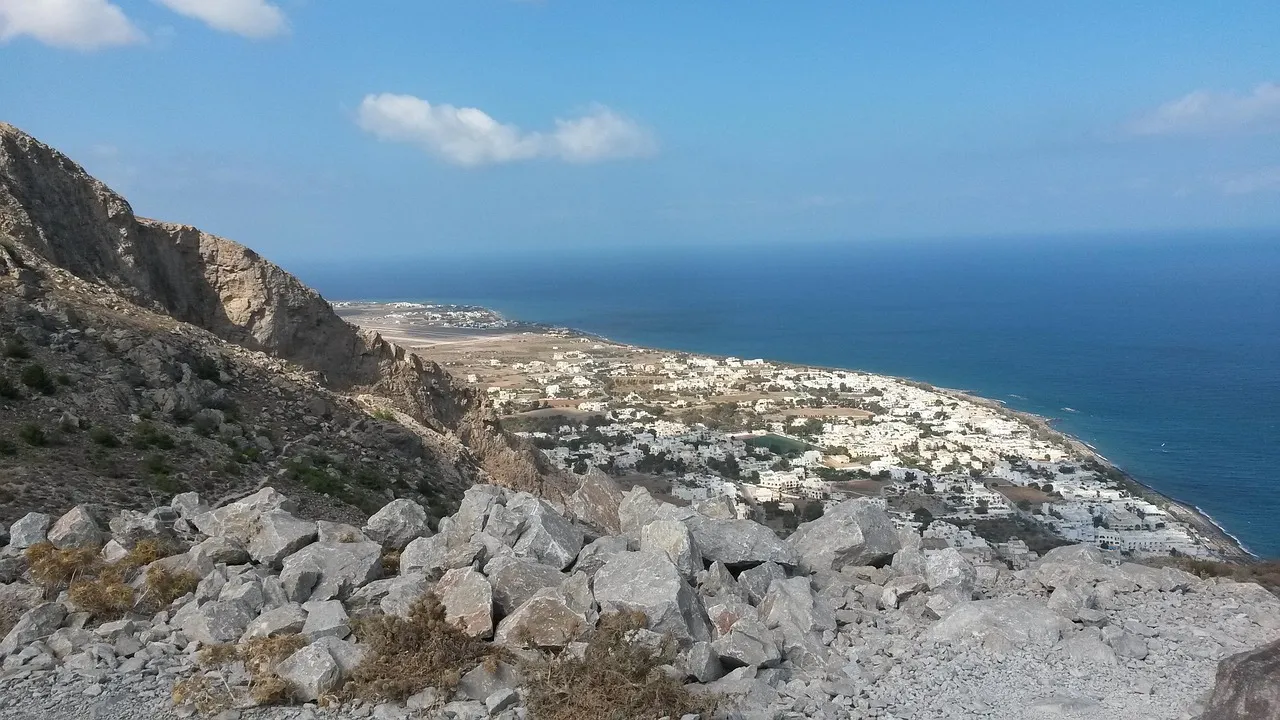
The beaches are the part most people get wrong, because the island markets itself from the cliff side and then drops you on one. There is no swimming from the caldera villages; the coast there is a sheer drop. The real beaches are on the east side, where the volcanic ash settled: Kamari, Perissa, and Perivolos, a near-continuous strip of black sand under the ridge of Mesa Vouno. Each has rows of sunbeds and tavernas behind. KTEL buses run from Fira frequently in season; the official 2026 fare is 2.20 EUR to Kamari and 2.70 EUR to Perissa.
Sunbed hire runs about 10 to 25 EUR a day depending on the beach and the row; the front row at Perissa in August is at the top of that range. Pack water shoes, because the black sand turns to sharper gravel at the waterline and the day heats up fast on dark ground. Lunch is a taverna under the umbrellas, a beach day costs close to nothing beyond the bed and the food, and it is the most relaxing day structure on the island.
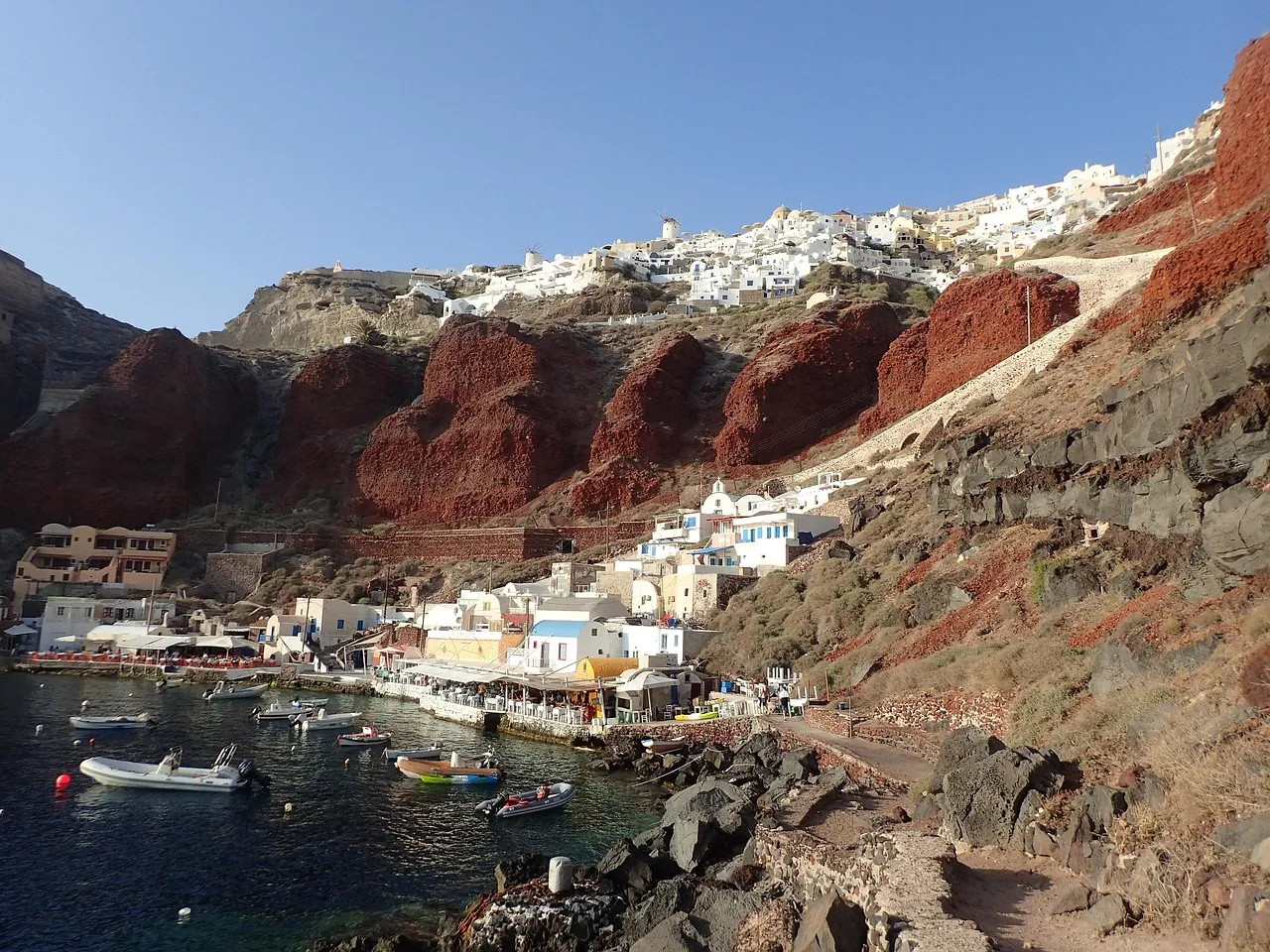
Red Beach needs a separate sentence, because the name appears in every list and most of them are now wrong. The famous red cliff on the southwest coast has had the land path closed since February 2025 after rockfalls, and the hillside they used to warn you about is now simply not safe to walk. The honest version is a boat angle: tour boats pass it on the way to the volcano and the hot springs, which is the way to see the red cliffs. Check current access if you specifically want to get closer.
The volcano and the boat trip
The volcano is not abstract on Santorini; you can walk on it. The half-day boat trip leaves from the old port under Fira and crosses the caldera to Nea Kameni, the young island in the middle where the crater still steams. A typical 2026 operator lists the trip at 28 EUR for adults and 14 EUR for children for about three hours including a guide, with the crater entrance fee on the island itself charged separately at about 5 EUR. The boats then stop at the hot springs off Palea Kameni, which is where the guides earn their honesty: the water is lukewarm, the ground underfoot is dark and slippery, and the swim is off the boat in open water.
Getting down to the old port is a small expedition in itself. The cable car is 10 EUR one way and the donkey ride is 10 EUR, though the ride is not recommended on animal-welfare grounds. The footpath beside them is 588 steep steps that everyone underestimates on the way down and pays for on the way up. The bus out of the gates in the evening is long; plenty of people ride the cable car down and walk the steps up as a compromise that loses nothing. Book the trip a day or two ahead in July; boat tours book out.
Akrotiri, the town in the ash
Akrotiri is the site that gives the island depth, a Bronze Age town buried by the same eruption that created the caldera around 1600 BC. It is often given a day slot and then quietly cut, and that is the first mistake worth making plans against. The site is a walkable settlement of three-storey houses, frescoes pulled from the walls, and drainage systems older than most museums on the island. You approach on raised walkways through the dig. It deserves the same morning as the walk does, booked early and enjoyed slowly.
The 2026 official entry is 20 EUR full and 10 EUR reduced, set by the Ephorate of Antiquities of the Cyclades, and the hours change through the season. The short version for planning is that the site closes early on Mondays and Thursdays, and the summer opening windows stretch to nearly eight o’clock on other days. Always check the official hours-and-prices page before the visit, because the closing day is the classic trap. The wall paintings and finds sit in the Museum of Prehistoric Thera in Fira, at 10 EUR, which pairs naturally with the site.
Food and wine
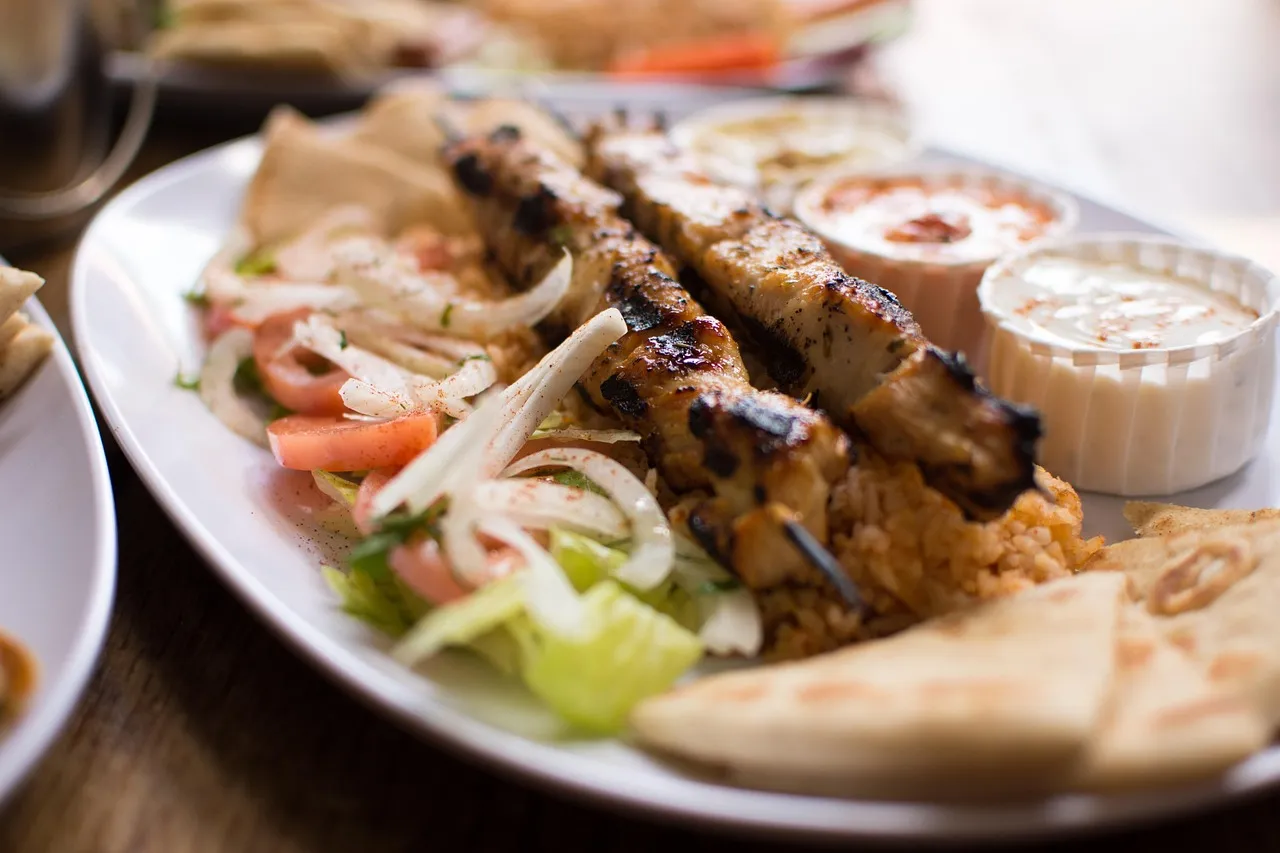
The food is the quiet third reason to come, and it runs on volcanic soil rather than tourist menus. Santorini grows its wine in basket-shaped vines that hug the ground against the meltemi wind, and the island’s Assyrtiko is the crispest white in Greece, a bottling that people walk past because they came for the sunset. The local classics are tomato keftedes, floury fava puree, and the island’s white aubergine; the seafood is whatever came off the boats that morning.
Prices are higher than mainland Greece but not insulting. A gyros by the bus station is 4 to 5 EUR, a taverna lunch is 12 to 18 EUR, and a dinner with a carafe of local wine is realistically 25 to 40 EUR a head depending on the village. Two honest rules: eat where the menus are in Greek, and drink the Assyrtiko with the seafood, because the salt and the acid are the pairing that built the island’s reputation.
Getting there
The flight is short and the division is simple. Athens to Santorini is about 45 to 55 minutes on Aegean, Sky Express, and the budget carriers, and it is the way to treat the island as a weekend. The catch is price: fares swing hard with booking lead and season, so the cheap seats belong to people who book early and travel outside August. The ferry is the honest alternative and often the better one on a longer Greece trip, because it lets you move the island loop without a separate flight.
On the sea, the 2026 options from Piraeus are a conventional run of about 7 to 8 hours with Blue Star from around 45 to 50 EUR on a deck seat. The Seajets fast ferry takes roughly 4 h 50 min, with Economy set at 89.70 EUR. The good island hops if you are looping rather than returning to Athens: Mykonos is 2 to 3 hours away, and Crete by fast ferry is under two hours, which folds neatly into the Greek island rotation. The port of Athinios is about ten minutes of winding road from Fira with a 2.70 EUR bus fare, and the ferries sell out days ahead in July; book them with the flight, not as an afterthought. If you are linking Greece with Italy, the Italy guide covers the Adriatic and Amalfi routes. See all guides for more.
Where to stay
Base yourself in one place and use the bus network, because the island is small enough that moving every two nights costs you half a day each time. The sensible first-timer bases:
Fira is the transport hub and the right default: the caldera cliff, the bus station, the museum, and the nightlife all stack together, and it is the one village where being central actually saves you money. Oia is the most beautiful and the most expensive, and staying there for the sunset view means paying resort prices to be in the middle of the crowd. Imerovigli is the quiet compromise, a caldera-front village with the best views and a short walk to Fira, but almost no evening life. Kamari and Perissa are the budget and beach answer, cheaper rooms on the black sand with a bus up to Fira when you want the caldera side.
What a day costs
Planning figures for 2026, per person per day and excluding flights and accommodation: a backpacker day runs 55 to 75 EUR, a comfortable budget day 85 to 120 EUR, and a mid-range day 140 to 200 EUR. The mid-range number is the honest one for most first-timers, because it covers a sit-down dinner, the volcano boat trip, one taxi, and the cable car without counting pennies. The day-to-day is not where Santorini breaks you; the accommodation is. These ranges are planning estimates built from the ferry, tour, entry and food prices cited in this guide, not an official index.
The season lever is bigger than the budget table. April runs at roughly half occupancy with rates 40 to 60 percent lower, and October trails it; May, June, September, and the first half of October give you the sane version of the island. July and August are the peak in the real peak sense: full ferries, double-room rates, and the meltemi wind building sandcastles across the beaches. If the dates are flexible, spend the money earlier in the season and it quietly funds the whole trip.
Practical information
| Getting around | Local buses follow the official KTEL fare table: Oia, Akrotiri, Kamari, and the airport at 2.20 EUR, Perissa and the port at 2.70 EUR. In season the Fira to Oia line runs about every 30 minutes. Taxis are scarce at night and quads book out, so stay on a bus line and know the last bus home. |
|---|---|
| When to go | May, June, September, and October give the sane island: swimming weather, shorter queues, prices below August. July and August bring the meltemi wind, full ferries, and peak rates. April is cheap and quiet, but many beach tavernas keep the shutters down until May. |
| Money | Cards work almost everywhere in Fira and Oia, but cash covers bus fares, market stalls, and small tavernas. Greece is a round-up tipping culture: a few euros on a good meal is appreciated and enough. |
| Health and safety | The caldera paths have no railings in places; keep back from the edge and skip the climbing-for-the-photo. The hot springs are lukewarm and the swim is from the boat in open water. Tap water is desalinated and brackish; bottled water is everywhere and cheap. |
| Sightseeing rhythm | Give the caldera walk and Akrotiri the early morning, the sunset the late evening, and the middle of the day to the sea. Book the fast ferry and the volcano boat a few days ahead in July, and always check the official Akrotiri hours page for the closing day. |
Disclosure. This blog post contains affiliate links. If you book through them, Mediterranean Vibes may earn a small commission at no extra cost to you; it is how the site stays up.