Granada is the last Moorish capital in Spain and the one place in Andalusia where the history is not behind glass. The Alhambra sits on one hill, the Albaicin faces it from the other, and the Sierra Nevada rises behind both. For two and a half centuries this was the seat of the Nasrid kingdom, and the palaces, water gardens, and narrow white lanes it left behind are the reason many travellers put Granada ahead of Seville or Cordoba.
The city is also the cheapest place to eat well in Spain. A drink comes with a free tapa at almost every bar, and a few rounds turn into dinner by accident. That is the second reason Granada deserves a night or two rather than a rushed day trip from the coast: the Alhambra takes a morning, the Albaicin takes an evening, and the bars take whatever is left.
This guide gives you the numbers that matter for 2026 with the source attached, because the Alhambra changes its tickets, hours, and entry rules more often than any other monument in the country. Ticket prices and booking windows, train and bus times, the free tapas rule, flamenco prices, and a daily budget range, plus the mistakes that cost first-timers the most. Every figure is checked against an official 2026 page, and the ones worth rechecking before you book are linked as you go. If you are planning the wider trip, compare all seven countries in the country index.
Plan and book
3 partners- Flights
Compare routes into Granada or Malaga and decide which airport suits the rest of your trip.
Search flights - Trains
The Madrid to Granada high-speed train, plus onward legs to Cordoba and Seville, in one search.
Compare trains - Where to sleep
Rooms in the Centro, the Albaicin, and the Realejo, sorted by area, price, and review score.
Find a room
The Alhambra
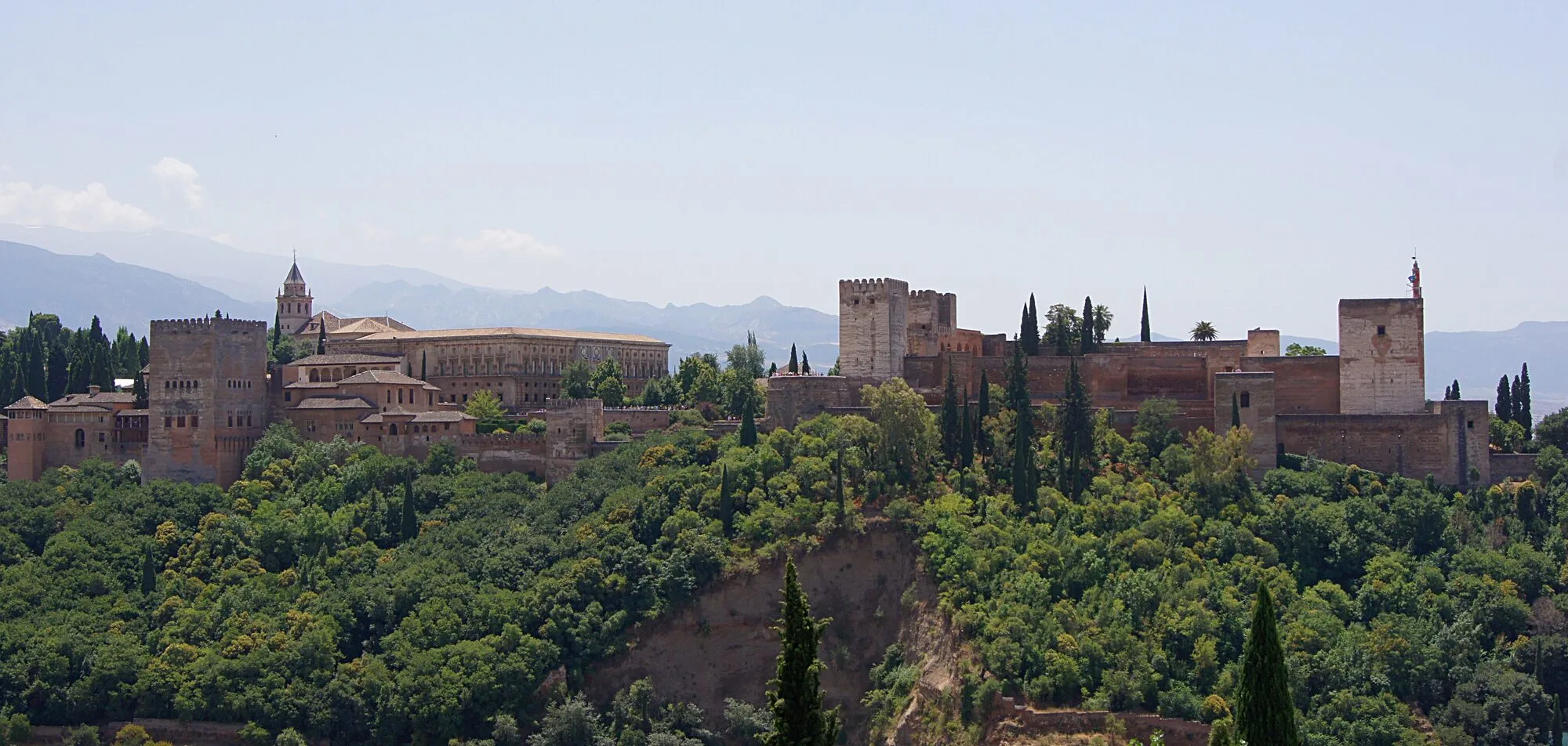
The Alhambra is not one palace but a walled city on the Sabika hill, and the ticket you want is the one that includes the Nasrid Palaces. That is where the famous rooms are: the Court of the Myrtles, the Hall of the Ambassadors, and the Court of the Lions with its fountain and carved arcades. The complex also holds the Alcazaba fortress, the Partal gardens, the Generalife, and the Palace of Charles V, a Renaissance building dropped inside a Moorish citadel. UNESCO listed it in 1984.
The general ticket is 22.27 EUR booked online, which is the 21 EUR adult price plus a 1.27 EUR booking fee, and it covers the whole complex. A gardens-only ticket, which excludes the Nasrid Palaces, is 12.73 EUR. Book on the official Patronato site, not through a reseller, and bring the same ID you booked with, because every ticket is named and checked at the gate. Sales open about three months ahead and the good slots go in days in spring and summer. Reduced rates exist for EU over-65s, youth-card holders, and large families, and under-12s enter free but still need a ticket.
The rule that catches people out is the Nasrid Palaces time slot. Entry is printed on the ticket and enforced by capacity control, so if you arrive late you lose that part of the visit with no refund. The summer season from April 1 to October 14 runs 08:30 to 20:00, the winter season from October 15 to March 31 runs 08:30 to 18:00, and the complex closes only on December 25 and January 1. The official page carries the current hours and ticket types.
Two smaller notes for 2026. The Golden Room courtyard in the Nasrid Palaces is under continuous protection for roof restoration, which hides the entrance facade to the Comares Palace, so part of the approach is boxed off. The Palace of Charles V and the Alhambra Museum are free to enter and do not need the general ticket. Allow about three hours for a full visit, and take the earliest slot you can get in summer, both for the light and for the cool.
The Generalife
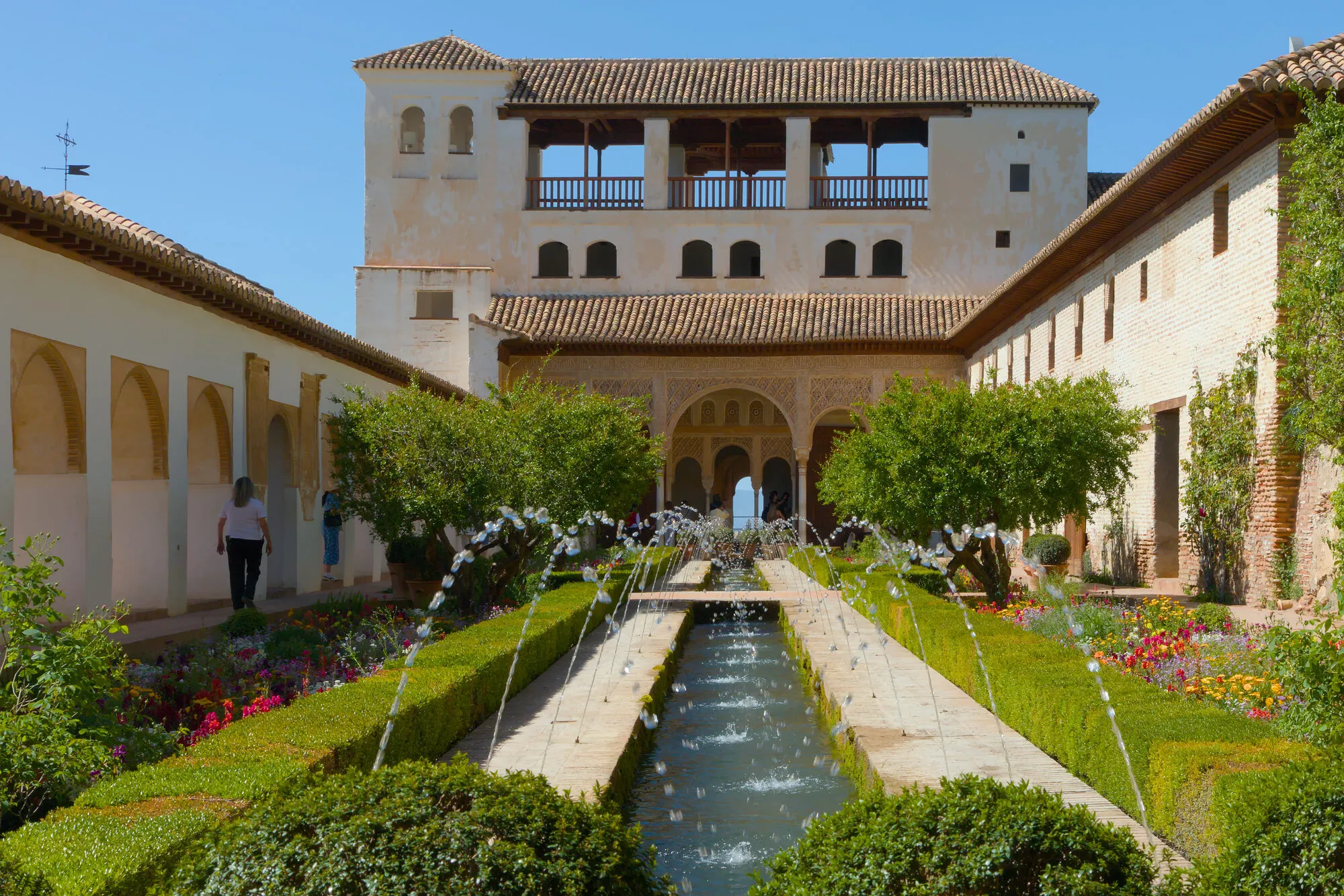
The Generalife is the summer palace and farm of the Nasrid kings, on the slope above the main complex, and it is included in the general ticket. The set piece is the Patio de la Acequia, a long water channel lined with jets, clipped hedges, and cypresses, with a pavilion at the end. It is the most photographed garden in Spain for good reason, and it is also the part most people rush when they are already tired.
Do it the other way around. The Generalife sits above the palaces and is reached by a separate path, so you can walk it first while the palace queue builds, then come back down. The water stairway and the upper gardens are quieter than the main courtyard, and the view back over the Alhambra roofs is the one that shows how large the complex really is.
The Albaicin
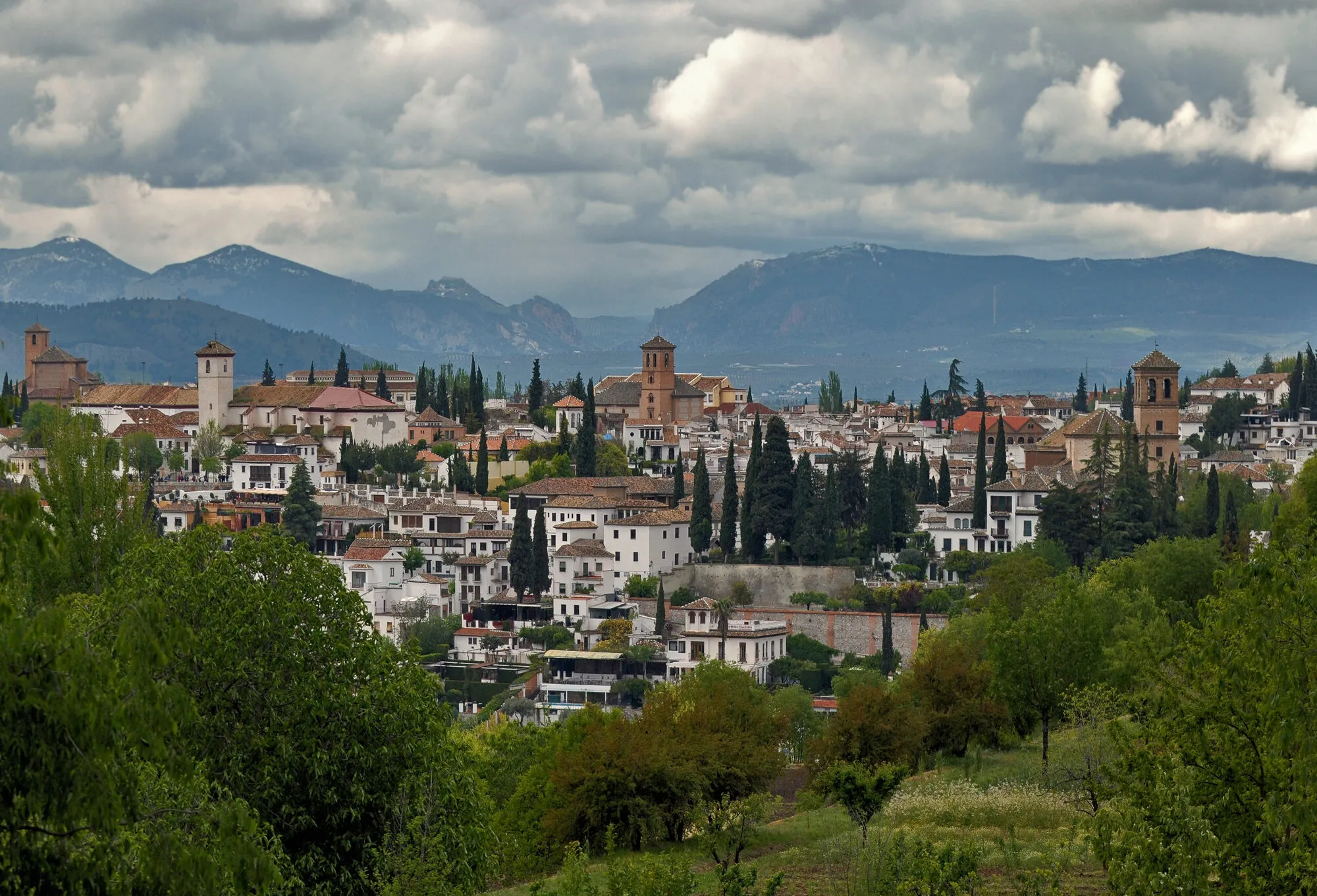
The Albaicin is the old Moorish quarter on the hill opposite the Alhambra, a UNESCO site in its own right and the best free thing in Granada. It is a maze of whitewashed lanes, walled gardens called carmenes, and small squares that open without warning onto a view. Calle Caldereria Nueva, the old silversmiths’ street at the bottom, is now a run of tea shops and craft stalls, and it is the natural way up from Plaza Nueva.
The viewpoint everyone comes for is the Mirador de San Nicolas, on the far ridge, where the Alhambra lines up against the Sierra Nevada. Go at sunset if you want the crowd and the red walls lit low, or go in the morning if you want the terraces to yourself and the light behind you. The climb is steep and cobbled, and the C31 bus from the centre stops near the top. The neighbourhood is where people live, so keep the noise down on the way home.
Sacromonte and flamenco
Sacromonte is the next hill along, the old Roma quarter of cave houses cut into the slope, and it is where Granada’s flamenco lives. The local form is the zambra, a cave-born style performed in a circle close enough that you can hear the singers breathe. Shows run about an hour, usually include one drink, and cost roughly 18 to 36 EUR depending on the venue and whether dinner is added. Book at least two days ahead, and a week or more in July and August, because the caves are small and fill up.
The walk between the two quarters is the point. Start at Plaza Nueva, follow the Carrera del Darro along the river under the Alhambra walls, pass the Paseo de los Tristes, and climb into Sacromonte. It takes about half an hour at an easy pace and gives you the river, the palace wall, and the cave district in one line. For a show, book a cave zambra rather than a big tourist tablao, if only for the distance between the performer and the room.
The cathedral and Royal Chapel
Granada’s cathedral is the first Renaissance church built in Spain after the Reconquista, begun in 1523 on the site of the main mosque. The scale is large and the interior is dark and cool, which is a relief in August. The official Archdiocese ticketing page sets the price at 10 EUR during the Kerygma exhibition running from May 8 to November 28, 2026, and 7 EUR outside those dates. Children under 12 are free, and the ticket includes an app-based audio guide. Hours are Monday to Saturday 10:00 to 18:15 and Sunday 15:00 to 18:15.
The Royal Chapel, the Capilla Real, is the part to put first. It holds the tombs of Ferdinand and Isabella, the monarchs who took Granada in 1492, along with their daughter Joanna and Philip the Handsome, and it is smaller and more affecting than the cathedral next door. Entry is 7 EUR, or 5 EUR for students under 25, people with disabilities, and large families, and under-12s go free. It opens Monday to Saturday 10:00 to 14:00 and 15:00 to 19:00, closes on Good Friday, December 25, and January 1, and the combined ticket with the cathedral rises by 3 EUR during the Kerygma exhibition.
Food and free tapas
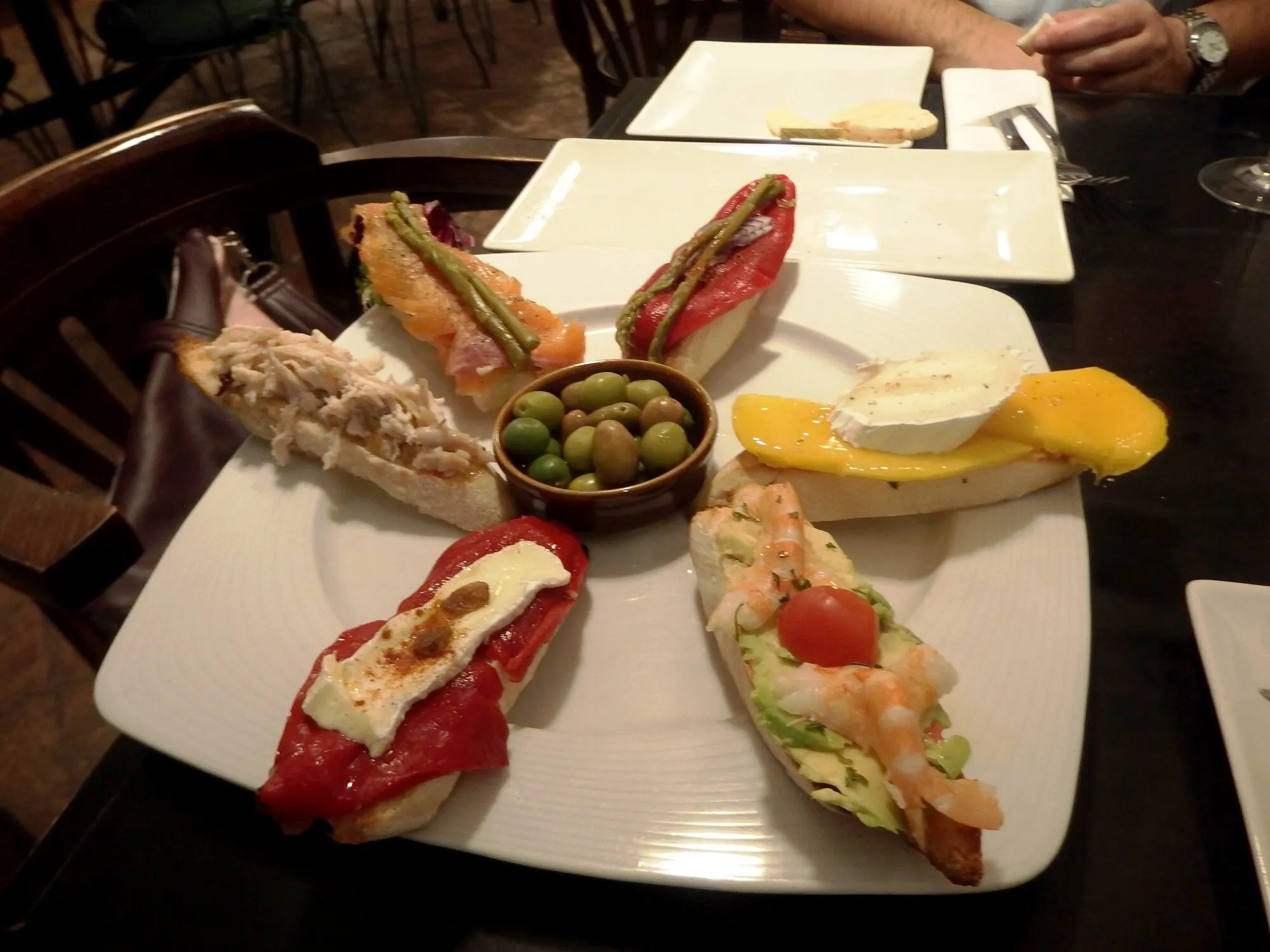
Granada is the last city in Spain where the free tapa survives as a daily habit rather than a tourist gimmick. Order a drink, any drink, and the bar brings a small plate with it, chosen by the kitchen and not by you. It changes with each round, so three or four drinks across three or four bars is a full meal for the price of the drinks. Beer and house wine run about 2.60 to 3.50 EUR in the centre, and soft drinks and even water qualify at most bars.
The best areas are Calle Navas, Calle Elvira, the Realejo, and Campo del Principe rather than the streets pressed against the cathedral, where the free tapa is rarer and the prices higher. Local dishes worth ordering when you do pay for food: habas con jamon, broad beans with ham; tortilla del Sacromonte, an omelette with sweetbreads; and pionono, the small rolled sponge cake the city claims as its own. A menu del dia at lunch is 15 to 18 EUR with a drink, and a sit-down dinner for two runs about 40 to 50 EUR.
Getting there
Granada was late to the high-speed network, and the train is still the easiest way in from Madrid. The fastest AVE runs the route in about 3 hours 14 minutes, the average is closer to 3 hours 35, and there are around five direct services a day. Fares swing hard with lead time, from roughly 14 EUR booked well ahead to 50 EUR or more on the day, so book on Renfe as soon as the date is fixed. Direct high-speed trains are Renfe AVE and Avlo; Iryo and Ouigo can appear as connecting options, so check the operator on your actual ticket. Andalusian hops are short: Cordoba is about 1 hour 35 away and Seville about 2 hours 30.
The bus is the cheap alternative. ALSA runs 22 to 27 services a day from Madrid in 4 hours 30 to 6 hours 15, from as little as 9 EUR. Granada’s bus station is on the northern edge of the city, a short taxi or bus ride from the centre. From the coast, Malaga is 1 hour 30 to 2 hours 30 by bus.
By air, Granada-Jaen airport (GRX) is 17 km west of the city. The Alsa line 245 bus meets the flights and takes about 45 minutes into the centre, and a taxi is a fixed rate of about 25 to 30 EUR. In the city, single bus tickets cost 1.60 EUR, a Credibus card drops that to around 0.53 EUR a trip, and the C30, C31, C32, and C34 minibuses serve the Alhambra, the Albaicin, and Sacromonte. Walking from Plaza Nueva up to the Alhambra is only about a kilometre, but it is all uphill.
Where to stay
Base yourself within walking distance of Plaza Nueva and you will barely need the buses. The Centro and Plaza Nueva area puts the cathedral, the Albaicin path, and the Alhambra buses on your doorstep, and it is the most convenient and the most expensive. The Albaicin itself is atmospheric and quiet at night, with cave hotels and small guesthouses, but every walk home is uphill. The Realejo, the old Jewish quarter below the Alhambra, is local, flatter by Granada standards, and good value. Sacromonte has the cave accommodation and the flamenco, and the steepest streets in the city. If you have an early train or bus, the area around the stations is the low-stress choice.
Day trips
The Sierra Nevada starts at the edge of the city. The ski resort is 31 km away, about 40 minutes by car or 45 to 60 by the Granada to Sierra Nevada bus from the main bus station, and in summer the same roads lead to hiking trails rather than lifts. It is the southernmost ski resort in Europe.
The other day trips are by rail. Cordoba is 1 hour 35 away and holds the Mezquita, the mosque-cathedral that alone justifies the trip. Seville is 2 hours 30 and has its own full guide. The white villages of the Alpujarras, on the south side of the Sierra Nevada, are better by bus or car. The honest note is the same as Seville’s: Cordoba works as a real day trip, but the Alhambra deserves a night in Granada, so do not try to see both from a single base in one day. Browse all the guides for the rest of Andalusia.
What a day costs
Planning figures for 2026, per person per day and excluding travel to Granada. A backpacker day runs about 65 to 85 EUR: a hostel bed from 37 EUR, a supermarket breakfast, free tapas with two or three drinks, one paid monument, and city buses. A comfortable day runs about 150 to 200 EUR: a three-star room from 80 EUR, a proper lunch and dinner, the Alhambra, a flamenco show, and the odd taxi. Accommodation is the line that moves most with season, and these ranges are planning estimates built from the ticket, transport, and food prices cited in this guide, not an official index.
The season matters more than the daily budget. April, May, September, and October are the good months, with warm days and manageable queues. July and August are genuinely hot: Granada Airport averages a maximum of about 34.8°C in July and 34.2°C in August, according to AEMET, and the sensible rhythm is the Alhambra at opening, a long lunch, and the Albaicin after 19:00. The Alhambra also runs night visits in the warm months, which is the coolest way to see the Nasrid Palaces and the one most first-timers forget exists.
Practical information
| Getting around | Single city bus tickets are 1.60 EUR, and a Credibus card brings the trip down to about 0.53 EUR with free transfers for an hour. The C30, C31, C32, and C34 minibuses climb to the Alhambra, the Albaicin, and Sacromonte, because the old quarters are too steep to enjoy in the heat. Night buses run until 06:00. Most of the centre is walkable, but count the hills. |
|---|---|
| When to go | April, May, September, and October give the best mix of weather and crowds. June is hot but workable with early starts. July and August average a maximum near 35°C and reward the Alhambra at opening and the Albaicin after sunset. Book the Alhambra about three months ahead for spring and summer dates. |
| Money | Spain uses the euro. Cards work almost everywhere, including bars, but keep some cash for small tapas bills and market stalls. Tipping is not expected; rounding up or leaving a euro or two on a good meal is normal. The free tapa with a drink is the local custom, not a promotion. |
| Health and safety | Granada is a safe city, with the usual caution for pickpockets around the Mirador de San Nicolas and on crowded buses. The real hazards are heat in summer and the cobbled, uneven lanes in the Albaicin and Sacromonte, so wear shoes with grip. Tap water is safe to drink. |
| Sightseeing rhythm | Give the Alhambra the early morning and book the Nasrid Palaces slot in advance, carry your passport because the ticket is named, then slow down. The cathedral and the Royal Chapel suit midday, the Albaicin and the Mirador the late afternoon, the bars the evening, and Sacromonte the night. Check the official pages for the cathedral and Royal Chapel before you go, since the Kerygma exhibition changes the price until late November 2026. |
Disclosure. This blog post contains affiliate links. If you book through them, Mediterranean Vibes may earn a small commission at no extra cost to you; it is how the site stays up.