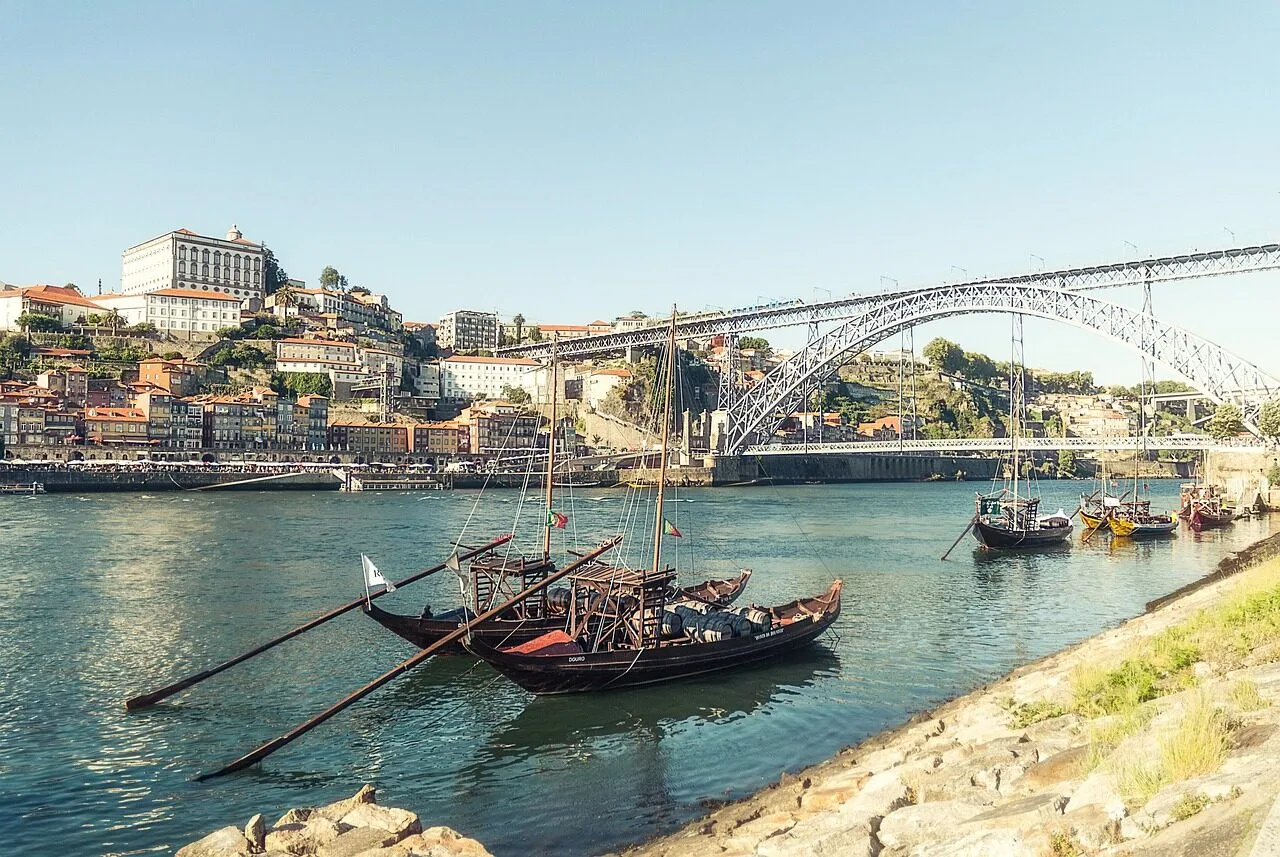
Porto is Portugal’s second city, built on the steep north bank of the Douro where the river meets the Atlantic, and it is one of the oldest cities in the country: the Romans called it Portus, the port, and the historic centre has been a UNESCO World Heritage site since 1996. Across the water sits Vila Nova de Gaia, where the port wine lodges have aged and blended the wine for centuries, and the two banks are joined by the iron arch of the Dom Luis I bridge.
The city is compact enough to walk but almost never flat, so the day tends to run downhill to the river and uphill everywhere else. The reward is one of the most photogenic skylines in Europe: the tiled facades of the Ribeira, the rabelo boats on the water, and the bridges stacked one behind the other toward the sea. It is also a natural pairing with the Douro Valley, which starts an hour or so upriver by train.
This guide gives you the numbers that matter for 2026 with the source attached, because ticketing and transport fares changed at the start of the year. What Livraria Lello and the Clerigos Tower cost, how the port lodges and the Andante transport card work, the Douro train, the airport transfer, and a daily budget range, plus the timing decisions that make the hills easier. Every figure is checked against an official 2026 page, and the ones worth rechecking before you book are linked as you go. If you are planning the wider trip, compare all seven countries in the country index.
Plan and book
3 partners- Flights
Fly into Porto from wherever you start, or compare it with Lisbon and take the train north.
Search flights - Trains
The Lisbon to Porto high-speed train, plus onward legs to Braga and Guimaraes, in one search.
Compare trains - Where to sleep
Rooms in the Ribeira, Baixa, Cedofeita, and Gaia, sorted by area, price, and review score.
Find a room
Ribeira and the riverfront
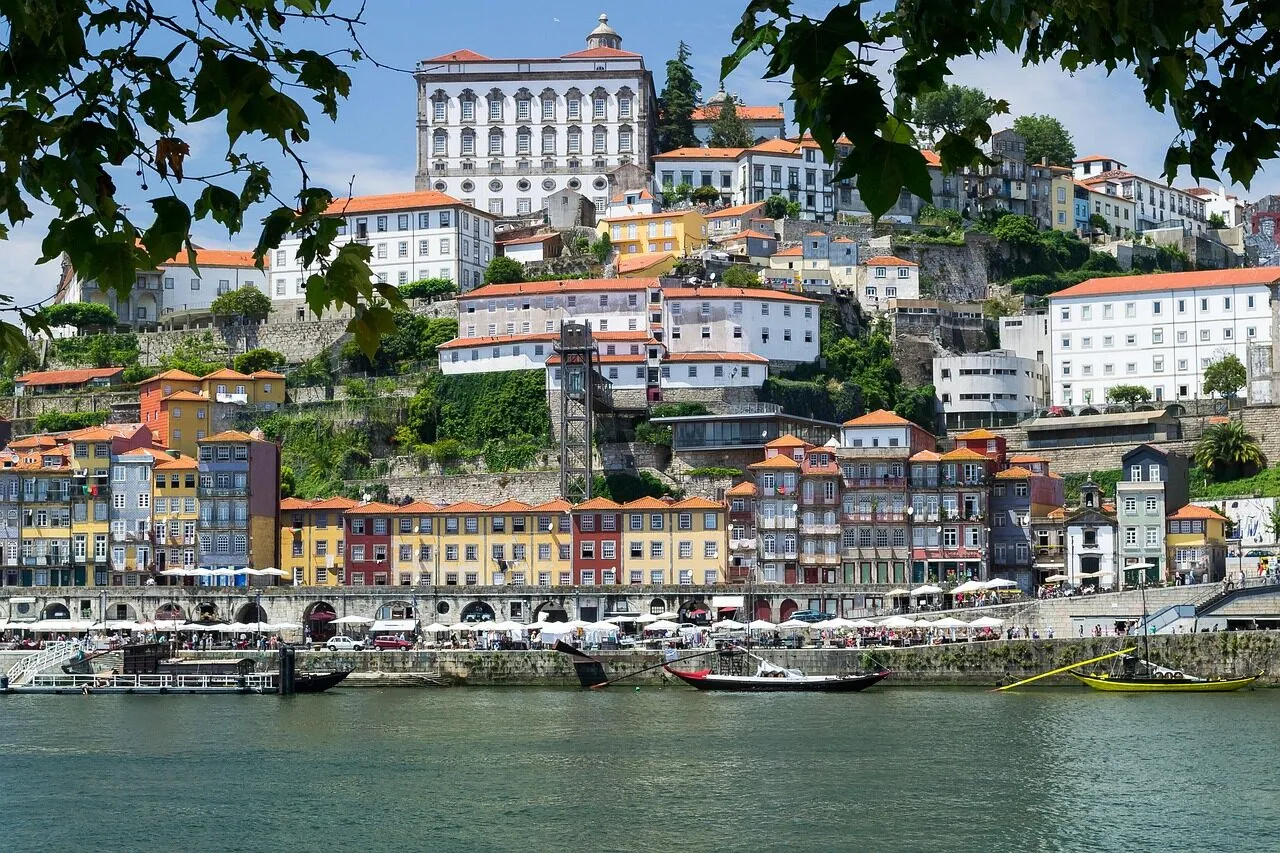
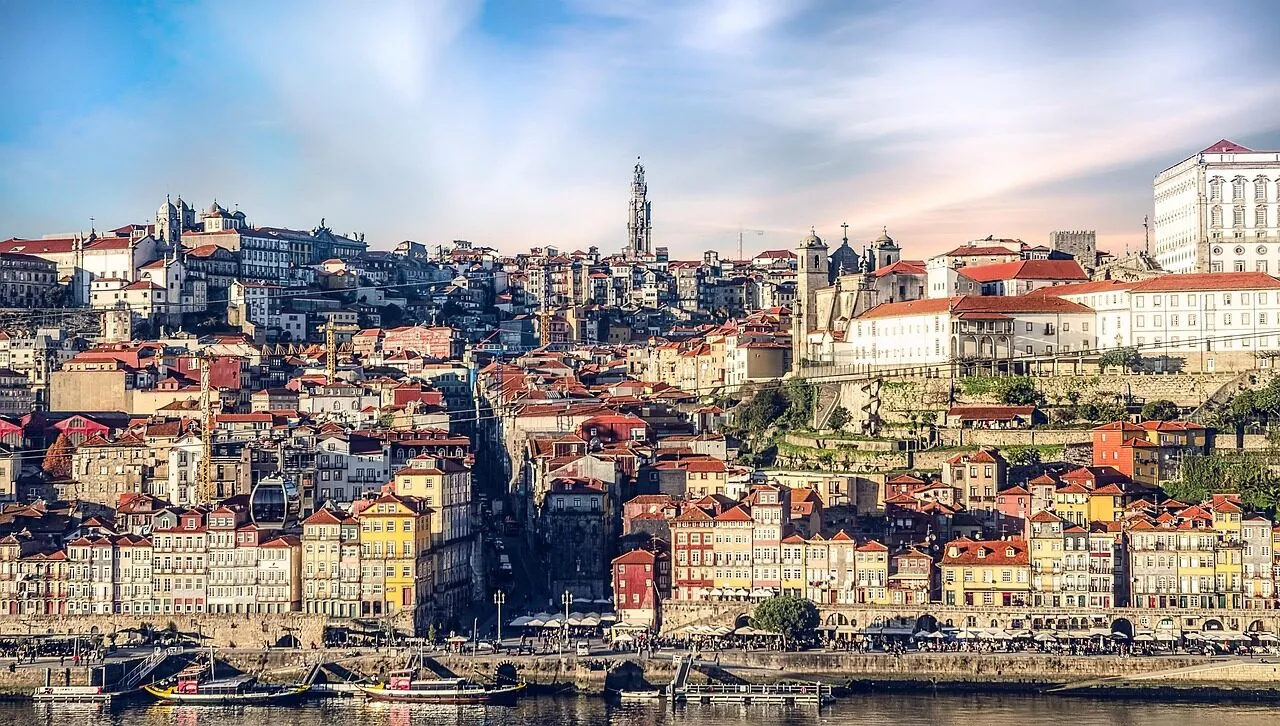
The Ribeira is the old riverside quarter, a tight row of tall, narrow houses in ochre, blue, and white that runs along the north bank between the bridges. It is where Porto feels oldest and most itself, and it has been part of the UNESCO historic centre since 1996. The quays, the Cais da Ribeira and the Cais da Estiva, are lined with restaurants and bars, and the rabelo boats that once carried port barrels downriver are moored along the wall.
Eat here once for the setting, then move inland for dinner. The riverfront is the most expensive and most tourist-facing part of the city, and the better value sits a few streets back in the lanes around the cathedral or across in Gaia. The Ribeira is at its best in the late afternoon, when the light hits the tiled facades, and on a summer evening when the whole bank turns into one long table.
The Dom Luis I bridge
The Dom Luis I is the symbol of the city, a double-deck iron arch opened in 1886 and designed by Theophile Seyrig, a former partner of Gustave Eiffel. It carries two levels: the upper deck, about 45 metres above the water, takes pedestrians and Metro Line D, while the lower deck carries cars, taxis, and cyclists. Both decks are free to cross on foot, and walking the upper level from Porto to Gaia is the single best free thing to do here.
The classic view is from the Gaia side, at the Serra do Pilar monastery at the far end of the upper deck, which looks back at the Ribeira and the rooftops. On the Porto side, the Miradouro da Vitoria is the quiet alternative, a small terrace above the roofs a short climb from the cathedral. Do the upper crossing at sunset if you can, and take the lower deck back so you see the arch from underneath.
Livraria Lello
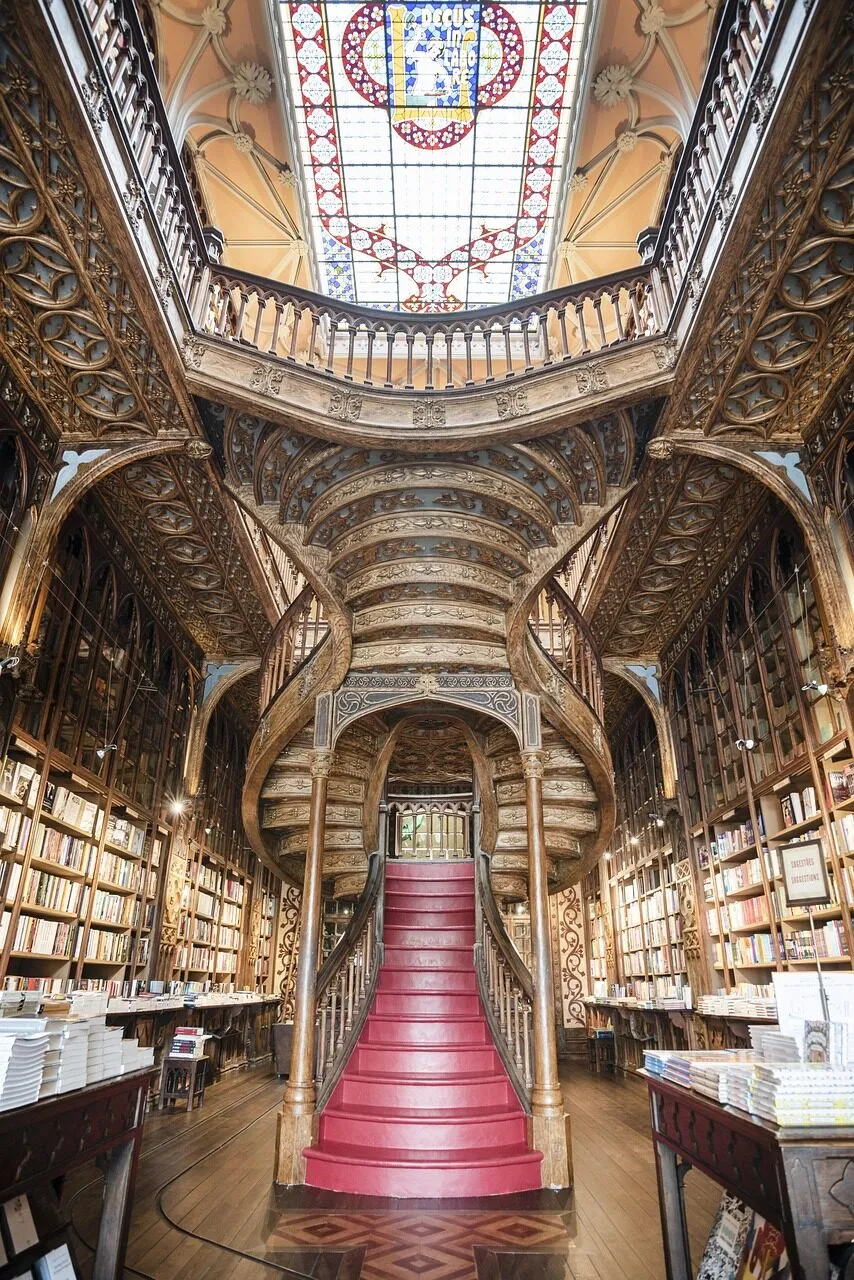
Livraria Lello is the ornate bookshop that everyone has seen in photographs, with its crimson forked staircase, stained-glass skylight, and carved wood shelves. It is small, genuinely beautiful, and very busy, so the visit is a matter of timing. Entry is by a 15.95 EUR Ticket-Voucher, which is deducted from a book purchase, per the official ticket store. It is open every day from 09:00 to 19:30 and closes on a handful of dates including 1 January, 1 May, 24 June for Sao Joao, and 25 December.
Book the Ticket-Voucher online before you travel and take the earliest or latest slot you can, when the stairs are less of a queue than a staircase. Lunchtime and the last hour are usually quieter. The ticket is valid for 60 minutes after your slot and is non-refundable, so pick a time you can keep. If books are the point, the voucher makes the entry effectively free once you buy something.
The Clerigos Tower
The Clerigos Tower is the Baroque bell tower by Nicolau Nasoni that stands over the city centre, about 75 metres tall and climbed by 225 steps. The ticket to the tower and museum is 10 EUR, or 7 EUR for students, with a 5 EUR night ticket on special evenings, per the official Clerigos ticket office. It opens daily from 09:00 to 19:00, with the last entry 30 minutes before closing, and runs later in the Easter, summer, and Christmas seasons. The church itself is free.
The climb is the price and the view is the reward: red rooftops, the river, the bridge, and the Cordoaria gardens below. Go in the morning for the clearest light or take one of the summer night ascents for the city lit up. The square in front is a good place to sit with a coffee afterward, since the whole cafe district of Cordoaria and the Aliados is a short walk away.
Port wine and Gaia
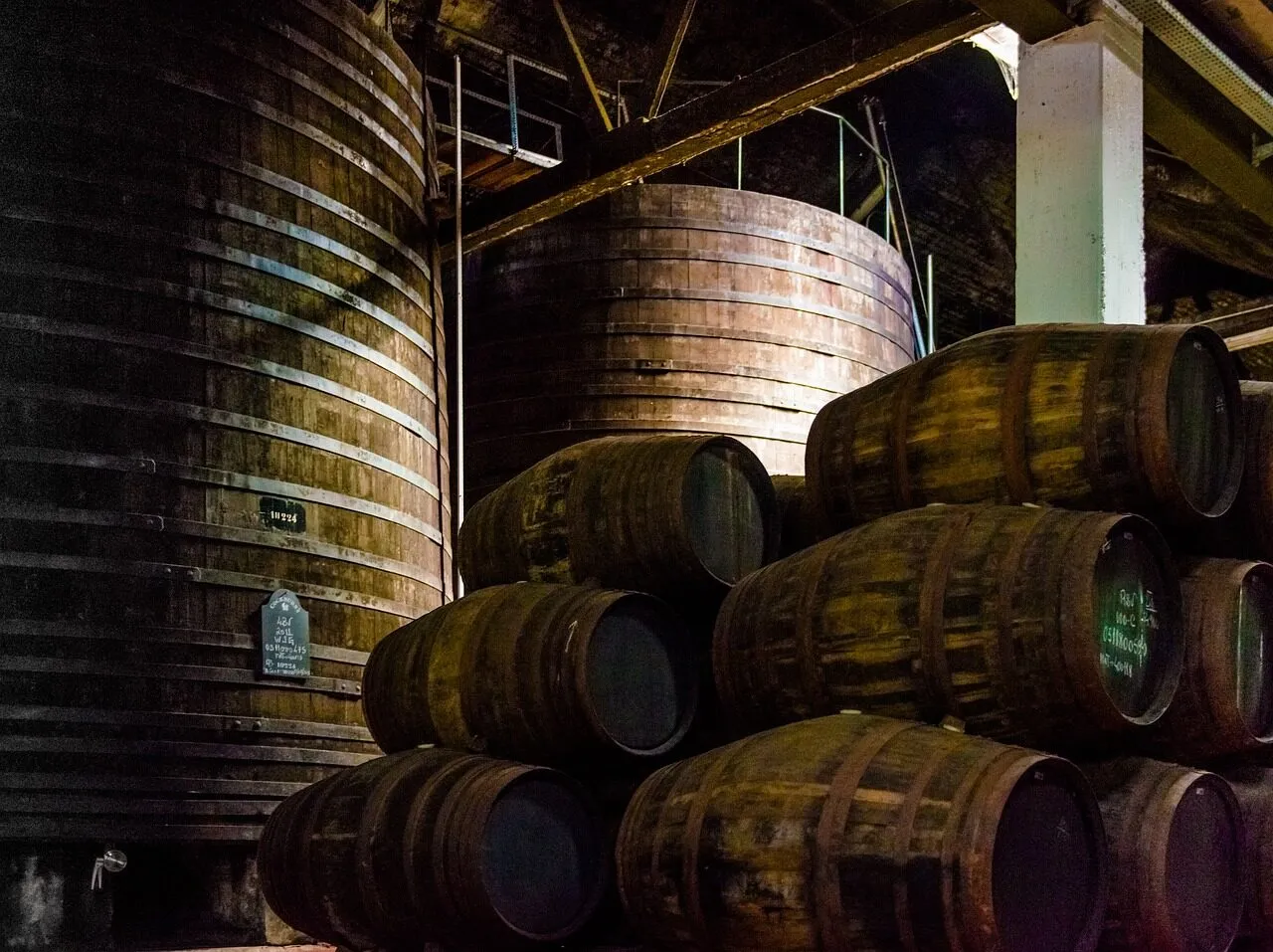
Port wine is the reason the city exists, and the lodges where it is aged are all across the river in Vila Nova de Gaia, a short walk over the lower bridge or one metro stop on Line D. A cellar tour and tasting is the essential Porto experience, and prices are similar across the big names: Ramos Pinto is around 20 EUR, Calem 22 to 27 EUR, Taylor’s about 25 EUR, Sandeman 23 to 35 EUR, and Cockburn’s from 26 EUR, per the lodges’ official and operator pages. Most run 50 minutes to an hour and include three wines.
Book ahead, especially between May and September, because the good slots go early. The tasting usually walks you through the main styles: ruby, which is young and fruity; tawny, aged in wood and nutty; LBV, a single-vintage ruby; vintage, the rare declared years; and white port, served chilled. A glass at a bar costs about 4 to 8 EUR, so you can sample widely without committing to a full tour. For a guided visit, compare cellar tours here.
Sao Bento, the cathedral, and the Bolsa
Sao Bento station is a working railway station and a sight in its own right, its main hall covered in around 20,000 azulejo tiles by Jorge Colaco that show Portuguese history, battles, and rural life. Entry is free, and it is worth ten minutes even if you are not catching a train. It was built on the site of a Benedictine monastery and opened in 1916.
Up the hill, the Porto Cathedral is the Romanesque fortress-church at the top of the old town. The church is free to enter; the cloister, museum, and tower need a small ticket, around 4 EUR, which is best confirmed at the door because it is not consistently published online. The terrace in front gives a good view over the rooftops to the river. A few minutes downhill, the Palacio da Bolsa, the old stock exchange, costs 14 EUR, or 9.50 EUR for students and seniors, and is visited on a mandatory guided tour of about 30 minutes, with the Arab Room the highlight; check the official Bolsa page for the current schedule.
The Douro Valley
The Douro Valley is the day trip, and the train is the cheapest and most scenic way to do it. The Linha do Douro runs from Sao Bento and Campanha along the river to Regua in about 1 hour 40, and on to Pinhao in about 2 hours 20. Sit on the right side leaving Porto for the river views. The line between Marco de Canaveses and Regua reopened in April 2026 after engineering works, and the full route to Pinhao is running again.
At Pinhao the quintas are often within walking distance, boat cruises leave from the harbour, and the Casal de Loivos viewpoint is nearby. A return ticket to Pinhao costs roughly 20 EUR, but check CP for the current fare, and note that the Andante city card is not valid on this line. If you would rather not plan the timetable, a full-day small-group tour with a cruise and a tasting removes the driving and usually runs 50 to 120 EUR.
Porto food
Porto eats heartily, and the dish to try first is the francesinha: a thick sandwich of ham, sausage, and steak under melted cheese and a beer-and-tomato sauce, created in the city in 1953. It is a full meal and costs about 10 to 16 EUR. The other local classics are the bifana, a garlicky pork sandwich that is the cheapest good lunch in town at around 3 to 5 EUR, best at Conga on Rua do Bonjardim; bacalhau in its many forms; tripas a moda do Porto, the tripe and bean stew that gave the city its nickname; and caldo verde, the kale and potato soup.
Prices are gentle. An espresso at a local cafe is under 1 EUR, a menu do dia at lunch is 8 to 12 EUR with a drink, and dinner with wine runs about 20 to 35 EUR a head. The Mercado do Bolhao, restored and reopened in 2022, is the place to graze and buy produce; it is free to enter and opens Monday to Friday 08:00 to 20:00 and Saturday 08:00 to 18:00, closed on Sunday, per the official market. Eat where the menus are in Portuguese and the tascas are full, and you will spend half what the Ribeira asks.
Getting there
Porto airport, Francisco Sa Carneiro (OPO), is about 11 km northwest of the centre, and the metro is the easy way in. Line E runs to Trindade in roughly 25 to 30 minutes; a Z4 ticket is 2.30 EUR plus a one-off 0.60 EUR Andante card, per the Metro do Porto fare page. Buses 601, 602, and 604 also run to the centre, and a taxi is around 20 to 35 EUR.
By rail, the Lisbon to Porto line is fast and frequent: the Alfa Pendular takes about 2 hours 39 minutes from Lisbon Oriente or Santa Apolonia to Porto Campanha, and the Intercidades about 3 hours. Fares start from roughly 11 to 20 EUR on advance promo tickets and rise to 28 EUR for the Intercidades and 36 EUR for the Alfa Pendular, per Omio and CP, so book early. Braga is about 54 to 71 minutes away and Guimaraes about 1 hour 10 to 1 hour 20, both 3.60 EUR from Sao Bento. Buses from Lisbon run from around 9 EUR.
Where to stay
Base yourself within walking distance of the river and the metro and you will not need much else. The Ribeira is the atmospheric choice, right on the water with the tiled facades outside your window, but it is loud at night and the most expensive. The Baixa around Aliados and Rua de Santa Catarina is the practical centre: transport, shops, and cafes on the doorstep, and a short walk to everything. Cedofeita is the quieter, more local option, full of cafes and small galleries and good value.
Gaia, across the bridge, is where the port lodges are; it is slightly cheaper, has the best views back at Porto, and is a metro stop or a walk from the centre. Foz do Douro, at the river mouth, is the upmarket seaside option with the beach and the ocean, though it is a tram or bus ride from the old town. If you have an early train, stay near Campanha station.
What a day costs
Planning figures for 2026, per person per day and excluding flights. A backpacker day runs about 50 to 70 EUR: a hostel bed, cafe breakfast, a bifana or market lunch, one paid sight, and metro or tram rides. A mid-range day runs about 100 to 160 EUR: a hotel room, a proper lunch and dinner, a cellar tour, the Clerigos or Bolsa ticket, and taxis where the hills win. The all-in average most travellers report is around 160 EUR a day once accommodation is included, and these ranges are planning estimates built from the ticket, transport, and food prices cited in this guide, not an official index.
The season shifts the numbers. May, June, and September give the best mix of sun and manageable crowds; July and August are the peak and the busiest. Porto is a wet city, and November, December, and January are the rainiest months, so pack for rain outside summer. The one date to plan around is Sao Joao on the night of 23 to 24 June, when the whole city fills the streets, fireworks are launched over the Douro between the bridges, and 24 June is a public holiday.
Practical information
| Getting around | Buy a rechargeable Andante card (0.60 EUR) and top it up by zone: a central Z2 trip is 1.40 EUR, the airport Z4 is 2.30 EUR. A 24-hour Tour card is 7.75 EUR. Metro, city buses, and urban trains are included; the historic trams and the Guindais funicular are ticketed separately at about 3.50 EUR each. The centre is walkable but very hilly. The Porto.CARD has been suspended since July 2026, so do not plan around it. |
|---|---|
| When to go | May, June, and September are the sweet spot for weather and crowds. July and August are warm but busy and more expensive. November to January is the wettest stretch, so bring a rain jacket. Sao Joao on 23 to 24 June is spectacular and fills the city, so book accommodation early if you want it. |
| Money | Portugal uses the euro. Cards work almost everywhere, including metro ticket machines, but keep a little cash for small tascas and market stalls. Tipping is not expected; rounding up or leaving a euro or two on a good meal is normal. Wine and port are cheaper than in most of western Europe. |
| Health and safety | Porto is a safe city, with the usual caution for pickpockets on the historic tram, in the Ribeira, and around Sao Bento. The main hazards are the steep cobbled streets and the rain, so wear shoes with grip. Tap water is safe to drink. |
| Sightseeing rhythm | Book Livraria Lello, the Clerigos Tower, and any port cellar in advance, and take the earliest slots for the busy sights. Give the Ribeira and the bridge the late afternoon and sunset, the Douro Valley a full day, and the Gaia cellars an afternoon. Cross the upper bridge on foot at least once, and keep the cathedral and Bolsa for the middle of the day. |
Disclosure. This blog post contains affiliate links. If you book through them, Mediterranean Vibes may earn a small commission at no extra cost to you; it is how the site stays up.