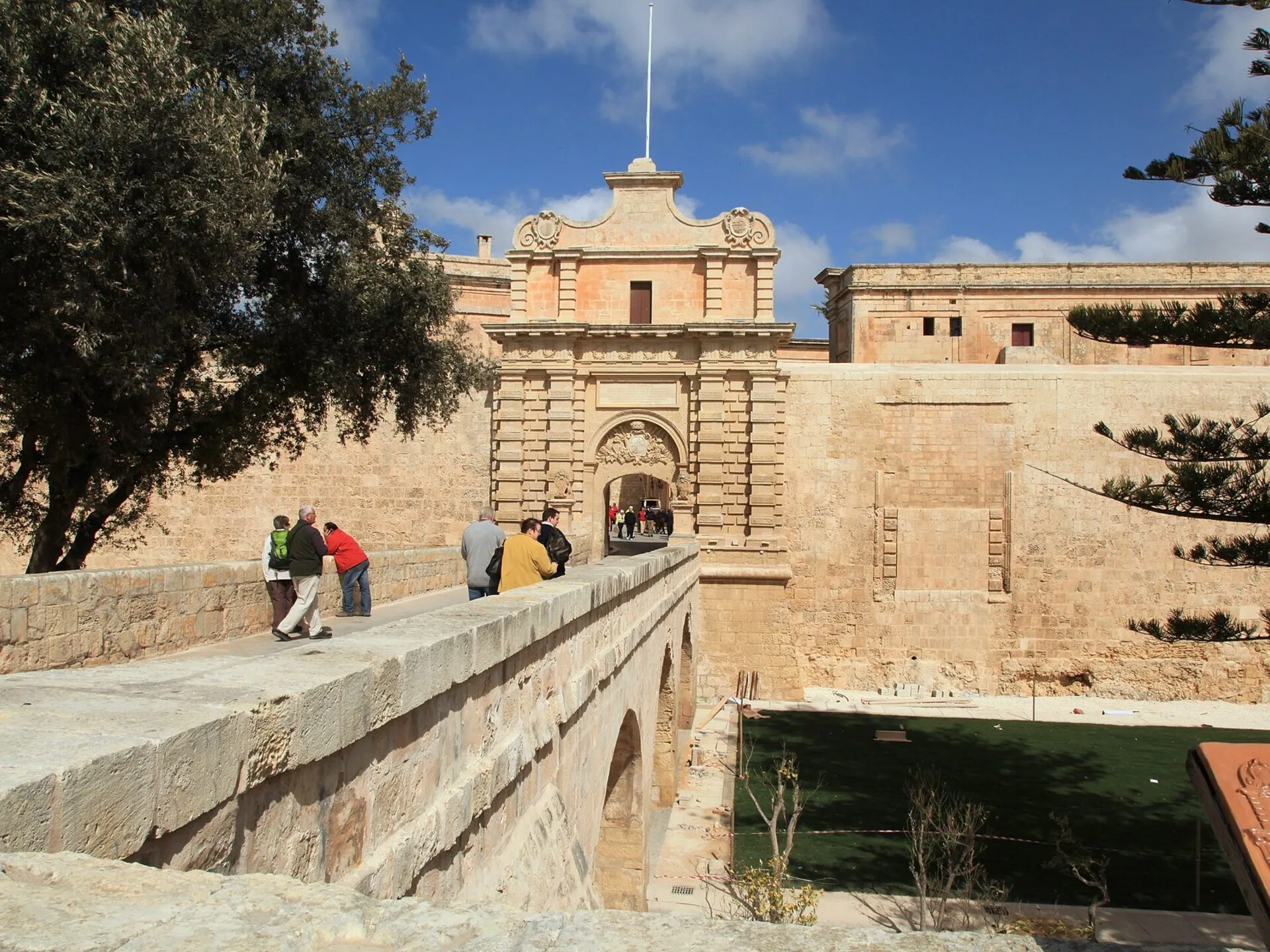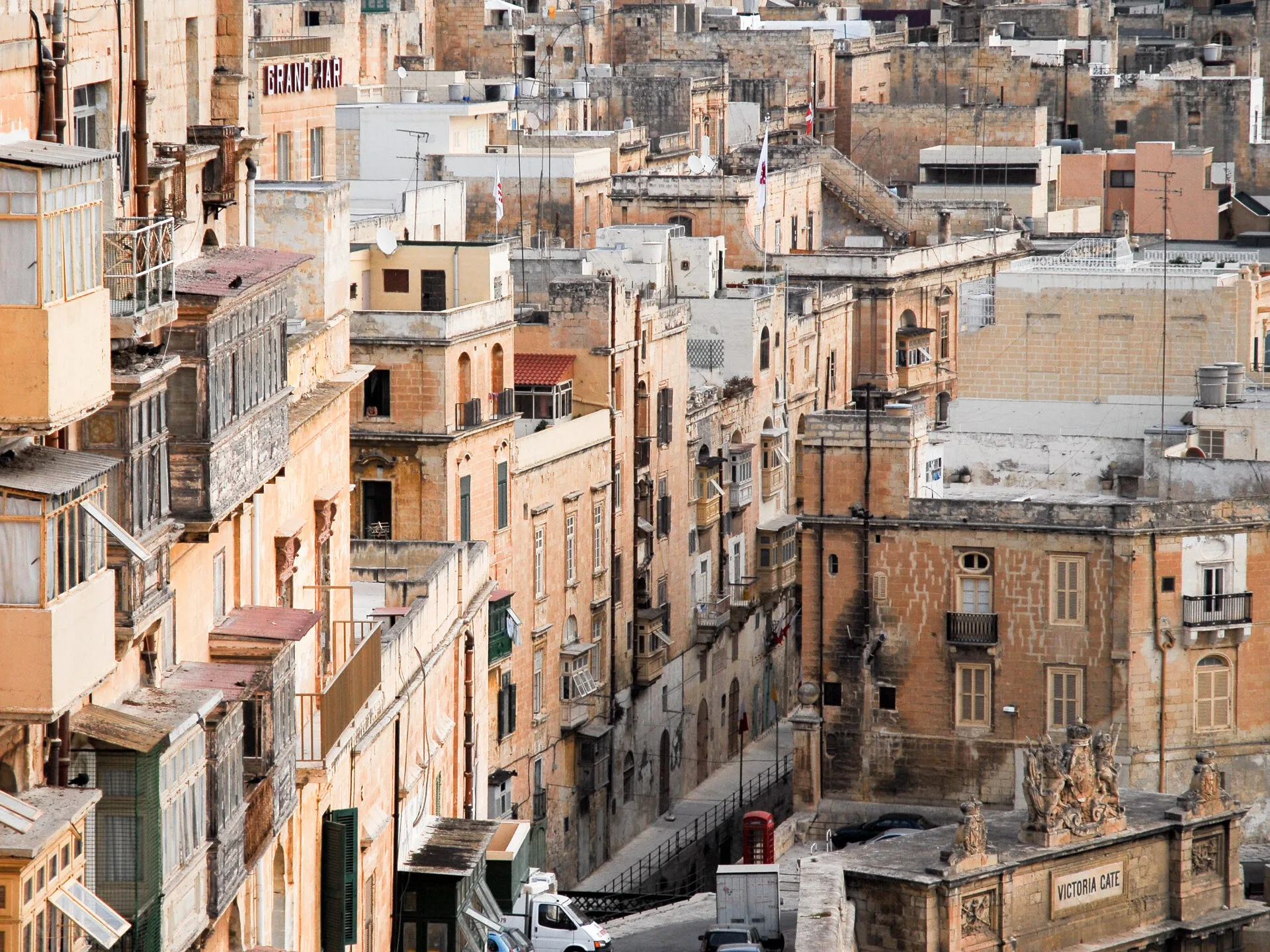
Valletta is a capital you can walk across in twenty minutes and still not finish in a day. The whole city is about 0.8 square kilometres on a limestone peninsula between two harbours, laid out on a rigid grid by the Knights of St John after the Great Siege of 1565. It has been a UNESCO World Heritage Site since 1980, and the listing covers a compact 74.66 hectares, which is a formal way of saying that almost every street has something on it worth stopping for.
The city is also small in population, roughly 5,200 residents according to the national statistics office, which is why it feels less like a capital and more like a fortified town that happens to hold the country’s museums, churches, and government. That density is the appeal. You can see a Baroque cathedral with a Caravaggio, walk a harbour bastion, eat a pastizz, and watch a cannon fire, all within a few hundred metres of each other.
This guide covers Valletta itself and none of the day trips, because the city rewards a full day on its own. It gives the 2026 gate prices with the source attached, the ferry, bus, and lift fares, the times the Saluting Battery fires, and the timing that keeps you ahead of the cruise crowds. Every figure is checked against an official operator or heritage page, and the one fare that two official sources still disagree on is flagged where it appears. If you are planning the wider island, the Malta guide covers the rest of the country.
Plan and book
3 partners- Flights
Compare fares into Malta International Airport from wherever you are starting.
Search flights - Ferries
Link the trip with the Virtu Ferries crossing between Valletta and Sicily.
Compare routes - Where to stay
Rooms in Valletta and across the harbour, sorted by area, price, and review score.
Find a room
The city in a day
Valletta sits on a ridge that runs roughly from the City Gate at the landward end to Fort St Elmo at the tip, with the Grand Harbour on one side and Marsamxett Harbour on the other. The main spine is Republic Street, which carries you past the major sights, and the parallel Merchants Street, which carries the market and the shops. Because the city is so narrow, you are never more than a few minutes from a view over water, and the steep side streets that drop toward the harbours are the ones with the best photographs.
The standard first visit runs through the upper half of the city. Enter through the City Gate, pass the Triton Fountain and the modern Parliament building, and work your way down Republic Street. The two anchors are St John’s Co-Cathedral and the Upper Barrakka Gardens, which sit a short walk apart. Between them you have the National Museum of Archaeology, the Grand Master’s Palace, and the tiny lanes that hold the city’s older character. It is a day that works as well at a slow pace as a fast one, and the only real planning decision is when to see the cathedral to avoid the biggest crowds.
St John’s Co-Cathedral
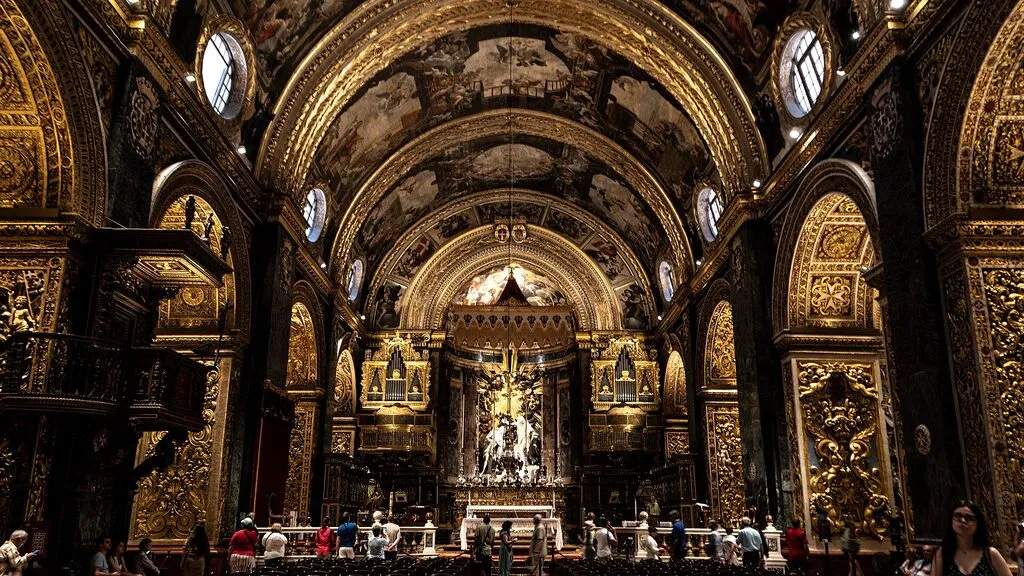
St John’s is the reason many people come to Valletta, and it is not a modest building. The exterior is plain by design, a fortress-church for a military order, but the interior is an explosion of gilt and colour that the Knights decorated over two centuries. The vaulted ceiling and the side altars were painted by Mattia Preti with scenes from the life of John the Baptist, and the floor is a patchwork of inlaid marble memorials to the knights who are buried beneath it.
The single work that draws the most attention is Caravaggio’s The Beheading of St John the Baptist, painted around 1608 and hanging in the Oratory. It is the largest painting he made and the only one he ever signed, and seeing it in the building it was made for is a different experience from seeing it reproduced. A second Caravaggio, St Jerome Writing, is in the same complex.
Admission is 15 EUR for adults, 12 EUR for seniors and students, and free for children under 12, with a belfry tour at 5 EUR on top, according to the official cathedral site. It opens Monday to Saturday from 09:00 to 16:45, with the last entry at 16:00, and closes on Sundays and public holidays. The honest advice is to arrive at opening or after 15:00, because the middle of the day is when the tour groups and the cruise passengers overlap.
The Grand Harbour
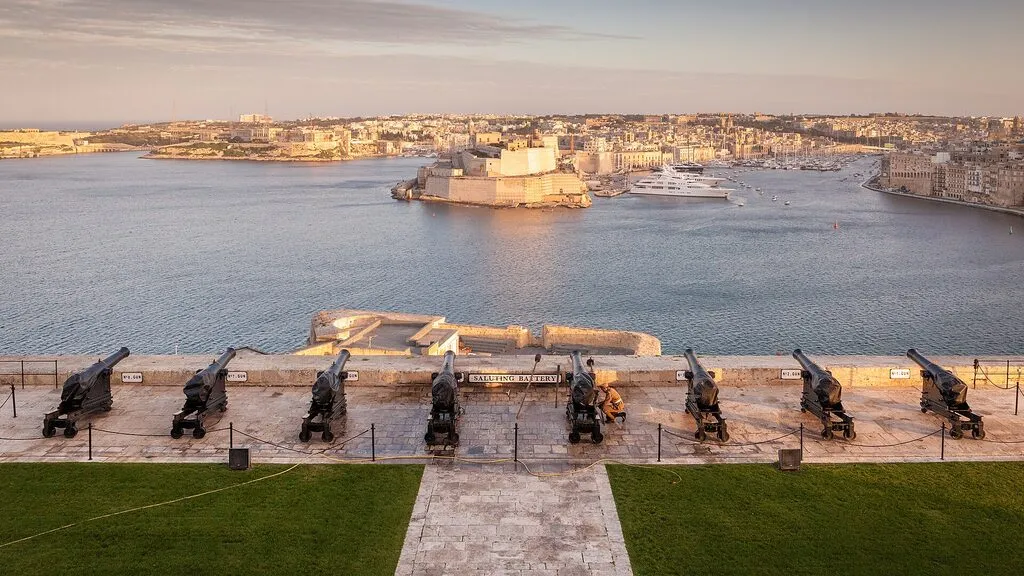
The Grand Harbour is the reason the city exists in this shape, and the Upper Barrakka Gardens are the best free view of it. The gardens sit on the bastion above the harbour, with a terrace that looks across to Fort St Angelo and the Three Cities on the far side. It costs nothing to walk in and take the view, and it is the one spot in Valletta where you understand the geography of the whole island at once.
Below the gardens is the Saluting Battery, a row of cannons that still fires a blank round as a time signal. The battery fires at 12:00 and again at 16:00, with commentary starting about 11:45, and viewing the platform costs 3 EUR for adults and 1 EUR for children, per the official operator. It is open Monday to Saturday from 09:30 to 17:30, while the gardens above stay free and open daily.
Getting between the harbour level and the gardens is part of the fun. The Barrakka Lift, run by Transport Malta, climbs 58 metres in about 23 seconds and costs 1 EUR for a same-day return, though it is free with a personalised tallinja card. The same card also makes the Valletta Ferry to Sliema and the Three Cities free; without the card, adult fares on the operator’s 2026 schedule are a few euros each way, and the crossing to Sliema takes about fifteen minutes. Two official sources still list different ferry fares, so treat the price at the quay as the live one.
Fort St Elmo
At the tip of the peninsula, Fort St Elmo guards the entrance to both harbours and holds the National War Museum inside its walls. It is the site of the most brutal fighting of the Great Siege in 1565, and the museum works through Malta’s military history up to the Second World War, including the island’s ordeal under bombardment and the George Cross awarded to the whole country in 1942.
The combined fort and museum ticket is 10 EUR for adults, 7.50 EUR for seniors, students, and youths, and 5.50 EUR for children aged 6 to 11, with infants free, according to Heritage Malta. It generally opens daily from around 09:00 with the last admission about half an hour before closing, but the hours shift by season, so check the current schedule before you go. On In Guardia Sundays the fort hosts a historical reenactment at 11:00 in the summer and autumn months, and the museum then opens later.
Fort St Elmo is at the far end of the city from the City Gate, which makes it a natural finish to a loop rather than the first stop. Walk down Republic Street, see the cathedral and the market, cross to the Upper Barrakka, then continue along the bastions to the fort. It is a walk of under two kilometres with several places to stop, and it puts the whole city behind you when you turn around.
Streets and museums
Valletta’s smaller sights fill the space between the headline stops, and several of them are worth an hour each. MUZA, the national community art museum in the former Auberge d’Italie on Merchants Street, tells the story of Maltese art from the medieval period to the present; admission is 10 EUR for adults and 5.50 to 7.50 EUR for children, seniors, and students, per MUZA, and it is easiest to visit from March to October, when it opens daily from 10:00 to 18:00.
The Grand Master’s Palace on St George’s Square is the other major interior, with its armoury and state rooms, at 12 EUR for adults and between 8 and 10 EUR for children, youths, and seniors, per Heritage Malta. Note that parts of the palace close for state functions and the Throne Room has been shut for works, so check before planning a visit around it. For something smaller and more domestic, Casa Rocca Piccola, a lived-in 16th-century townhouse on Republic Street, opens for guided tours at 12 EUR for adults and 8 EUR for students, with children under 13 free, and includes the family’s rock-cut wartime shelters.
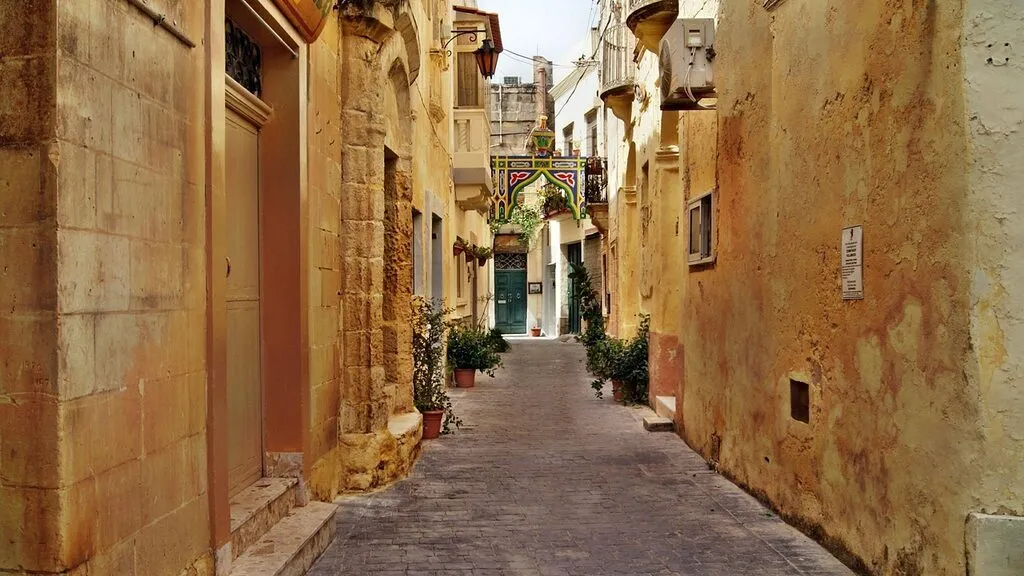
Between the sights, the pleasure of Valletta is the street itself. The enclosed wooden balconies, the painted shop signs, the sudden view at the end of a downhill lane toward the water, and the church facades at every turn are what people remember more than any single museum. Give the walking a full afternoon and let the map go.
Food and drink
Valletta is a good city to eat cheaply and a good city to eat well, and the two are not in conflict. The national snack is the pastizz, a flaky pastry filled with ricotta or mushy peas, sold from small shops and counters for well under a euro. It is the best breakfast or midday stop in the city, and a couple of them with a coffee costs less than a single museum ticket.
For a proper meal, the restored Is-Suq tal-Belt, the covered market on Merchants Street, mixes produce stalls with food counters serving Maltese ftira, pasta, and street food under one roof. Away from the market, the old streets and the waterfront hold a mix of Maltese restaurants and wine bars, with rabbit stew, fresh fish, and the local cheeses on the traditional end of the menu. For the evening, the harbour-side lanes and the area around Strait Street are where the city’s bars cluster, quieter than the day-tripper strip and better for it.
The one pattern worth knowing is the timetable rather than the cuisine. Valletta is a working capital that empties in the evening, so lunch and mid-afternoon are the busy, tourist-heavy hours, while dinner is calmer and the restaurants are easier to get into. It is also worth checking whether a restaurant is inside the cruise footprint on a heavy ship day, because the difference between a quiet lunch and a wait for a table is usually just one street.
Getting there
Malta International Airport sits about eight kilometres from Valletta, and the bus is the straightforward way in. The airport express service TD4 runs to the city in roughly twenty minutes for 3 EUR, per Malta International Airport, and the regular day routes cost 2 EUR in winter or 2.50 EUR in summer, valid for two hours including transfers, according to Malta Public Transport. The old X-prefix airport routes were retired in April 2025, so disregard any guide still listing X1, X4, or X7 as the airport line.
Once inside the city walls you do not need transport at all, but the wider bus network is useful for the rest of the island. A single day-route ticket is 2 EUR in winter or 2.50 EUR in summer, a night route is 3 EUR, a seven-day adult Explore card is 25 EUR, and a 12-single-journey card is 19 EUR and can be shared. The best value if you are staying a while is the personalised tallinja card, which makes day routes, night routes, the Valletta Ferry, and the Barrakka Lift free.
By sea, the Valletta Ferry connects the city with Sliema and the Three Cities, which is the pleasant way to reach either side of the harbour. For travel from Sicily, Virtu Ferries runs a high-speed catamaran from Pozzallo to the Valletta area in about one hour forty-five, and the route is bookable in advance.
Where to stay
Staying inside Valletta means waking up in the city before the day-trippers arrive, which is the single best argument for paying the premium. The hotels are mostly small and set in converted townhouses, and the supply is limited, so book early for spring and autumn. Being inside the walls also means you can see the cathedral at opening and the bastions at sunset without a bus ride in between.
The alternative is across the water. Sliema and St Julian’s, on the Marsamxett side, have more and cheaper accommodation, a modern waterfront, and a regular ferry link to Valletta that takes about fifteen minutes. The Three Cities, on the Grand Harbour side, are quieter and more residential, with the same ferry access and better value. If you want the city on foot and are prepared to pay for it, stay in Valletta; if you want space and a lower rate, base in Sliema and commute by ferry.
What a day costs
Valletta’s costs are moderate for a European capital, and the day is easy to budget because the big items are fixed. A full sightseeing day with St John’s at 15 EUR, the Grand Master’s Palace at 12 EUR, and Fort St Elmo at 10 EUR comes to 37 EUR in admissions before food, and swapping one museum for MUZA or Casa Rocca Piccola changes that by only a euro or two. Add the Saluting Battery at 3 EUR and a day of bus travel at 2 to 2.50 EUR, and the daytime total lands around 42 to 45 EUR per person.
Food is where you can spend freely or not at all. A pastizz breakfast and a market lunch keeps eating under 15 EUR for the day, while a sit-down dinner with wine in the old town can run 30 to 45 EUR for one. A comfortable day with two paid sights, a market lunch, and a proper dinner sits around 70 to 90 EUR per person, and a lean day with one sight and street food sits near 30 EUR. These are planning estimates built from the gate, fare, and food prices cited above, not an official index, and accommodation is the item that really moves the total. Time the visit to April to June or September to October and you usually pay less than in the July and August peak.
Practical information
| Getting around | Valletta is walkable end to end in about twenty minutes, with steep side streets and steps. The Barrakka Lift (1 EUR return, free with a tallinja card) links the harbour to the Upper Barrakka Gardens, and the Valletta Ferry crosses to Sliema and the Three Cities. |
|---|---|
| Opening times | St John’s Co-Cathedral is open Monday to Saturday from 09:00 to 16:45 and closed on Sundays and public holidays. Heritage Malta sites including Fort St Elmo, the Grand Master’s Palace, and MUZA generally run daily from around 09:00 or 10:00, with hours varying by season. Check each site before you go. |
| Prices | St John’s 15 EUR adult, Fort St Elmo 10 EUR, the Grand Master’s Palace 12 EUR, MUZA 10 EUR, Casa Rocca Piccola 12 EUR, the Saluting Battery 3 EUR. Children, students, and seniors pay less at each. City buses cost 2 EUR in winter and 2.50 EUR in summer. |
| When to go | April to June and September to October give the best weather and the fewest crowds. July and August are hottest, around 31 C, and hit the peak cruise season, when the old town fills from late morning to mid afternoon. |
| Cruise crowds | Valletta Cruise Port handled a record 962,966 passenger movements in 2025 across 385 calls, so on heavy days the Republic Street corridor and the cathedral are busiest at midday. See St John’s at opening or after 15:00 and save the walking for the early evening. |
| Money and etiquette | Malta uses the euro and cards are widely accepted, though small pastizzerias may prefer cash. Dress modestly to enter churches, covering shoulders and knees, and keep voices down inside St John’s, which is an active place of worship as well as a monument. |
Disclosure. This blog post contains affiliate links. If you book through them, Mediterranean Vibes may earn a small commission at no extra cost to you; it is how the site stays up.