Antalya sits on Turkey’s south coast where the Taurus Mountains drop to the Mediterranean, and it has grown into one of the country’s biggest cities. The province holds 2,722,103 people, according to the Turkish Statistical Institute’s count of 31 December 2024, and about 30 percent of all foreign visitors to Turkey come through this stretch of coast. The city itself is a working place of around 1.5 million people, not just a resort.
The shape of a visit comes from that mix. At the centre is Kaleici, a walled old town of Ottoman houses, Roman gates, and a small harbour that has been in use for two thousand years. Around it, the coast runs east and west in long beaches, and inland the hills hide some of the best-preserved Roman ruins in the Mediterranean.
This guide gives you the numbers that matter for 2026 with the source attached, because museum prices for foreign visitors are now set in euros, and they change by season. What Kaleici and the ruins cost, how the tram and airport transfer work, which beaches to pick, the day trips worth the drive, and a daily budget range. Every figure is checked against an official 2026 page, and the ones worth rechecking are linked as you go. If you are planning the wider trip, compare all seven countries in the country index.
Plan and book
3 partners- Flights
Find a direct route into Antalya from wherever you start, and compare the summer charter fares early.
Search flights - Tours and tickets
Perge and Aspendos day trips, boat tours along the coast, and skip-the-line entry where it helps.
Browse tours - Where to sleep
Rooms in Kaleici, Konyaalti, and Lara, sorted by area, price, and review score.
Find a room
Kaleici and Hadrian’s Gate
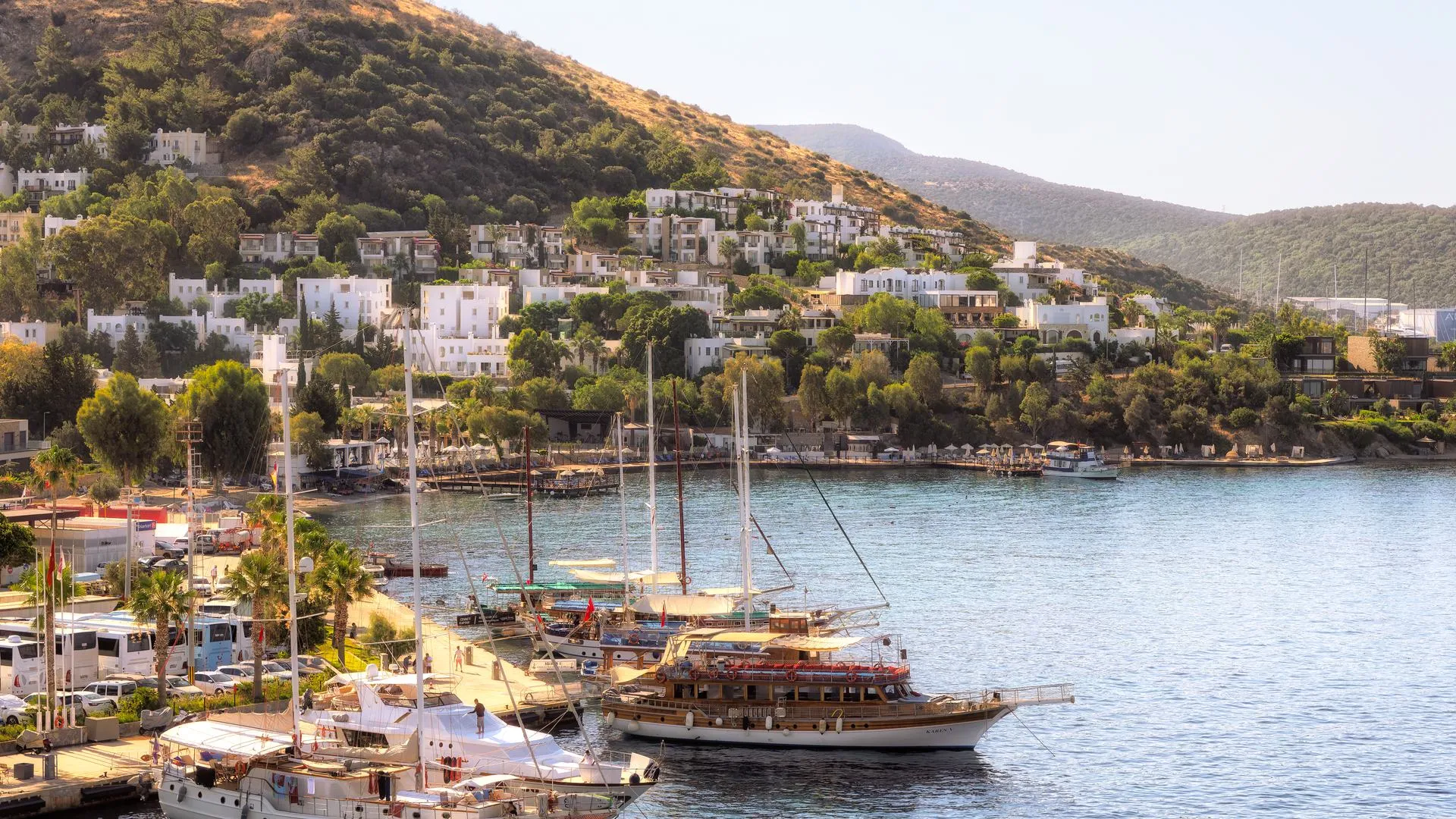
Kaleici is the old town inside the Roman and Byzantine walls, and it is the first place to walk. The streets are narrow and car free in places, the houses are Ottoman timber and stone, and the whole quarter steps down to a harbour ringed by the cliffs of the old city. The three main gates are Hadrian’s Gate at the east, the clock tower, and the harbour at the south.
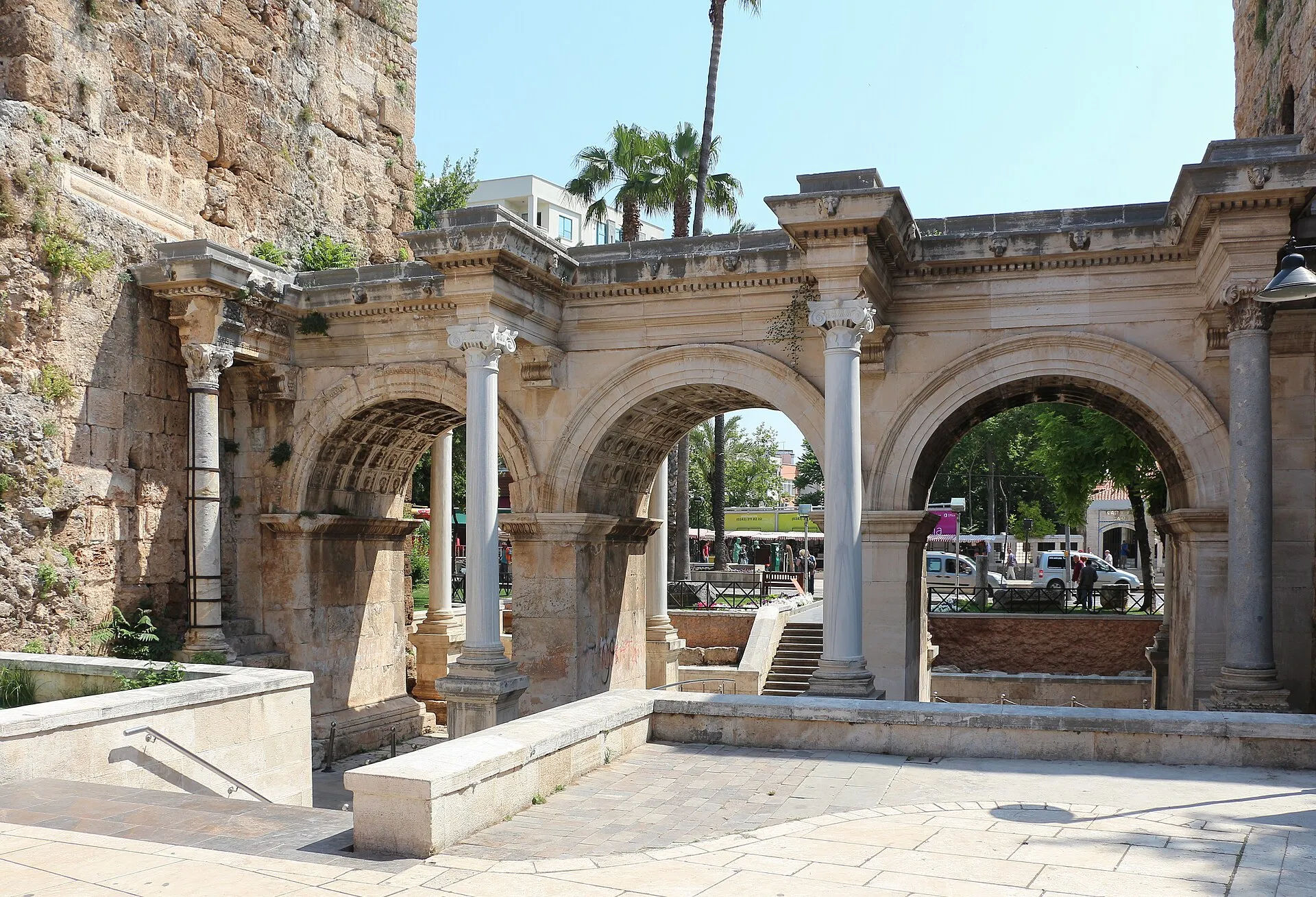
Hadrian’s Gate, known in Turkish as Uckapilar or the Three Gates, was built in 130 AD for the Roman emperor’s visit. It is free to walk through and easy to miss from the modern street outside, so look for the marble arch and the flanking towers. Hemen arkada, the lanes open into the old town and its courtyards, and the Hıdırlık Tower at the sea end marks the line of the ancient walls.
The old town is a place to wander rather than tick off. Buy a coffee in one of the courtyard hotels, sit by the marina, and walk the cliff path toward Karaalioglu Park for the view over the bay. In the evening the harbour lights and the sound of the call to prayer from the Yivli Minare make the case for staying in Kaleici rather than on the beach strip.
Konyaalti and Lara
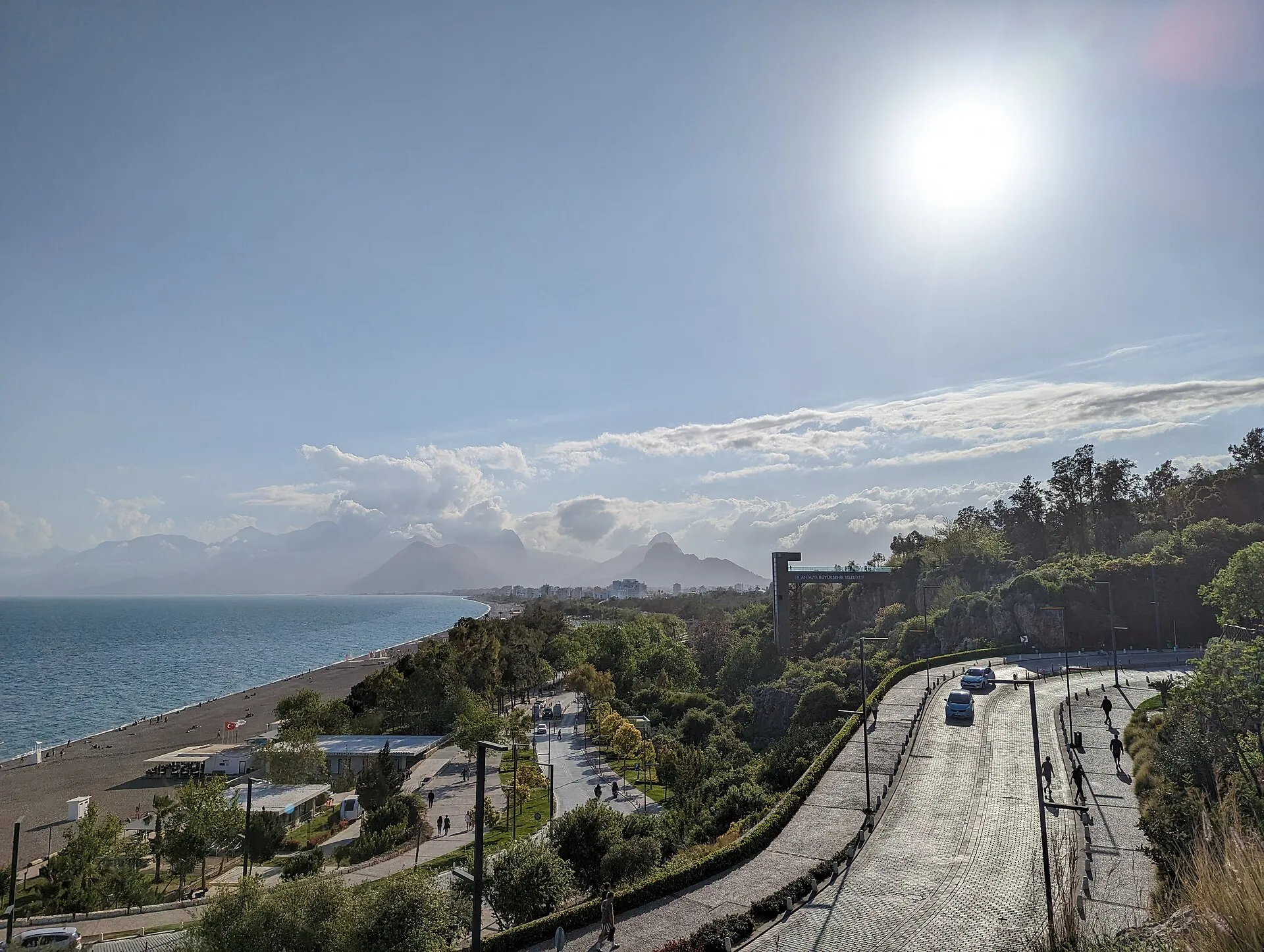
Antalya has two beach faces, and they feel like different cities. Konyaalti lies west of the centre, a long pebble beach about 7 km from end to end with the Beydaglari mountains behind it and a clear, cool sea. Lara, to the east, is the sandy one, with a broad sweep of beach backed by resorts, and it is the calmer choice for children.
Both are free to enter, and both have beach clubs and cafes that charge for a sunbed and umbrella. The Konyaalti waterfront has a promenade, bike lanes, and a cable car base, while Lara sits closer to the airport and the Duden waterfalls. In summer the sea is warm from May to October, and the local advice is to swim early, because the afternoon heat is fierce.
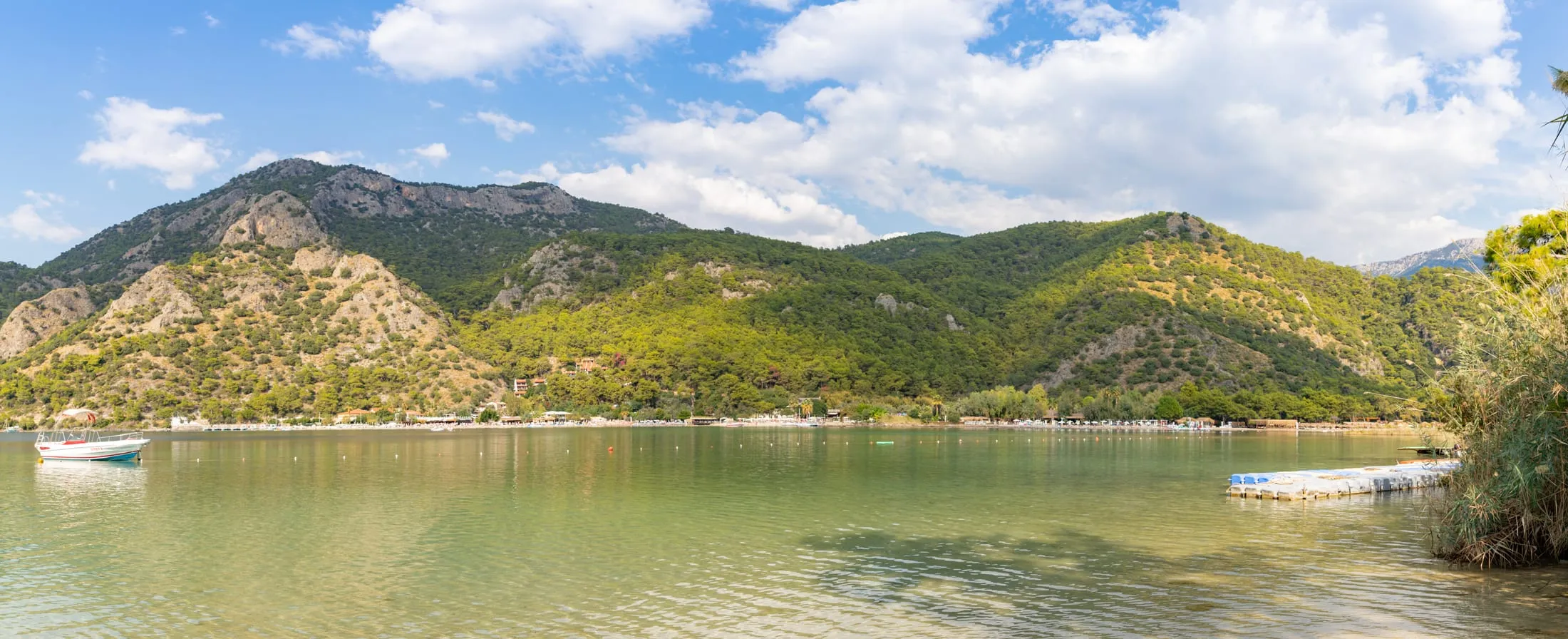
For a city beach, the quality is high, but neither matches the coves further along the coast. If you want clear water and pine trees, plan a day toward Kemer or Adrasan, where the mountains meet the sea and the swimming is calmer.
The Duden waterfalls
Antalya’s most visited natural sight is the Duden river, which splits into two falls as it reaches the city. The Upper Duden falls, in the Kepez district about 11 km from the centre, drop into a green gorge you can walk behind, and there is a small entry fee. The Lower Duden, at Karpuzkaldiran near Lara, pours straight off the cliffs into the sea and is free to see from the clifftop park.
The two are often sold together on a city tour, and both are easy to reach by bus or taxi. Go in the late afternoon when the light is softer and the tour buses have left. The water is strongest in spring, after the winter rain, and thinner at the end of summer.
Monuments and museums
The city’s archaeology museum, the Antalya Museum, was one of Turkey’s largest, with thirteen halls covering the region from the Stone Age to the Ottomans. It closed in 2025 for a full rebuild, so check its status before you build a day around it. The nearby Antalya Museum site and the older collection are not the draw they were until the new building reopens.
What is open and worth the time is the old city itself. Hadrian’s Gate is free, the Hıdırlık Tower is a short climb for the view, and the Yivli Minare, the fluted Seljuk minaret of the 13th century, stands beside the old bazaar. The Antalya Ataturk House and a handful of small civic museums fill a rainy morning, and the city’s Roman harbour is a monument in its own right.
Antalya food
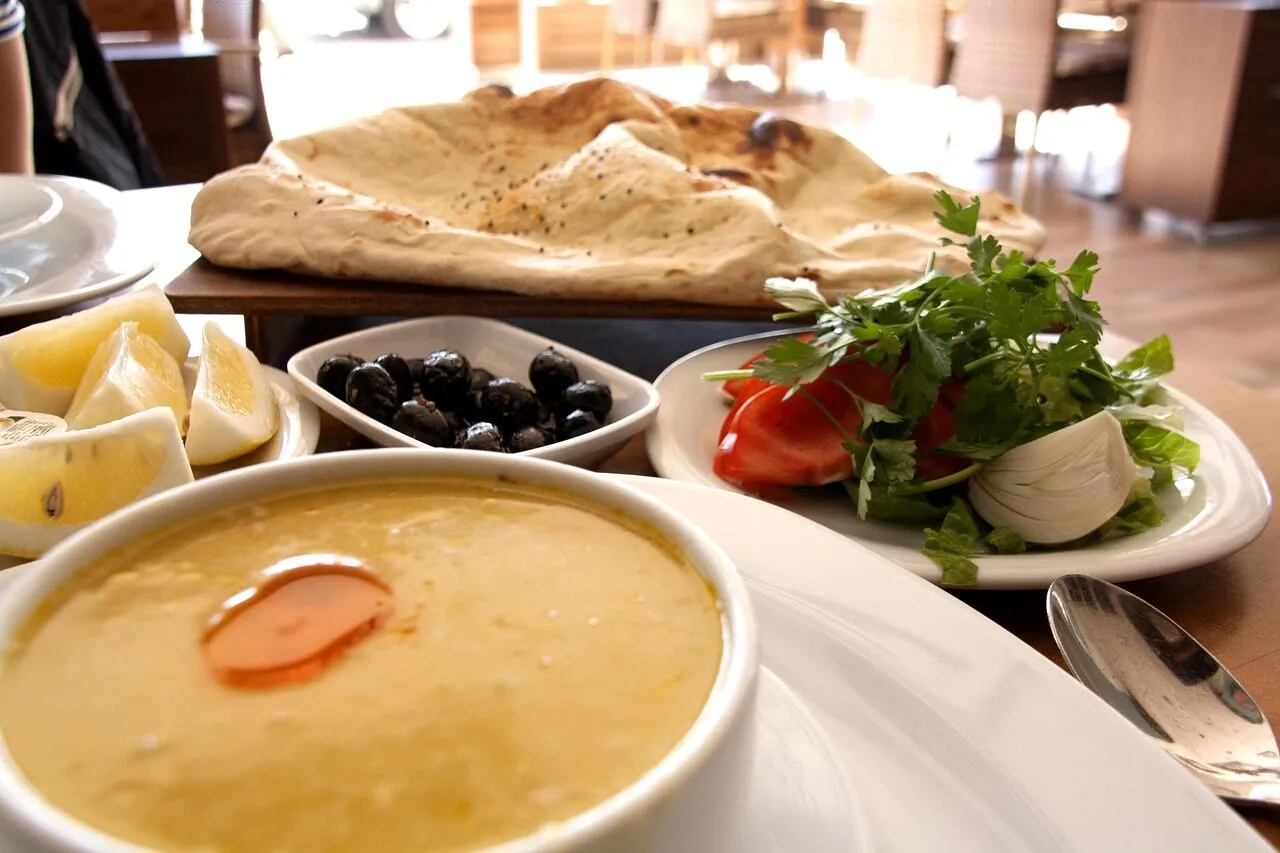
Antalya has its own take on Turkish cooking, lighter and more vegetable led than the kebab cities inland. The dish to order first is Antalya piyaz, a white bean salad dressed with tahini, onion, and olive oil. Alongside it come hibeş, a tahini and cumin dip; şakşuka, fried vegetables in tomato; and şiş köfte, the local grilled meatballs.
Fish is the other half of the menu, sold by the kilo and grilled simply. In summer the markets fill with figs, melons, and the local bergamot, and the desert to finish is kabak tatlısı, pumpkin slow cooked in syrup with tahini and walnuts. The old bazaar and the lanes of Kaleici have the atmosphere, while the side streets off Ataturk Boulevard have the better value on the same dishes.
Breakfast is a meal in itself: a Turkish spread of cheeses, olives, tomatoes, cucumbers, honey, and eggs. In the old town a full kahvaltı runs from around 150 to 300 TL a head, and a simple lunch of soup, kebab, or a pide is often under 200 TL. Coffee culture is strong, and a Turkish coffee or a cay at a courtyard cafe is the cheapest way to slow down.
Boat trips
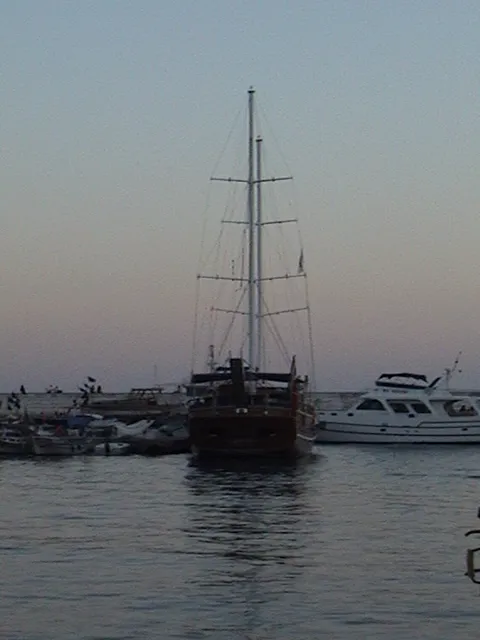
The old harbour is the launch point for boat trips along the coast, and most are sold the same day along the marina. The standard half-day route runs east to the Lower Duden waterfall and back, with a swim stop or two, and the longer trips reach the bays and caves toward Kemer. A shared boat trip is inexpensive, and a private boat for a group can be arranged if you prefer your own schedule.
The best trips leave in the late afternoon, when the light on the cliffs is at its best and the day-trippers have gone. Take sun cream and a hat, because there is little shade on the water, and check whether drinks and lunch are included before you pay.
Perge, Aspendos, and Side
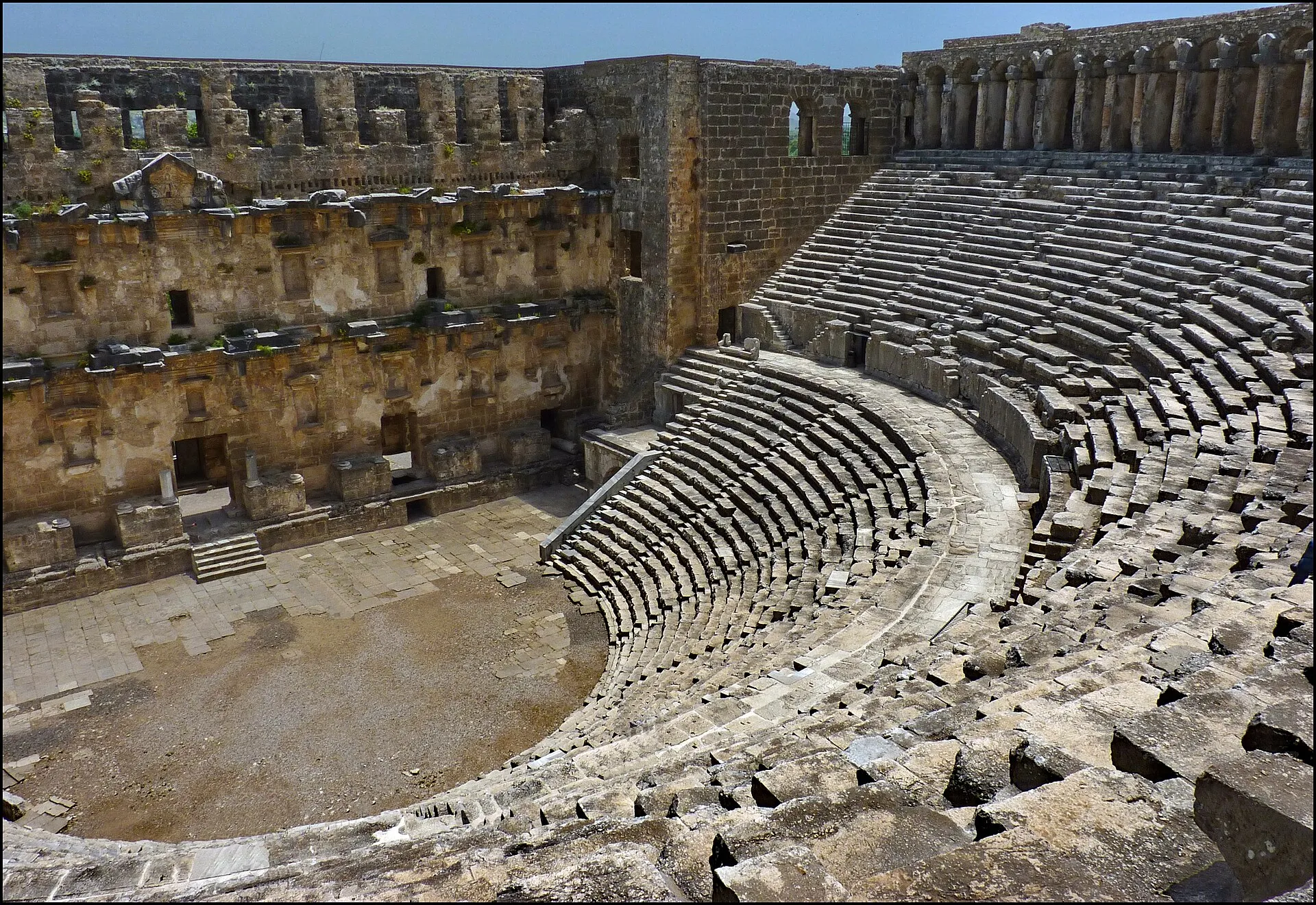
The Roman cities east of Antalya are the reason to leave the beach. Perge, about 15 km out, was a wealthy Pamphylian city with a colonnaded street, a stadium, and Roman baths, and the entry is 11 EUR for foreign visitors. Aspendos, further east, has the best-preserved Roman theatre in the world still standing, with perfect acoustics and seating for 12,000, and the ticket is 15 EUR, per the official museum listing.
Side is the third stop, a port town where the Temple of Apollo stands at the water’s edge and the ruins mix with living streets. The Side Museum and the temple are separately ticketed, and the town is a good place for lunch between the sites. All three together make a long, full day by car or guided tour.
The sites run on the same seasonal calendar: from 1 May to 1 October they open 08:00 to 21:00, and from November to March 08:00 to 17:00, with the box office closing about half an hour before. If you plan to visit several ancient cities, the Museum Pass The Mediterranean costs 90 EUR for seven days and covers more than 40 sites in Antalya, Mersin, Adana, and Denizli, including Perge, Aspendos, Olympos, and Pamukkale.
Further afield
Pamukkale is the big day trip, about three hours each way, where white travertine terraces and the Roman city of Hierapolis sit on the same ticket. Day tours leave Antalya early and return late, and the site is covered by the Museum Pass. It is a long day, so go with a tour or stay the night in Denizli rather than driving both ways yourself.
West of Antalya, the Lycian coast has the sunken city of Kekova, the rock tombs of Myra at Demre, and the ruins of Olympos in its forest valley, all reachable on a long coastal day or a two-day loop toward Kas and Fethiye. Inland, the Koprulu Canyon offers rafting on the mountain river, and Termessos, the city Alexander could not take, sits high in a national park above the pine line.
Closer in, the Alanya Castle and its museum are about two hours east and make a full day, and the Olympos Teleferik at Kemer climbs to a viewpoint over the coast when the weather allows. Always check that the cable car or boat you plan to use is running, because seasonal closures and maintenance are common.
Getting there
Antalya Airport is about 13 km east of the centre, and the tram is the simplest way in. The AntRay light rail connects the airport to the old town and the centre in about 35 to 40 minutes, running roughly every 10 to 15 minutes from early morning until midnight. A single ride costs about 1 EUR with an AntalyaKart, and the fare is low by any measure, though it moves with the lira, so check the official transport site for the current price.
A Havaş shuttle also runs to the centre and the intercity bus station, and metered taxis wait at the terminal. The tram continues to the otogar, the main bus terminal, which is where the coaches for Pamukkale, Fethiye, Kas, and Cappadocia leave. Antalya has no train station, so long-distance travel is by bus or plane. Within the city, the tram and the municipal buses cover the coast and the old town, and a contactless bank card or the AntalyaKart works on both.
Where to stay
Kaleici is the atmospheric choice, with courtyard hotels in restored Ottoman houses and the harbour on your doorstep. It suits a first visit of two or three nights, and it is where the old city, the restaurants, and the boat trips all meet. Some lanes are steep and some rooms are small, so check the photos and the access before you book.
Konyaalti is the beach base, with the promenade, the sea, and a long line of hotels, about 20 minutes from the old town by tram or taxi. Lara is the resort strip, closer to the airport and the sandy beach, and it suits package holidays and families. For the cheapest rooms and the best bus links, the area around the otogar and the centre works, though it has less charm.
Wherever you stay, ask about the air conditioning and the pool, because July and August are genuinely hot, and a room without shade is a bad deal. Off the coast, the hillside hotels toward Kemer trade the city noise for pine trees and quiet.
What a day costs
Planning figures for 2026, per person per day and excluding flights and accommodation: a budget day runs 30 to 45 EUR, a comfortable day 55 to 80 EUR, and a mid-range day 90 to 130 EUR. Antalya is much cheaper than the western Mediterranean once you are on the ground, and the comfortable number covers the Roman sites, a boat trip, two proper meals, and transport. These ranges are planning estimates built from the ticket, transport, and food prices cited in this guide, not an official index.
The season moves the numbers. April to June and September to October give warm sea, mild days, and thinner crowds. July and August are hot, around 31 degrees, with the busiest beaches and the highest hotel rates. Winter is mild and quiet, with rain and a shorter sightseeing day, and some coastal boats and beach clubs close. For more of the country, browse the Turkey guide and all the guides.
Practical information
| Getting around | Antalya has a modern tram, the AntRay, plus municipal buses and dolmus minibuses. The tram links the airport, the old town, and the bus terminal, and runs from early morning to around midnight. Buy an AntalyaKart or tap a contactless bank card. The old town is walkable, and taxis are metered. |
|---|---|
| When to go | April to June and September to October are the best months, with warm sea and comfortable days. July and August are hot and crowded. Winter is mild, around 12 degrees, with rain and shorter hours at the sites. The Antalya Film Festival falls in October. |
| Money | Turkey uses the Turkish lira, and prices move with inflation, so treat any lira figure as short lived. Cards are widely accepted in hotels, restaurants, and shops, but keep cash for markets, dolmus, and small cafes. Museum tickets for foreign visitors are often quoted and charged in euros. |
| Health and safety | Antalya is a safe city, and the main risks are the summer sun and the sea. Carry water, use high-factor sun cream, and swim where locals swim, watching for rocks and sea urchins. Tap water is not recommended for drinking, so buy bottled water. Check your visa or e-visa before you fly. |
| Sightseeing rhythm | Walk Kaleici in the morning and the harbour in the evening, and save the ruins and the beach for the middle of the day. Sites open 08:00 to 21:00 in summer, so start early to beat the heat and the buses. Book airport transfers and any day tour before the peak weeks of July and August. |
Disclosure. This blog post contains affiliate links. If you book through them, Mediterranean Vibes may earn a small commission at no extra cost to you; it is how the site stays up.