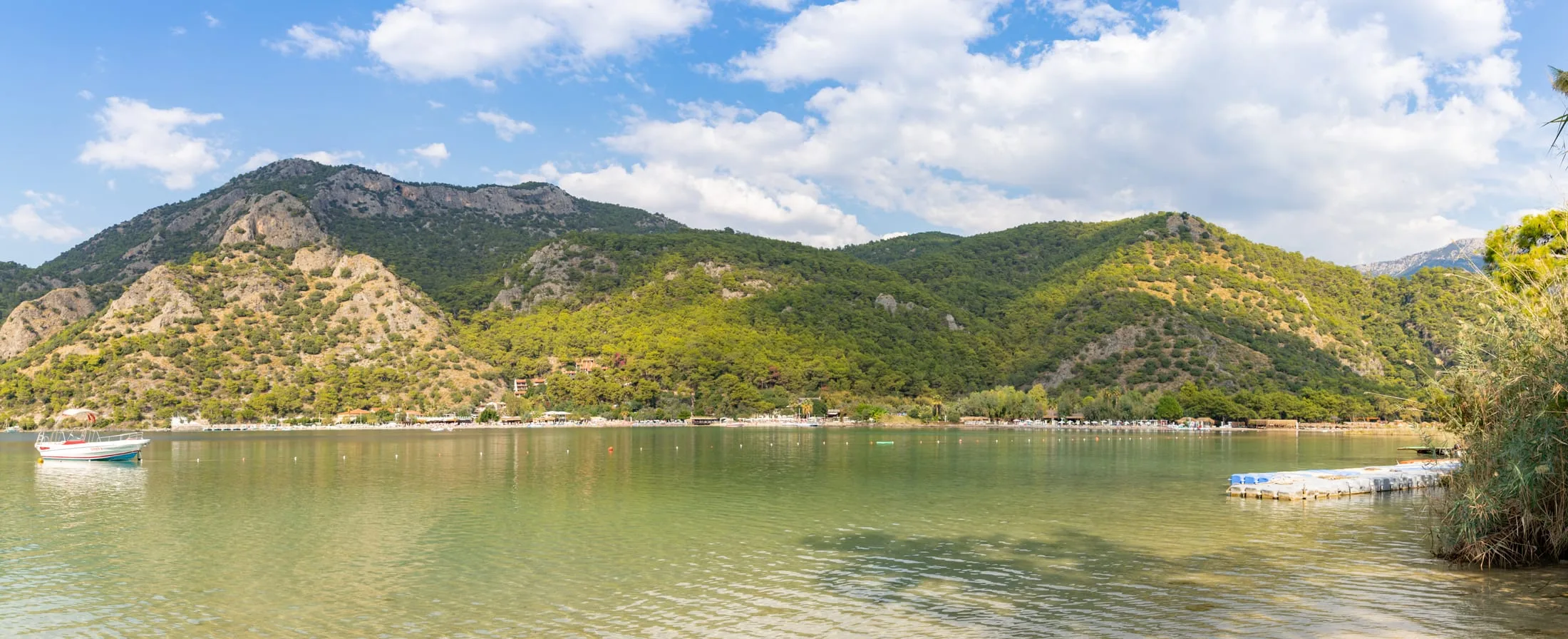
Fethiye and Oludeniz are the middle of Turkey’s Turquoise Coast, the stretch where the mountains fall straight into the sea and the water turns a colour that does not look real. Oludeniz has the Blue Lagoon, the calm postcard lagoon inside a national park, and Babadag, the mountain above it that is one of the best paragliding launches in the world. Fethiye, ten minutes away, is the working town underneath: a harbour, a market, Lycian tombs cut into the cliff, and the boats that reach the bays on either side.
What makes the pair worth more than a beach stop is the range packed into a small area. You can fly off a 1,960 metre mountain in the morning, eat lunch by a ghost town, wade up a canyon in the afternoon, and take a ferry to a Greek island the next day. The Lycian Way, Turkey’s first long-distance trail, starts right here, and the ancient sites run from the rock tombs above Fethiye to Tlos and the sunken ruins further down the coast.
This guide gives you the 2026 numbers with the source attached: what paragliding costs, how the Blue Lagoon works, the boat trips and their prices, Dalaman airport transfers, the Fethiye to Rhodes ferry, where to base yourself, and a daily budget. Every figure is checked against a current operator, ferry or ticket page. If you are building a wider Turkish route, compare it with Antalya to the east and Bodrum to the north, or start from the Turkey country guide.
Plan and book
3 partners- Flights
Find a route into Dalaman (DLM) from wherever you start, and compare the summer fares early.
Search flights - Tours and activities
Tandem paragliding, 12 Islands cruises, Saklikent jeep safaris, and Butterfly Valley boat trips.
Browse activities - Where to sleep
Rooms in Fethiye town, Calis Beach, Oludeniz, Hisaronu, and Ovacik, sorted by area and price.
Find a room
Oludeniz and the Blue Lagoon
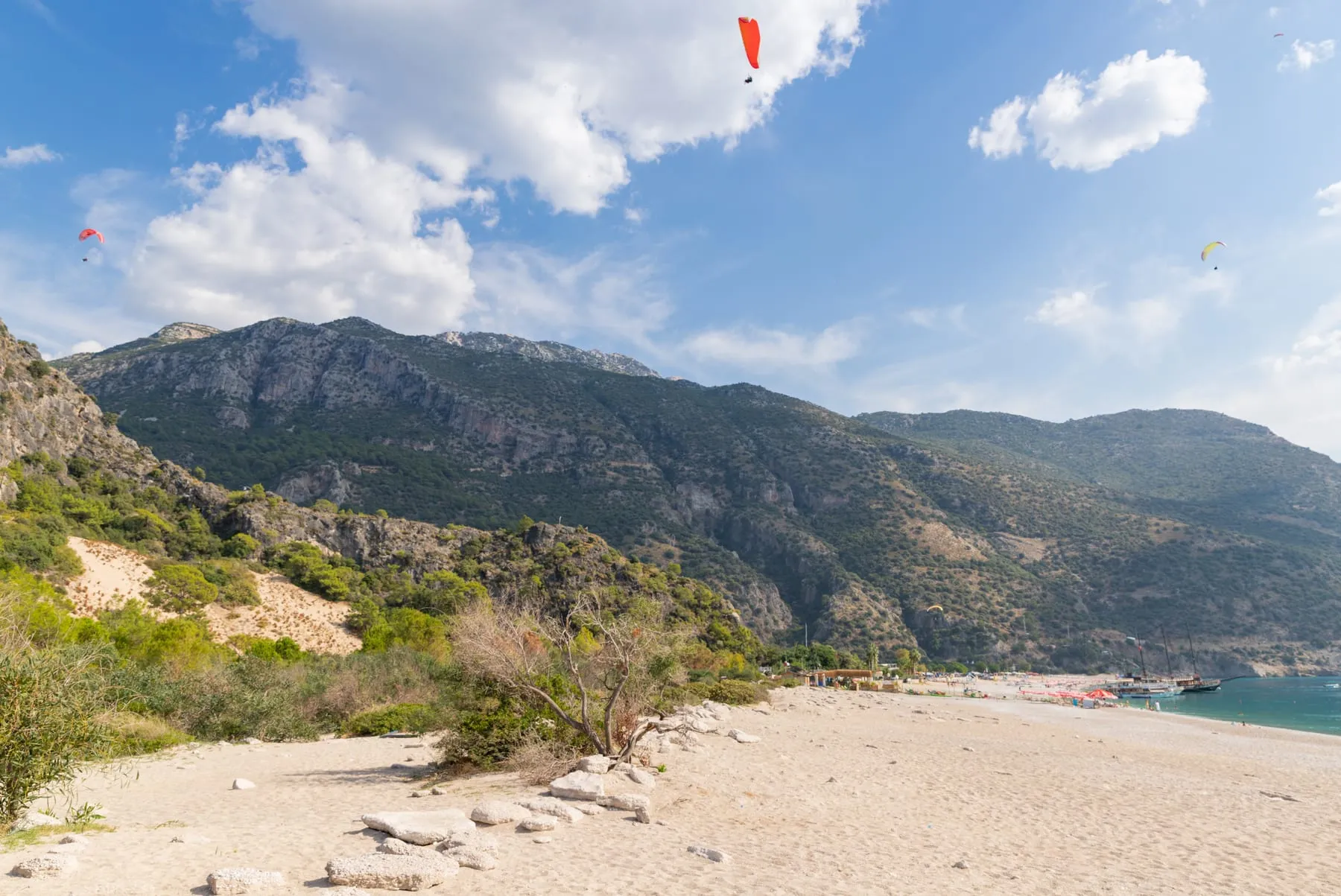
Oludeniz is built around two things: the long pebble beach of Belcekiz and the Blue Lagoon behind it, a sheltered inlet of shallow, glassy water that sits inside a protected national park. The lagoon is the calmest swimming on the coast, which is why families settle here, and there is a small national park entry fee to use it. Kayaks and pedalos go out from the shore, sunbeds fill the strip, and the light is best in the late afternoon when the day boats have gone.
The honest advice is to treat the lagoon and the beach as separate days if you can. The lagoon is for an easy morning and a lazy swim; the open beach is for the water sports and the sunset. Behind the strip, the resort is hotel after hotel, so this is a place to sleep and swim rather than to wander. For the town, the market, and the restaurants, you go to Fethiye, which is only about 20 minutes by dolmus.
Paragliding from Babadag
Paragliding is the reason many people come. Babadag, the mountain above Oludeniz, tops out around 1,960 metres and has launch points from 1,200 metres up to the summit, making it one of the highest commercial tandem launches in the world. You do not need any experience: you fly strapped to a licensed pilot who does everything, and the standard flight runs about 25 to 45 minutes, normally ending with a landing on the beachfront at Oludeniz.
On price, 2026 operator pages list the standard tandem with hotel transfer from around 100 to 130 EUR per person, with the pilot, equipment and the drive to launch included. Photos and video are usually an extra on the day, and several operators do not allow your own camera, so ask before you fly. The best window is April to October; wind can ground flights, so book for early in your stay and keep a spare morning. If you would rather not jump, the Babadag cable car climbs to around 1,700 metres for the same view without the flight, and the summit terraces are a sunset spot in their own right. To compare options, browse the tandem flights.
Fethiye town
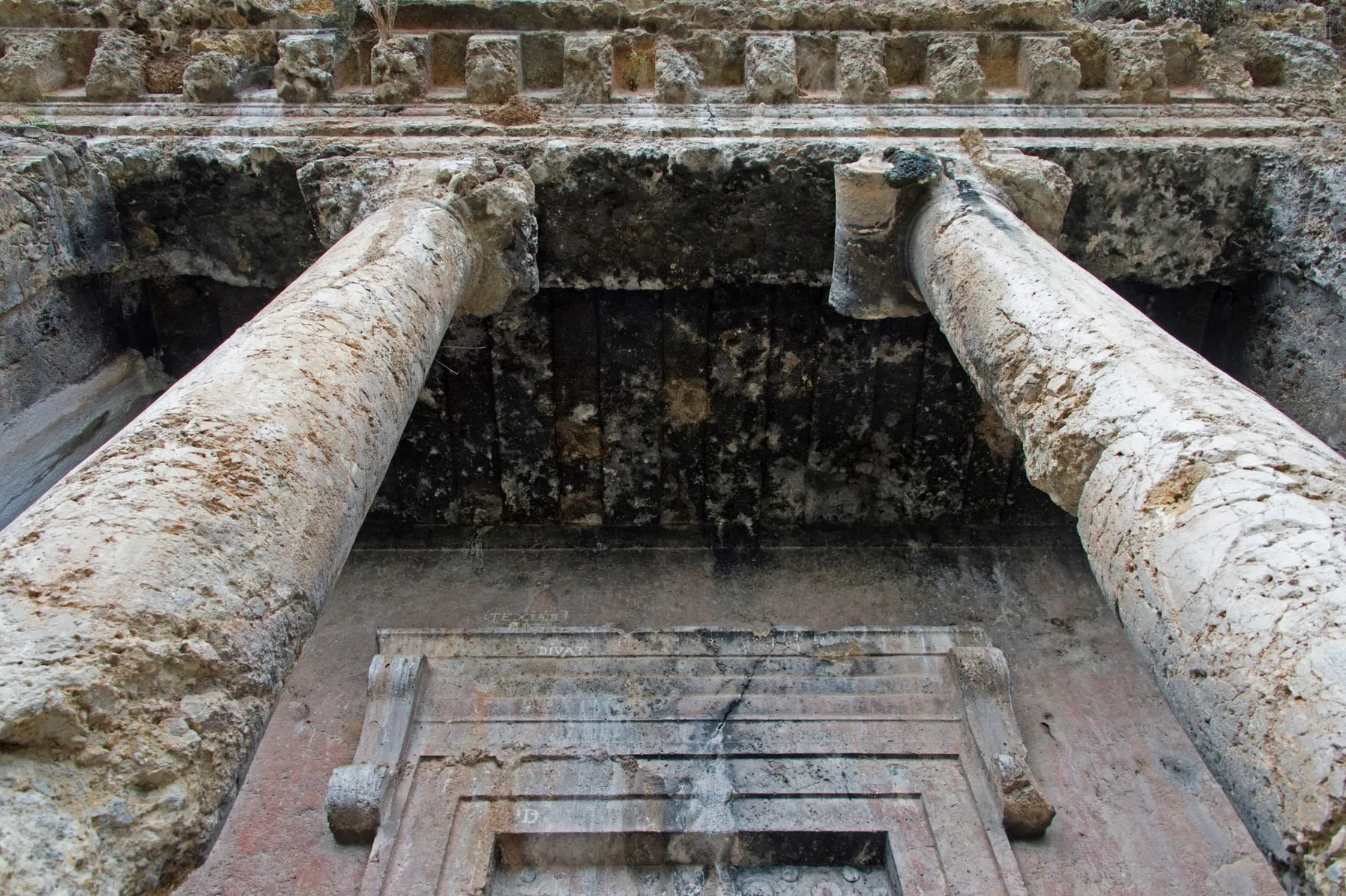
Fethiye is the real town of the area, with a working harbour, a marina full of gulets, and a market street, Paspatur, that is the best place to buy anything from spices to towels. Above it, cut into the cliff in the 4th century BC, the Amyntas rock tombs are the Lycian signature of the coast: temple facades carved straight into the stone, with a view over the whole bay from the platform below. There is a small official ticket and a short climb.
The town is also where the practical side of the holiday happens, from the bus station and the ferry port to the fish market, where you pick your fish and a restaurant cooks it. Wander the waterfront in the evening, eat at the fish market, and keep an afternoon for the market and the tombs. It makes a better base than the resort strip if you want restaurants, ferries and buses on your doorstep.
Kayakoy, the ghost town
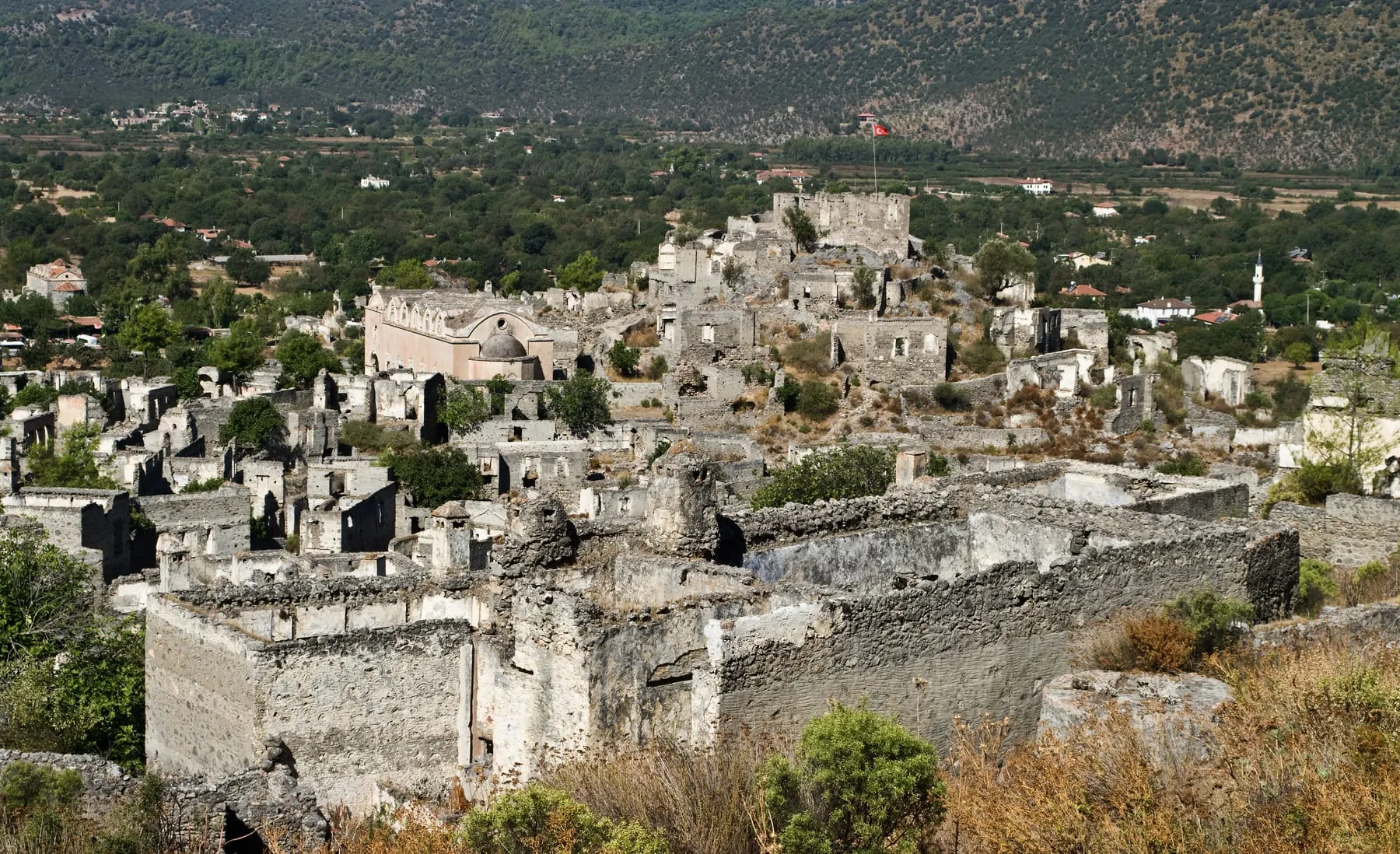
Kayakoy, a short drive above Fethiye, is one of the strangest places on the coast: a hillside of roofless stone houses abandoned in 1923, when the population exchange between Greece and Turkey emptied the village of its Greek residents. Around a thousand houses, two churches and a school still stand without roofs, and the site is now a peace monument as much as an open-air museum. It is eerie, quiet, and worth an hour of walking.
Pair it with the rock tombs on the same afternoon, since both sit above the same bay. There is a small ticket for the village, a good cafe at the entrance, and a view down to Oludeniz from the ridge. It is also a stop on the Lycian Way, so you will pass walkers setting out or finishing a section.
Saklikent Gorge and Tlos
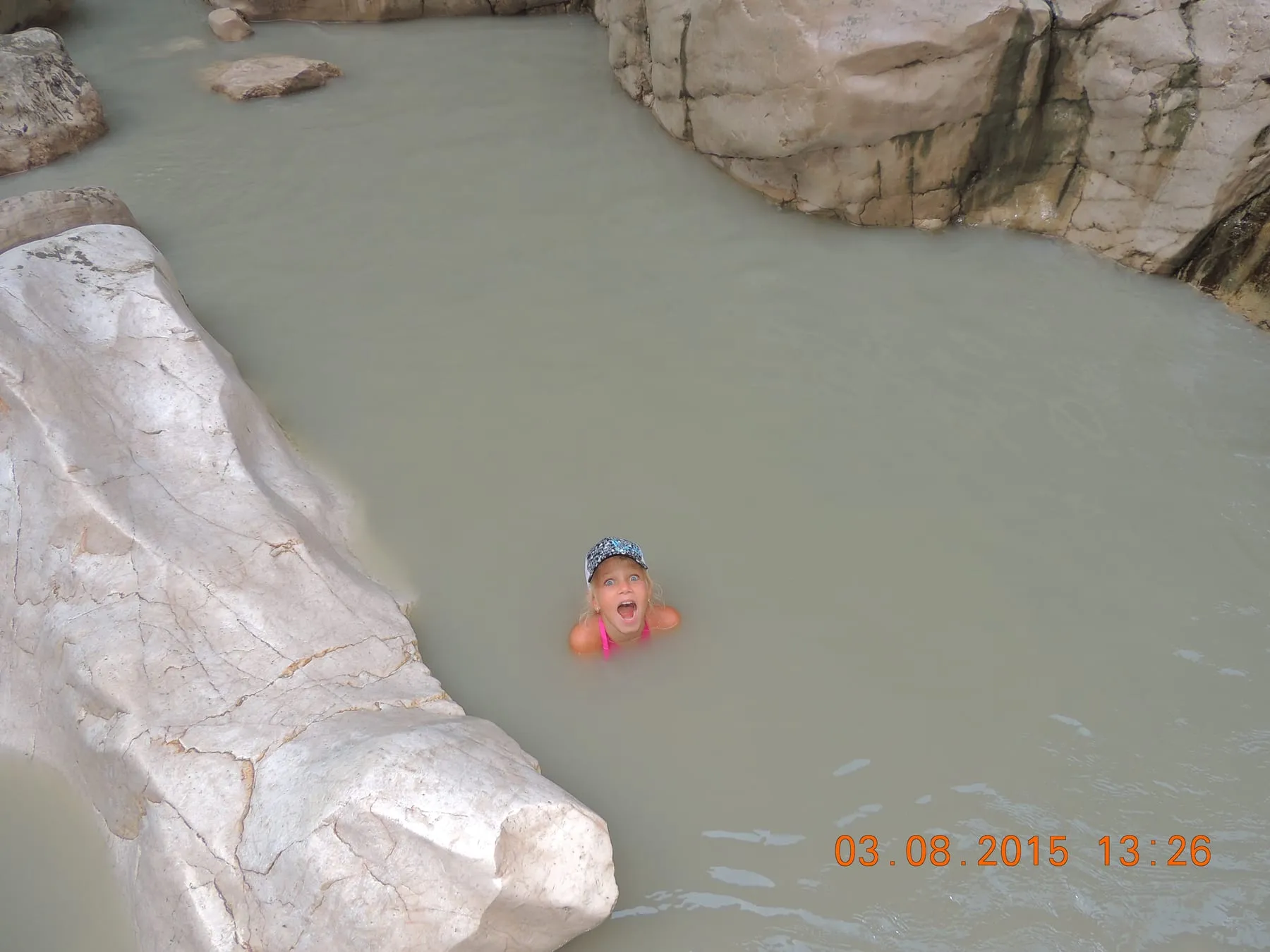
Saklikent is the adventure day: one of the deepest canyons in Turkey, an 18 km slot in the mountains where a cold river runs through a gorge so narrow the walls block the sun. You wade in along a boardwalk and then up the stream itself, which is the whole point, and the water is genuinely cold even in August. The entrance fee is paid on site, and there is rafting and a zip line for an extra charge.
Most people see it as part of a jeep safari that also takes in the Gizlikent waterfall, the ruins of Tlos, and a mud bath, which is the easy way to cover it without a car. It is about 45 km from Fethiye, so a tour makes sense unless you are driving. Wear shoes you do not mind soaking, and go early to beat the tour buses.
Boat trips
The coast is best seen from the water, and there are two classic cruises. From Fethiye, the 12 Islands trip takes a gulet around the bay, with swim stops and lunch on board, and it lists from around 27 to 40 EUR per person. From Oludeniz, the Butterfly Valley and Blue Cave trip runs west along the cliffs to the valley and its beach, with more swim stops, from around 37 to 50 EUR per person.
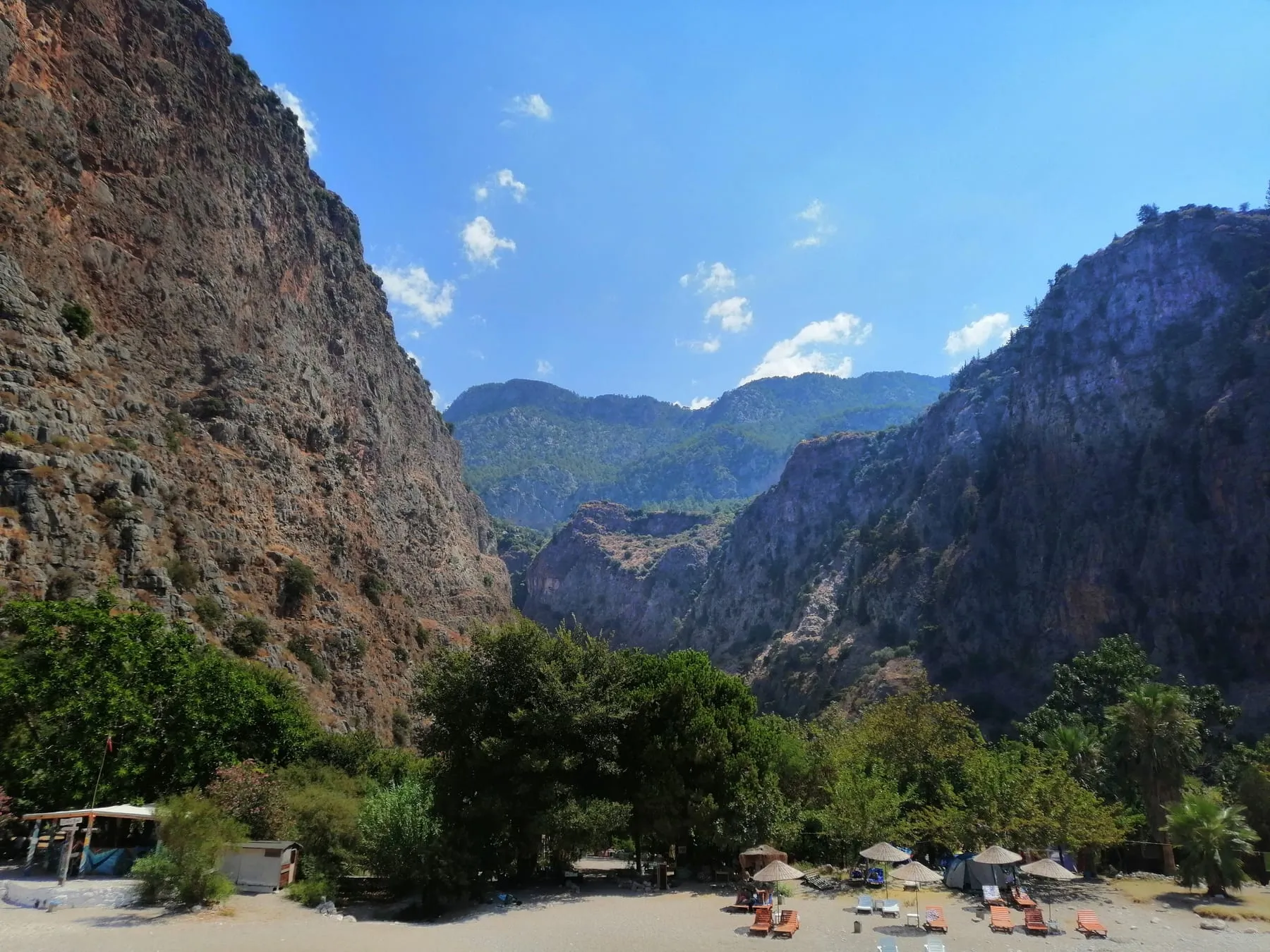
Butterfly Valley is the highlight: a steep-walled canyon opening onto a beach, home to dozens of butterfly species and reached mainly by boat, since the footpath down from Faralya is rough. Boats leave from Oludeniz through the season, and many trips stop at the Blue Cave and St Nicholas Island on the way. Book a day ahead in high summer, and check whether lunch and entry fees are included before you pay.
Food
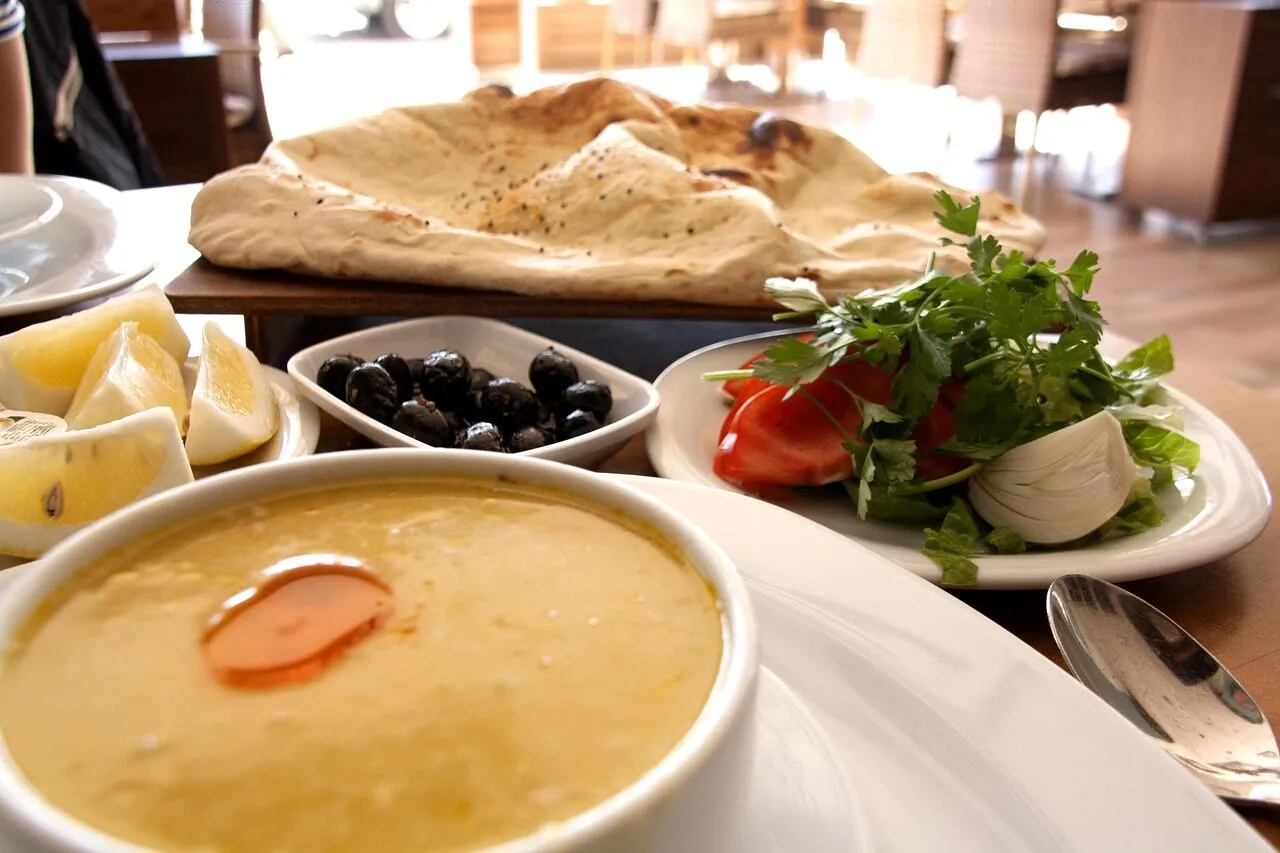
This is the Aegean and Mediterranean kitchen at its lightest, and Fethiye eats well without trying. The fish market is the local ritual: you choose the fish, a restaurant around the square cooks it, and you pay for the cooking and the meze. Alongside that, look for the region’s vegetable dishes cooked in olive oil, stuffed vine leaves, and the Turkish breakfast, which is a spread of cheese, olives, eggs, honey and endless tea rather than a quick meal.
Prices are lower than the Greek islands and lower than Istanbul. A street kebab or a balik ekmek is a few euros, a taverna lunch is around 8 to 15 EUR, and a fish dinner with meze and drinks is realistically 20 to 35 EUR a head. Two rules hold here as on the rest of the coast: eat where the menu is in Turkish as well as English, and finish with tea, because that is the local punctuation mark.
Getting there
Dalaman (DLM) is the airport for the whole area, about 50 minutes to an hour from Fethiye and a little further to Oludeniz. Private transfers for up to six people list from around 45 to 55 EUR for the car, and shared shuttles cost less per person; the dolmus and buses connect but are a hassle with luggage. Antalya is the alternative, roughly three hours by road along the coast, which is the scenic option if you are driving one way.
The other way in is by sea. The Fethiye to Rhodes ferry takes about 1 hour 25 minutes to 1 hour 30 minutes, runs several times a day in summer with Ido and Makri Travel, and tickets start at around 30 EUR. That makes a day trip to a Greek island genuinely easy, and it folds into a wider Aegean route with Rhodes on the other side. Bring your passport and check the timetable, which thins outside the summer months.
Getting around
You do not need a car if you are based in Fethiye or Oludeniz. The dolmus minibuses run frequently between Fethiye, Calis, Ovacik, Hisaronu and Oludeniz, about 20 to 30 minutes end to end, and they are cheap and easy. A car pays off for the far beaches and for Saklikent, but the tours cover those too, so a car is a convenience rather than a necessity here.
For the Lycian Way, the trailhead is at Ovacik, above Oludeniz, and the first sections toward Faralya and Kabak are the popular day hikes. If you want to walk a section, start early, carry water, and check the waymarking, because the trail is long and the signs are maintained by volunteers.
Where to stay
Fethiye town is the best base for a first visit: the harbour, the market, the ferry, and the bus station are all here, and the restaurants are better and cheaper than in the resort strip. Calis Beach, ten minutes west, is quieter and faces the sunset. Oludeniz is the beach base, right on the lagoon and the paragliding landing zone, but it is hotel-heavy and a dolmus ride from town. Hisaronu and Ovacik, up the hill, are the budget and family options, close to the Lycian Way trailhead.
A good split for a week is two or three nights in Fethiye for the town, the market and the ferry, then a move to Oludeniz or Calis for the beach and the water. Book early in July and August, when the whole coast fills up.
When to go
May, June, September and October are the best months. The sea is warm, the days are dry, the lagoon and the boat trips are open, and the crowds are a fraction of the peak. July and August are hot, busy and windy, and the afternoon wind can ground paragliding and make the exposed boat trips choppy. Winter is mild and quiet, with many resorts and boat trips closed.
The shoulder months are also the right window for walking. Spring and autumn keep temperatures around 20 to 25 degrees on the Lycian Way, while high summer is too hot for the long sections. If your plan mixes flying, sailing and hiking, aim for late spring or early autumn and the whole trip works at once.
What a day costs
Planning figures for 2026, per person per day and excluding flights and accommodation: a backpacker day runs 30 to 50 EUR, a comfortable day 55 to 85 EUR, and a mid-range day 90 to 140 EUR once you fold in paragliding or a boat trip. The activities are the swing factor, since paragliding alone is 100 to 130 EUR and a full-day cruise is 27 to 50 EUR. Food and local transport are cheap by Mediterranean standards. These are planning estimates built from the tour, ferry, transfer and food prices cited in this guide, not an official index.
Practical information
| Getting around | Dolmus minibuses link Fethiye, Calis, Ovacik, Hisaronu and Oludeniz frequently and cheaply, about 20 to 30 minutes end to end, and you pay in cash. A car helps for the far beaches and Saklikent, but guided tours cover those, so it is optional. The Lycian Way trailhead is at Ovacik. |
|---|---|
| When to go | May, June, September and October for warm sea and manageable crowds. July and August are hot, busy and windy, and the wind can cancel paragliding. Spring and autumn are also best for hiking the Lycian Way. |
| Money | The Turkish lira, with cards accepted in hotels, restaurants and tour offices but cash useful for dolmus, markets and small cafes. Prices are lower than the Greek islands. Tipping is a small round-up or a few percent on a good meal. |
| Health and safety | Paragliding is weather-dependent and only grounded flights are the safe ones, so accept a reschedule. Saklikent’s river is cold and the rocks are slippery underfoot. The Lycian Way sections are exposed and unshaded, so carry water and start early. The lagoon is shallow and calm, the safest swimming in the area. |
| Sightseeing rhythm | Fly early, when the wind is calm and the light is good, and keep a spare morning for a reschedule. Give Fethiye town and the rock tombs an evening, Kayakoy and Saklikent a half day each, and the boat trips a full day. Book paragliding and cruises a day ahead in high summer. |
Disclosure. This blog post contains affiliate links. If you book through them, Mediterranean Vibes may earn a small commission at no extra cost to you; it is how the site stays up.
.jpg)


