Greece is the cheapest of the well-connected Mediterranean bases and the one where the gap between the dream and the paperwork is widest. The dream is a small city apartment or a island view, a fast enough connection, and a cost of living below Italy or Spain. The paperwork is a digital nomad visa with a clear income bar, a 2026 change that closed the convert-on-arrival route, and a tax break that most people incorrectly assume applies to them. This guide separates the two.
The honest starting point is that remote work is still rare inside Greece itself. In 2025 Eurostat put the share of employed people who usually work from home at 2.3 percent, among the lowest in the European Union and far below the 9.0 percent EU average. That is a fact about the Greek job market, not about what a foreign remote worker can do here. But it does shape the experience: co-working is concentrated in Athens, the service culture is built around offices and tourism, and the infrastructure that matters most to you, fixed broadband, is uneven once you leave the mainland.
What follows are the 2026 numbers, each linked to its source, for the income threshold, the real tax position, rents in Athens and Thessaloniki, internet speeds on the mainland and the islands, and the healthcare you will actually be required to hold. Crowd-sourced cost figures are labelled, and the one widely repeated Greek statistic that does not say what people think it says is flagged clearly. For the wider region, the country index compares all seven Mediterranean countries.
Plan and book
3 partners- Flights
Compare fares into Athens and the mainland airports from wherever you are starting.
Search flights - Ferries and island hops
Price the Athens to Santorini run and compare it with the other island routes in one search.
Compare routes - Somewhere to land
Rooms and apartments in Athens, Thessaloniki, and the islands, for the first month.
Find a place
Why Greece
Greece wins on cost and on the texture of daily life. Athens and Thessaloniki are real cities with real rents, not resort towns, and the price of the everyday, from coffee to produce to a taverna lunch, sits below Spain and well below Italy or France. The weather is the obvious draw, with a long warm season and a short winter, and the geography means a weekend is a ferry ride rather than a flight. For a remote worker on a northern European salary, the arbitrage is large and visible.
The digital nomad visa, introduced in the 2023 migration code, formalised what was previously a grey area and gave remote workers a legal path to stay. Greece also has a strong, if narrow, tax incentive for people who move and work for the Greek economy, which is worth understanding properly because it is widely misreported as a nomad tax break. And the country is smaller and less crowded than the remote-work giants, which some people find is the point.
Two things to weigh before you fall for it. The first is the island gap in connectivity, which is real and covered below. The second is bureaucracy: registering, banking, and tax paperwork in Greece moves at its own pace, and a long stay is easier if you expect it to take time and keep documents in order. Neither is a deal-breaker, but both are easier to plan around than to discover.
What it costs to live
Rent is where Greece is most clearly cheaper than its neighbours. In Numbeo’s October 2026 data, a one-bedroom apartment in central Athens averaged about 668 EUR a month, and in Thessaloniki about 560 EUR, against a Greek national average of 483 EUR. Monthly living costs for a single person, excluding rent, came out at roughly 835 EUR in Athens and 841 EUR in Thessaloniki. Those figures are crowd-sourced, so treat them as an indicative gauge and check live asking rents before you commit, but the order of magnitude is consistent with everything else about Greek prices.
Athens is the more expensive of the two cities and the one with the deeper rental market, more apartments, more variation, and better availability for a short first lease. Thessaloniki is cheaper, more walkable, and has a strong student and young-professional culture that suits remote workers who want a compact city. Outside the two cities, the picture is different again: the large islands can be cheaper than Athens for rent but carry a seasonal supply problem, with prices rising and availability falling in summer, and the small islands can be both expensive and slow to connect.
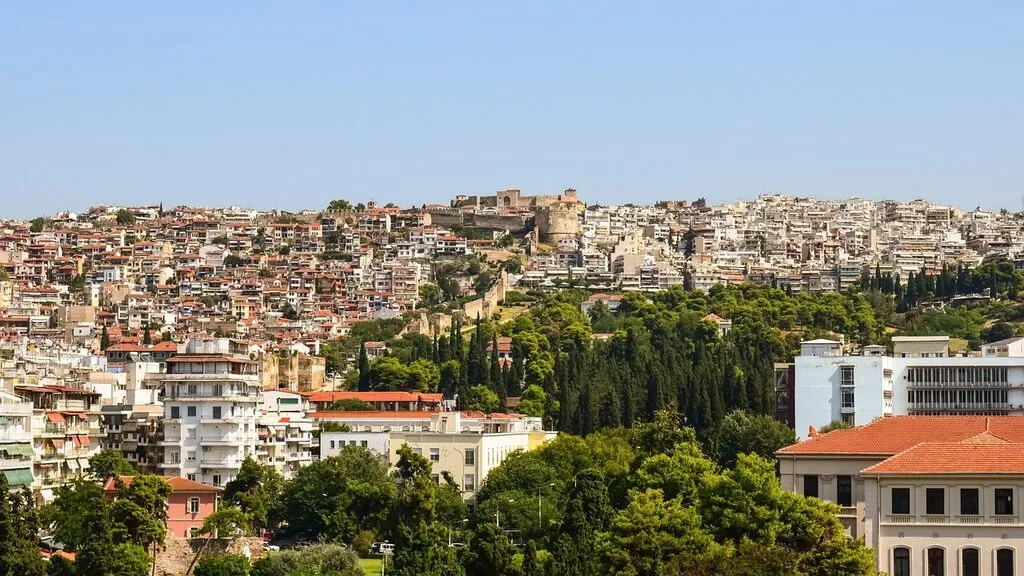
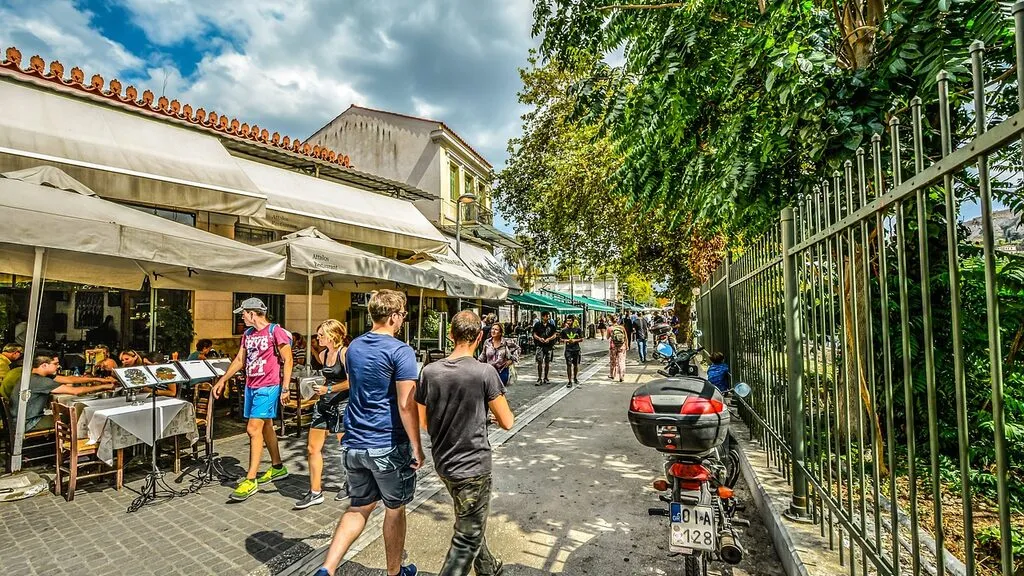
The day-to-day reinforces the advantage. A coffee is a euro or two, a taverna lunch is in the low teens, and the public transport in Athens, including the airport line, is cheap and extensive. Where a long stay adds cost is in the setup: the deposit and agency fee on a flat, the time and fees around the residence permit, and the fact that some landlords prefer to let to short-term visitors in summer rather than sign an annual lease. As in Spain, budget a first-month buffer beyond the rent itself.
Internet and the island gap
On the mainland, the connection is good enough for anything a remote job throws at it. In the Ookla Speedtest Global Index for August 2026, Greece’s median fixed line measured 175.36 Mbps down and 98.10 Mbps up, with the median mobile connection at 201.30 Mbps down. Athens, on Ookla’s city page, ran at around 100.63 Mbps fixed. These are real-world measurements from consumer speed tests rather than advertised packages, and the month matters, but they put mainland Greece comfortably in the range where calls and cloud work are routine.
The islands are the honest caveat, and the problem is structural rather than seasonal. Greece’s fibre rollout has been concentrated in the cities: the national regulator reported that fibre-to-the-premises coverage reached 46.1 percent in June 2024, well behind the European Union’s 82.5 percent, and rural fibre coverage was close to nothing. Ookla’s own report found that in the first half of 2025 Heraklion on Crete had the slowest median fixed download of Greece’s large cities at 50.5 Mbps. In practice, a main town on Crete, Rhodes, or Corfu is workable with a good fixed line or a strong mobile signal, while a small Cycladic island is a risk you should test before committing to a long stay.
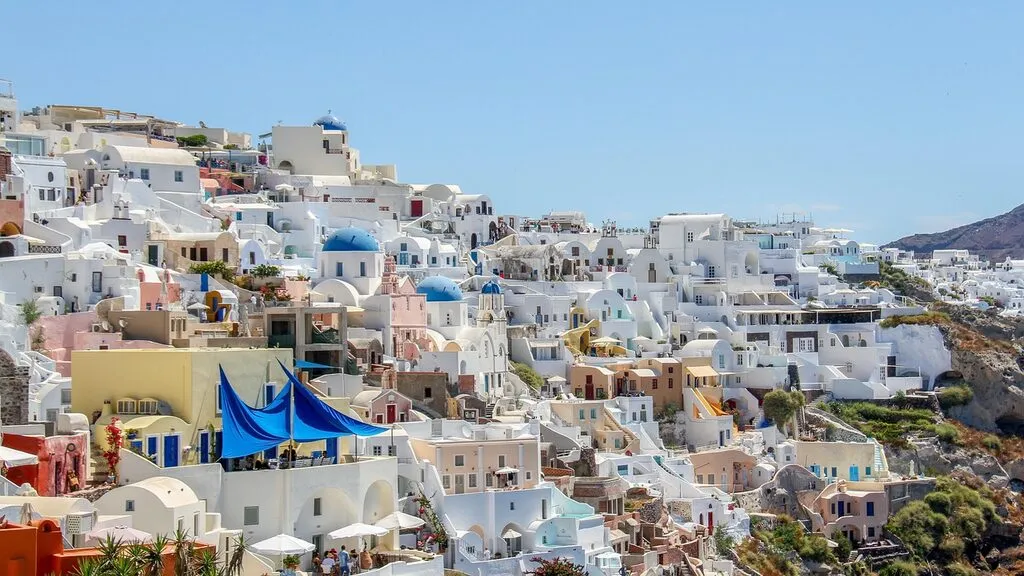
If your work depends on a stable high-speed line, base on the mainland and treat the islands as weekends. If you want island life anyway, choose a large island’s main town, arrange a fixed connection rather than relying on a mobile hotspot, and test it in the peak season when the network is most loaded. Mobile coverage is generally strong and can carry you, but data allowances and evening congestion are the things that break a working week.
Visa and taxes
The digital nomad route sits in Article 68 of the 2023 migration code, Law 5038/2023, and it is aimed at people whose income comes from outside Greece. The financial test is 3,500 EUR a month of stable net income, or 42,000 EUR a year, with a spouse or civil partner adding 20 percent and each child 15 percent. You apply for a national Type D visa, which runs for up to 12 months, and it converts to a two-year residence permit renewable in two-year periods. The permit bars Greek employment and Greek clients, and the income must be active rather than passive.
One 2026 change matters more than the rest. Under a law that took effect in February 2026, the option to convert status from inside Greece was removed, so applicants must obtain the Type D visa at a Greek consulate before travelling. If you were planning to arrive as a visitor and apply once settled, that route is closed, and it is worth confirming the current consular process for your nationality before making any plans.
The route is also not for EU, EEA, or Swiss passport holders. Citizens of those countries do not need a visa to live and work in Greece, because they have the right of free movement, and a stay longer than three months is covered by registering for a Certificate of Registration with the local authority rather than by applying for a national visa. The digital nomad permit is reserved for third-country nationals, which includes UK citizens since Brexit. For that group the consular Type D visa above is the route, and the tax position follows residency and treaty rules rather than the permit itself.
Now the tax point, because it is the most misreported item in every Greece nomad guide. Greece does have a 50 percent income tax exemption, in Article 5C of the income tax code, but its conditions are specific: it applies to income from employment with a Greek employer or the Greek permanent establishment of a foreign company, or from business activity carried on in Greece. It requires that the person was not a Greek tax resident in five of the previous six years, and it runs for seven consecutive tax years, with no statutory upper limit on the exempted amount, as the tax authority’s own guide explains. A digital nomad working exclusively for a foreign employer, with no Greek establishment, does not meet those conditions, however long they stay. The two regimes rest on opposite assumptions, and treating them as the same thing is the single most common error in the field.
What that means in practice is that the tax position for a digital nomad on a foreign salary is decided by ordinary residency and treaty rules, not by a headline 50 percent discount. If you spend most of the year in Greece you may become tax resident, and the honest next step is advice for your own situation. The 50 percent exemption is real, and worth understanding, but it is for people who move their work into the Greek economy, not for those who bring a foreign salary with them.
Choosing a base
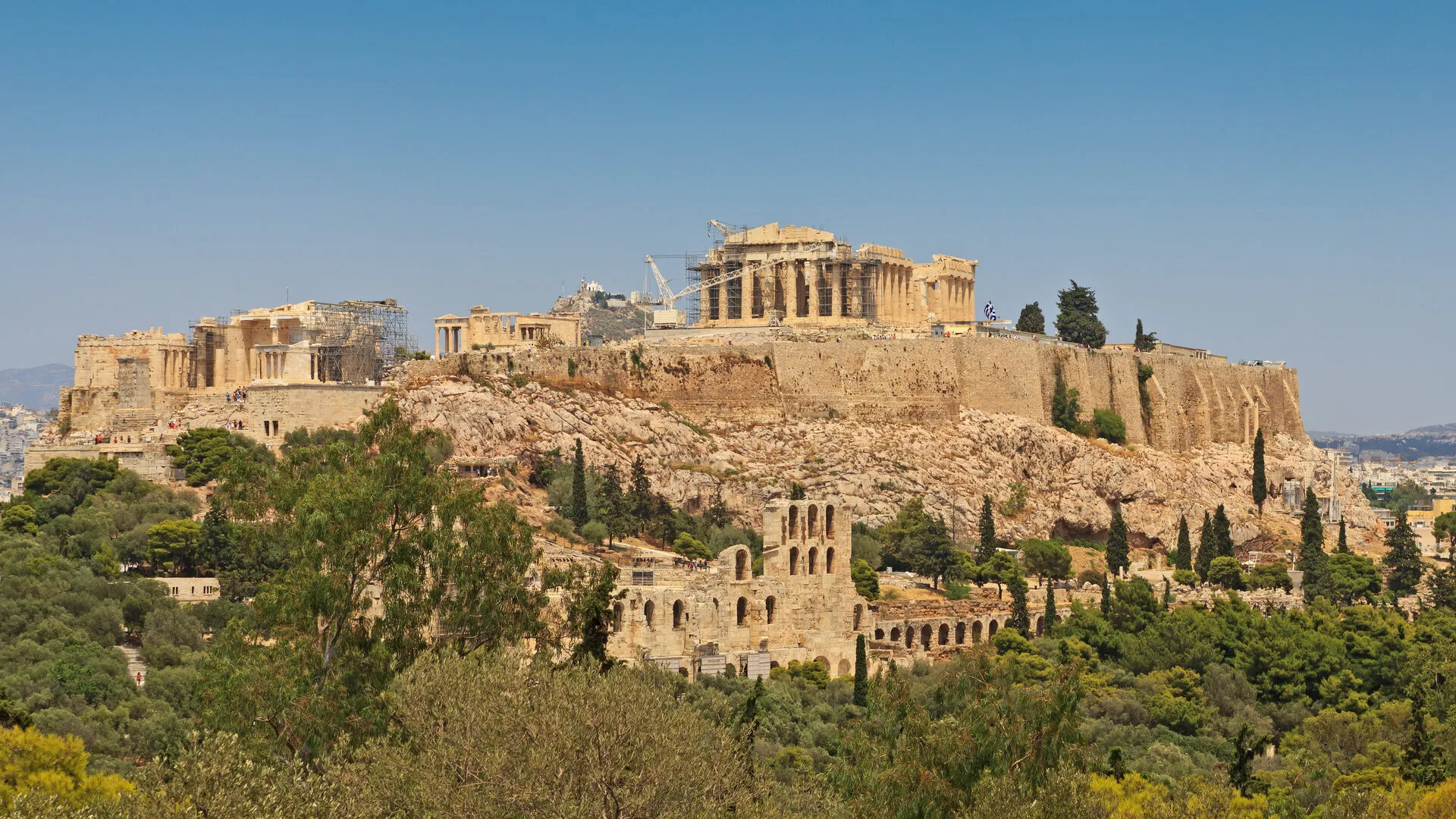
Athens is the default for a reason. It has the fastest fixed broadband of the major cities, the only substantial co-working market, the international community, and the airport that connects you to the islands and the rest of Europe. It is the most expensive of the mainland options and the busiest, but it is the easiest place to start a long stay. Thessaloniki is the second city and the better value, walkable, cheaper, and with a strong cultural and food scene, at the cost of fewer direct international flights and a colder winter.
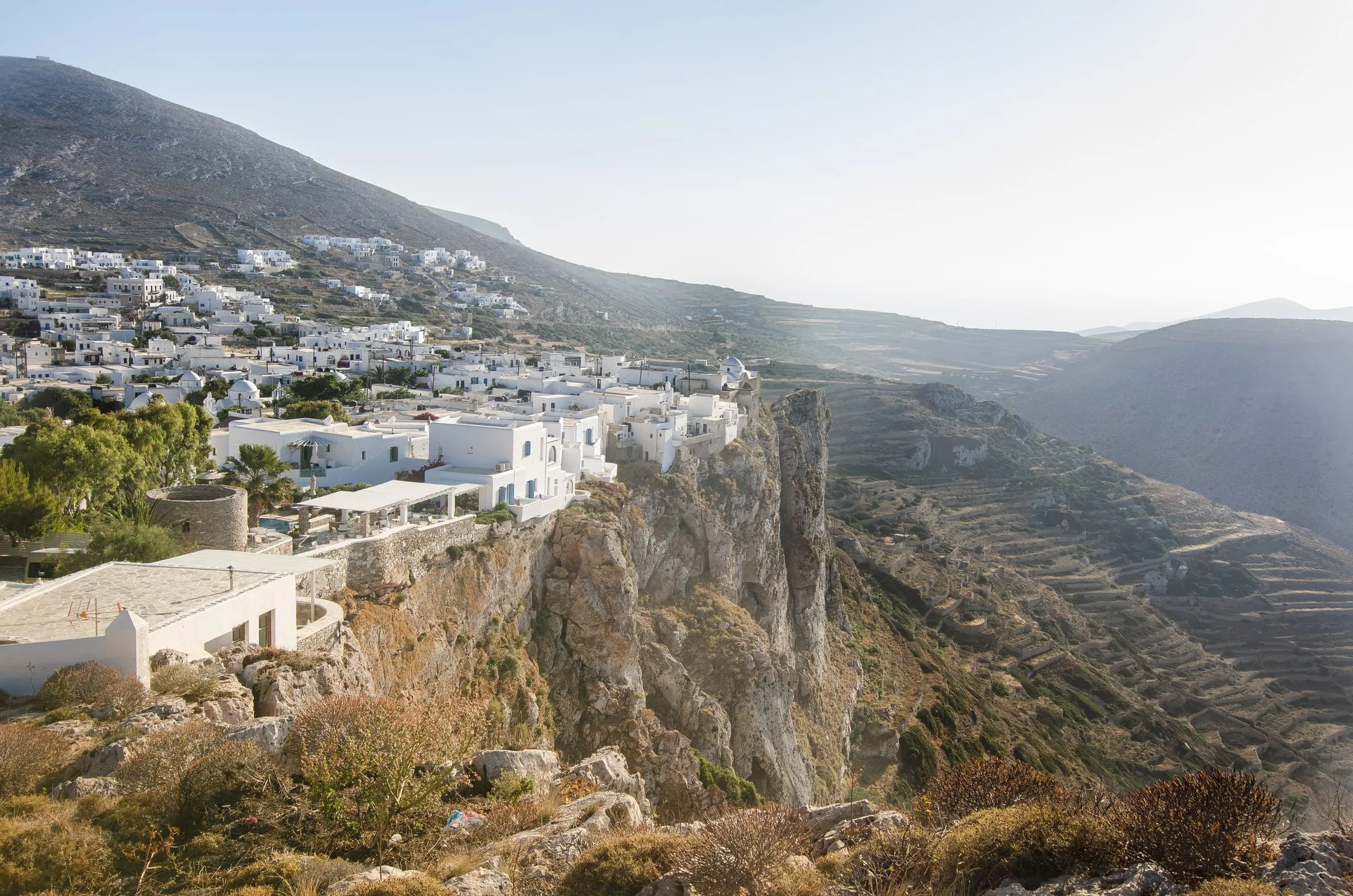
For island life, the practical rule is to pick a large island that has a working main town rather than a small one with a postcard view. Crete has the size, the infrastructure, and year-round services, with Heraklion and Chania both workable if you accept fixed broadband that is slower than the mainland. Corfu and Rhodes follow on the same logic. The small Cyclades are beautiful and unreliable for work, and a stay there is better planned as a holiday with a laptop than a base.
One planning note: Greece does not publish an authoritative current count of digital nomad permit holders, and the only official-adjacent figure that circulates widely, 1,693 approvals from 2,918 applications, dates from 2021. Treat that as historical context rather than a current measure of the community, and be sceptical of marketing pages that quote large nomad populations without a source.
Healthcare
Greece’s public health system is solid, but the digital nomad route sits outside it by design. The social security number, AMKA, depends on a residence permit with the right to access the labour market, and the nomad permit specifically bars Greek employment. The consistent reading among practitioners is that digital nomad permit holders are expected to hold private health insurance for the length of their stay, and the visa sets minimum cover requirements, including hospital and medical expense limits, as set out in the 2024 ministerial decision on residence-permit insurance. Budget for a proper policy rather than a travel plan, because it is a condition of the permit, not a suggestion.
If you are an EU citizen, the picture is friendlier: healthcare can be coordinated through the European Health Insurance Card or an S1 form, and if you are employed in Greece you register with the social security fund and build coverage through contributions. For everyone else on the nomad permit, private insurance is the route, and it is worth choosing a policy that covers the islands, not just Athens, because medical evacuation from a small island is the scenario the cover exists for.
Practical information
| Income threshold | Stable net income of at least 3,500 EUR a month, or 42,000 EUR a year, from work outside Greece. A spouse or civil partner adds 20 percent and each child 15 percent. |
|---|---|
| Permit timeline | National Type D visa for up to 12 months, then a two-year residence permit renewable in two-year periods. Since February 2026 the visa must be obtained at a Greek consulate before travel. |
| EU, EEA, and Swiss citizens | Do not need the digital nomad visa. They have the right of free movement and register for a Certificate of Registration if they stay longer than three months. The permit itself is reserved for third-country nationals. |
| Tax position | The 50 percent exemption in Article 5C applies to Greek employment or Greek business income, not to a foreign salary, so most digital nomads do not qualify. Residency and treaty rules decide the rest. |
| Cost of living | City-centre one-bedroom rent around 668 EUR in Athens and 560 EUR in Thessaloniki, on October 2026 Numbeo data. Treat as a gauge and check asking rents before committing. |
| Internet | Median fixed line of 175.36 Mbps down in the August 2026 Ookla index, with Athens around 100.63 Mbps. Island connections lag the mainland, and small islands are a risk for a working week. |
| Healthcare | Nomad permit holders are expected to hold private health insurance, since the permit bars Greek employment and AMKA depends on labour market access. EU citizens can coordinate cover through the EHIC or an S1 form. |
Disclosure. This blog post contains affiliate links. If you book through them, Mediterranean Vibes may earn a small commission at no extra cost to you; it is how the site stays up.