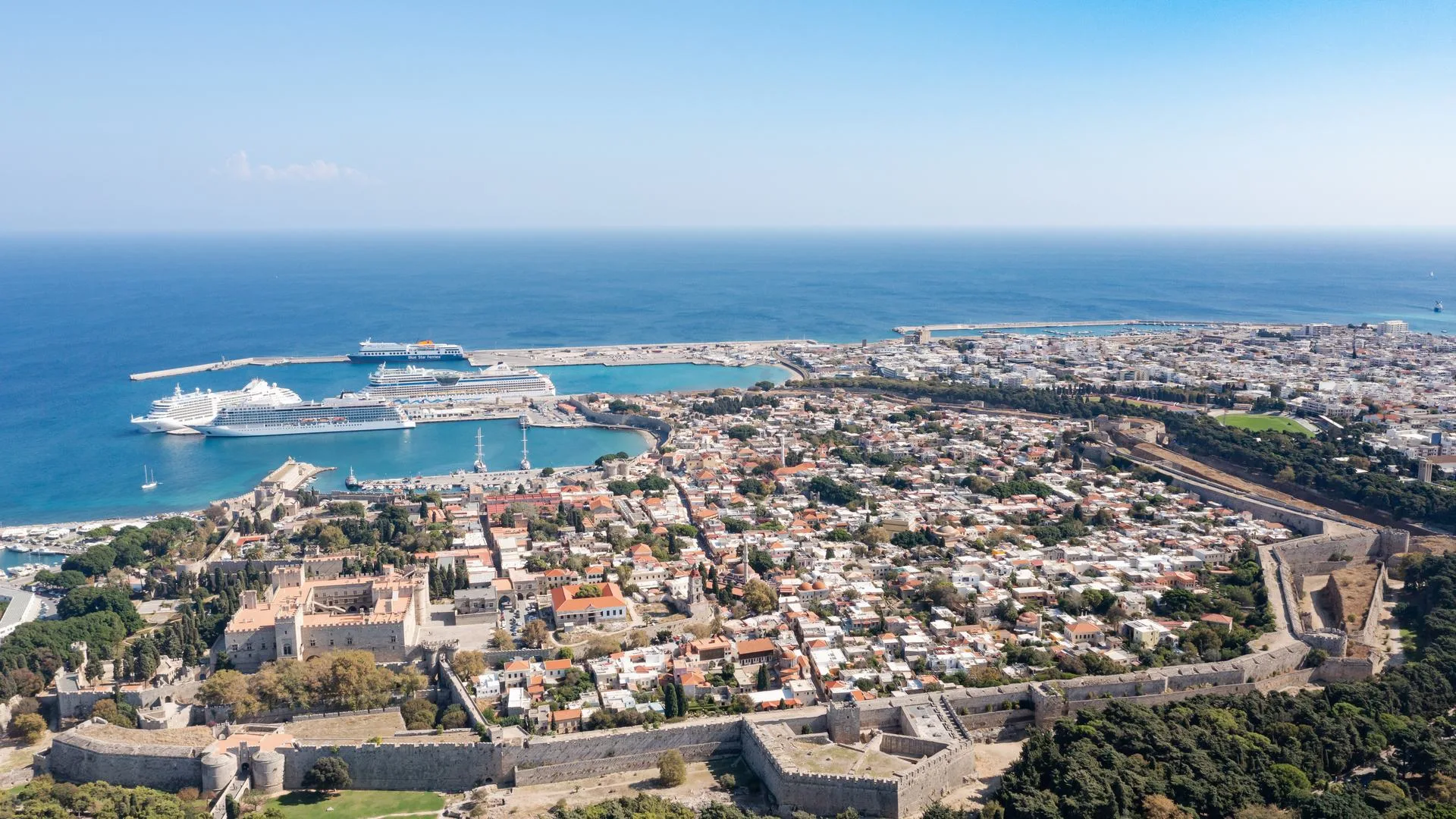
Rhodes is the island that gives you a medieval city and a beach holiday in the same week. The old town is the largest inhabited walled city in Europe and a UNESCO World Heritage site since 1988, and you can sleep inside walls the Knights of St John built seven centuries ago. Add the clifftop Acropolis of Lindos, a warm sea on the sheltered east coast, and ferries to Symi and to Turkey, and the range explains why Rhodes has the longest tourist season in Greece.
The island is also roughly 80 km from end to end and genuinely developed, which is either the appeal or the warning depending on what you want. The east coast is the package-tourism strip, the west coast catches the meltemi wind, and the old town takes a daily cruise-ship wave between about 11:00 and 16:00 in summer. The trick is to pick the coast and the hours that suit you, and to understand that the old town is a different place before ten in the morning and after six in the evening.
This guide gives you the numbers that matter for 2026 with the source attached, because Greek state museums and sites set entry prices and hours centrally and they change by season. What the old town and its palace cost, how the airport bus and the ferries work, which beaches belong to which coast, and a daily budget range. Every figure is checked against an official 2026 page, and the ones worth rechecking are linked as you go. If you are planning the wider trip, compare all seven countries in the country index.
Plan and book
3 partners- Flights
Find a direct route into Rhodes (RHO) from wherever you start, and compare the summer fares early.
Search flights - Ferries and island hops
Compare the Piraeus to Rhodes crossing with the short hops to Symi, Kos, and Halki in one search.
Compare routes - Where to sleep
Rooms in the old town, the new town, and the beach resorts, sorted by area, price, and review score.
Find a room
Rhodes Old Town
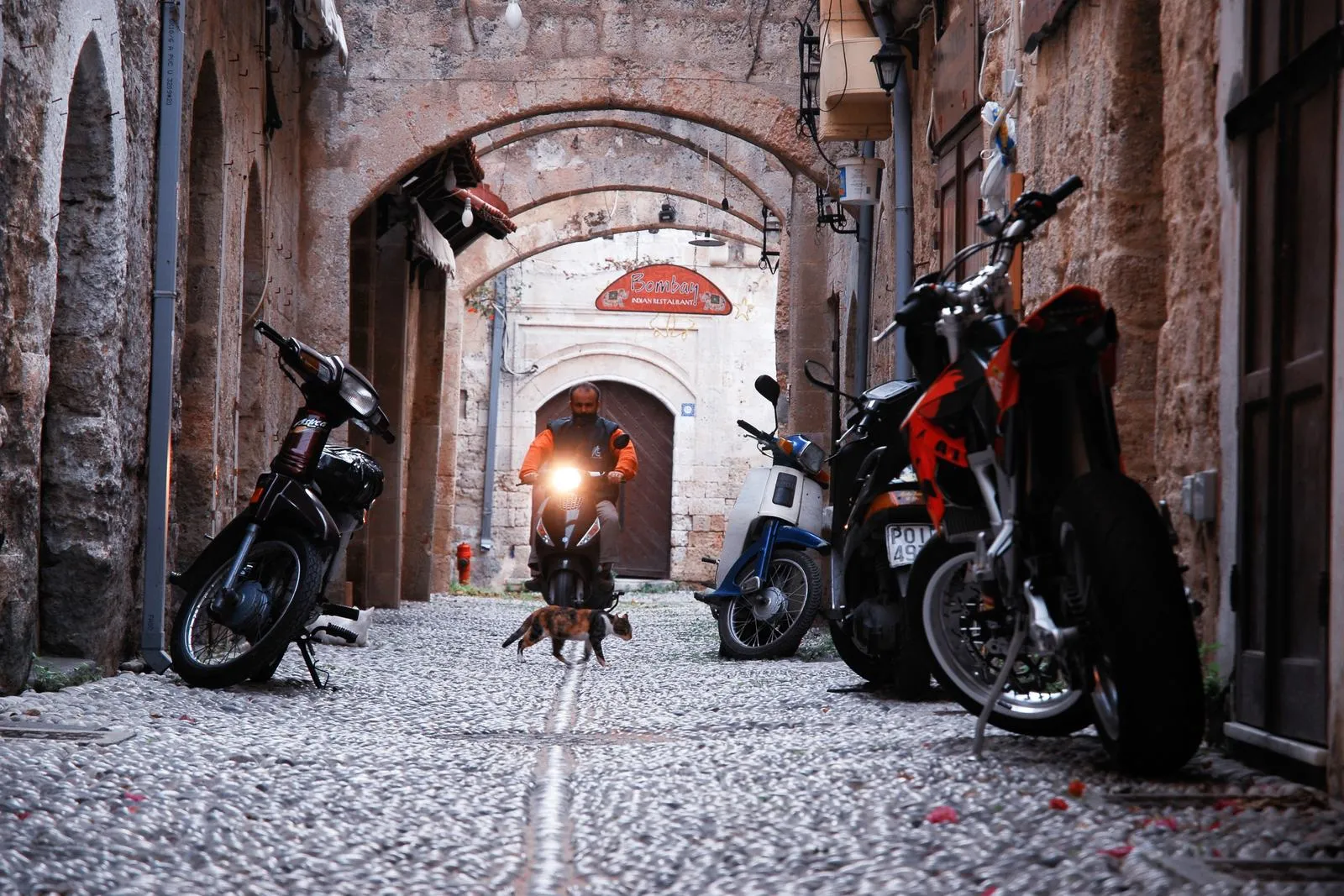
The old town is the reason to come, and it is not a museum piece. Thousands of people still live inside the walls, in lanes of honey-coloured stone where a 14th century inn stands next to a mosque, a synagogue, and a Greek Orthodox church. That layering is the story: the Knights of St John ruled here from 1309 to 1522, the Ottomans for almost four centuries after them, and each left their mark on the same streets.
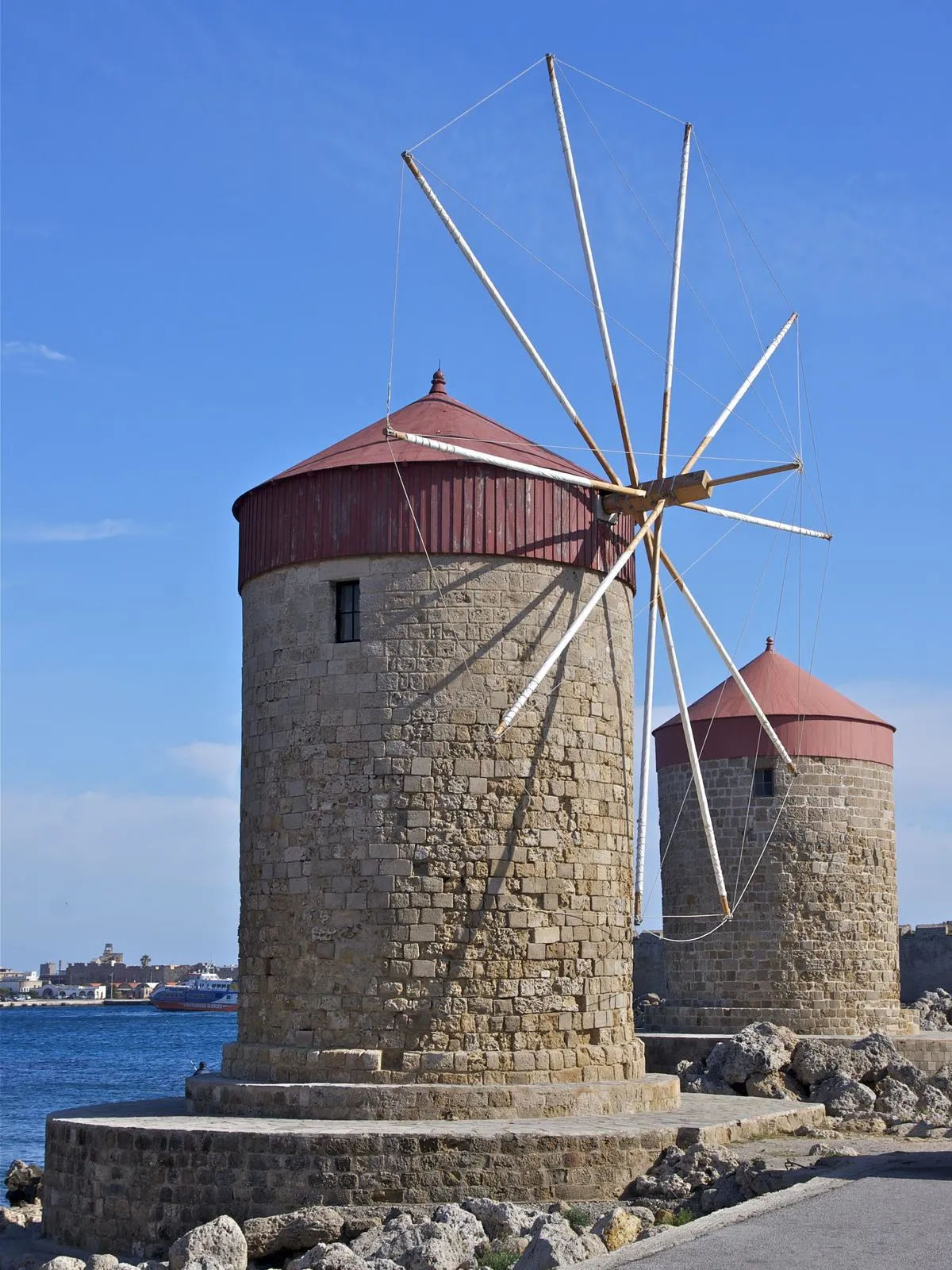
The essential walk runs from the Marine Gate past the medieval windmills and up to the Street of the Knights, a perfectly preserved cobbled street lined with the inns of the knightly orders, each one still flying the tongue of its origin on the facade. From there the lanes spill into the bazaar quarter around Suleymaniye Mosque, the most photographed square in the city, and into the quieter Jewish Quarter, whose synagogue and museum carry the memory of a community destroyed in the twentieth century.
The old town rewards early mornings and evenings. Come before ten to have the Street of the Knights almost to yourself, and again after six when the day-trippers have gone back to their ships and the courtyards fill with locals over dinner. The Archaeological Museum, housed in the medieval Hospital of the Knights, is covered by the same combined ticket as the Palace of the Grand Master, so buy once and see both.
The Palace of the Grand Master
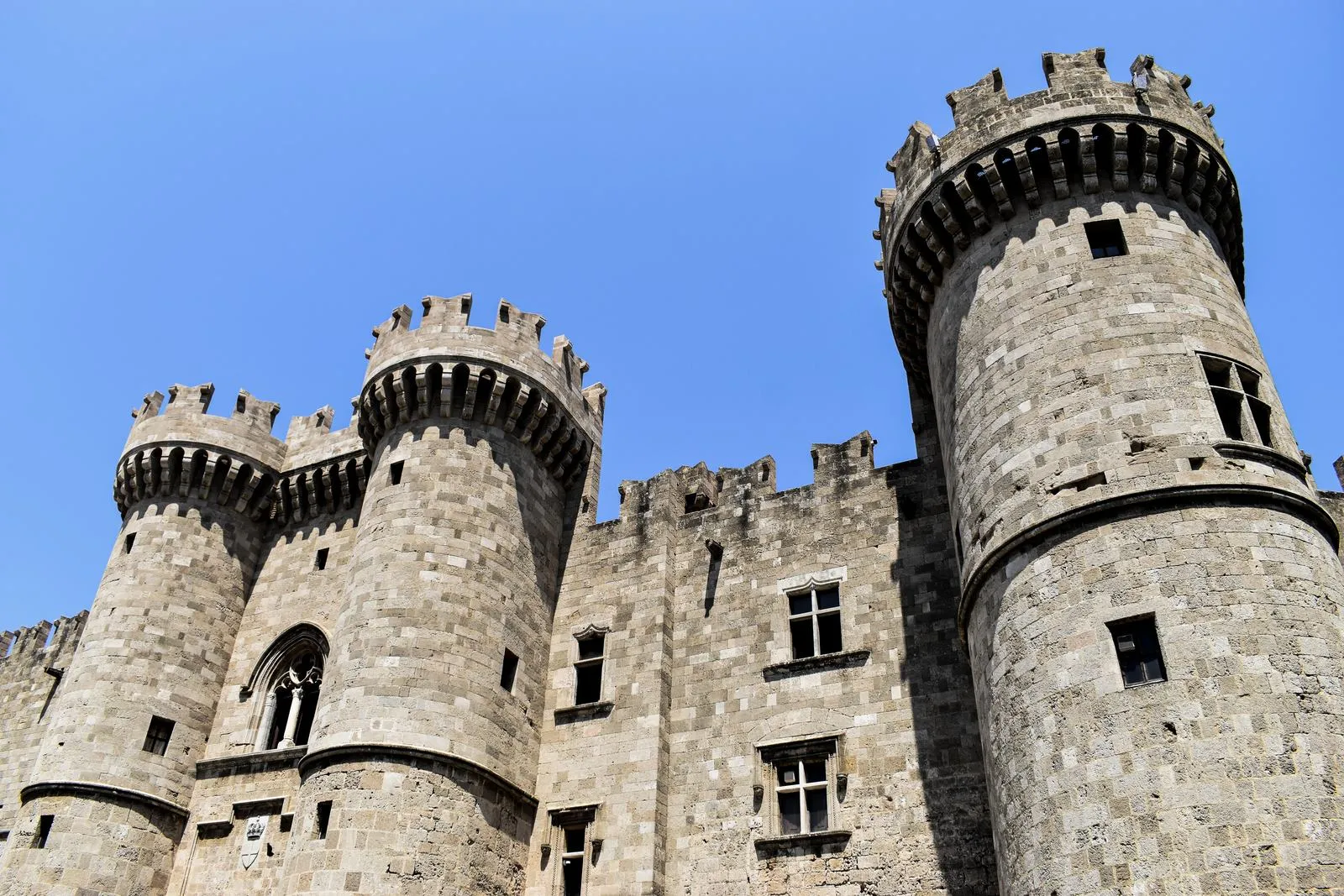
The Palace of the Grand Master is the head of the old town, a fortress palace at the top of the Street of the Knights. The knights built it in the 14th century as the seat of their grand master, and the Italians rebuilt it in the 1930s as a holiday residence, which is why the interior feels more lavish than its medieval shell suggests. The upper floor is lined with Roman and early Christian mosaic floors lifted from buildings on Kos, and the halls hold two permanent exhibitions on ancient and medieval Rhodes.
One ticket covers a lot. The official 2026 price is 20 EUR for foreign visitors, and the same ticket is valid for the Archaeological Museum of Rhodes, the Decorative Arts Collection, the Church of Our Lady of the Castle, the medieval town itself, and the palace, according to the Greek Ministry of Culture. In summer, from 1 April to 31 October, the palace opens daily from 08:00 to 20:00; in winter it runs 08:30 to 15:30 and closes on Tuesdays. Last admission is twenty minutes before closing.
Give it two hours, and pair it with a walk along the top of the fortification walls if the season allows. The walls are among the most complete in Europe, and the walk between the towers gives the best view back over the old town and out to the sea.
Lindos and its Acropolis
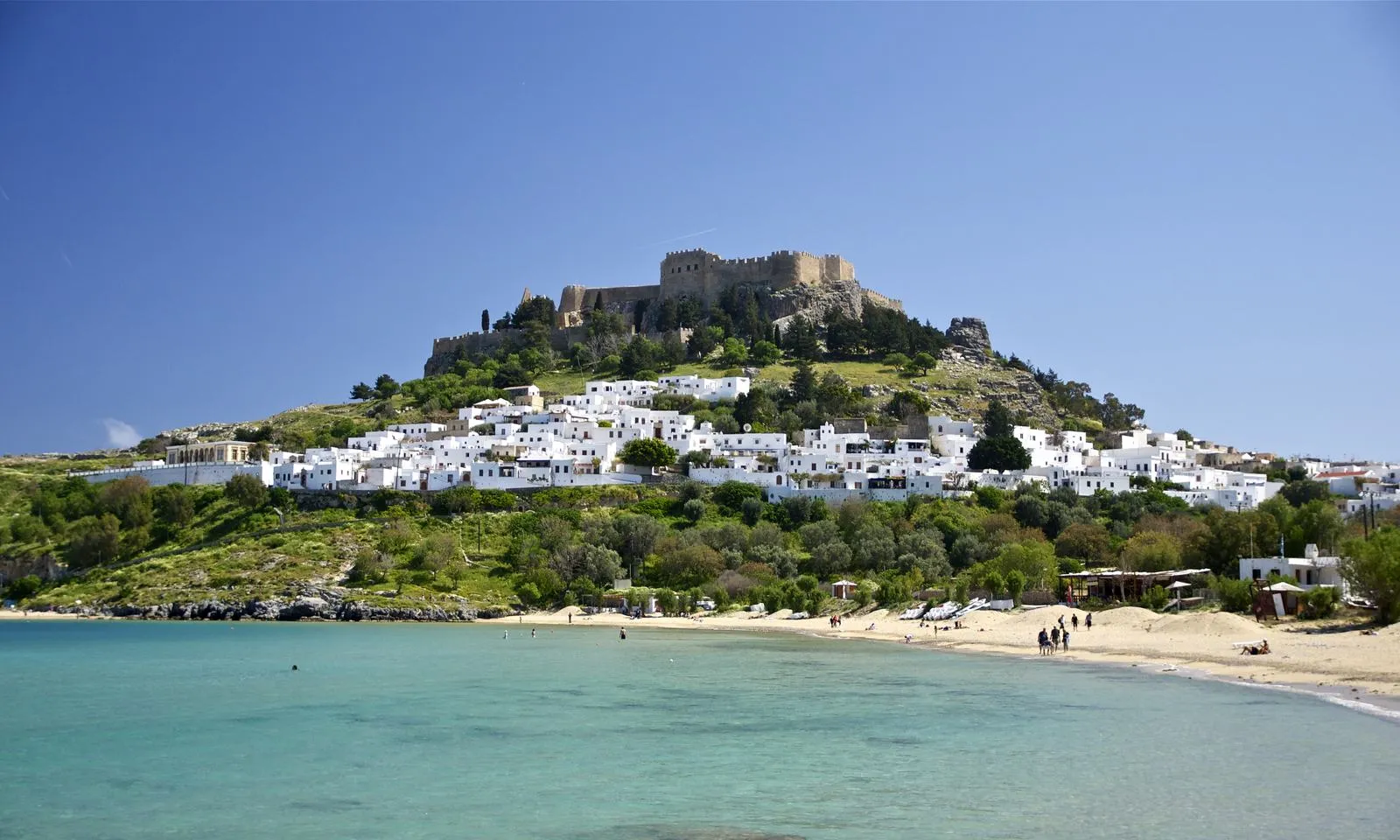
Lindos is the island’s second town and its best half-day, a whitewashed village of captains’ houses stacked beneath a rock that carries an ancient acropolis. The climb from the village square to the summit gate takes 15 to 20 minutes on a steep stone path, or you can ride a donkey for a fee. On top, a 4th century BC temple to Athena sits behind a medieval castle gate the knights added, and the view over Saint Paul’s Bay is the one that sells the island.
Entry to the acropolis is 20 EUR in 2026, and there is a new timed-entry system: you book a one-hour slot on the official hhticket.gr portal run by the Ministry of Culture, and arrive within your window. In summer the site opens from 08:00, with closing moving earlier from late August as the days shorten. Book a day or two ahead, and take the earliest slot you can; by midday in August the rock is hot and the path is a queue.
Below the acropolis, the village itself is worth an hour. The narrow lanes hold small shops and rooftop tavernas, and Saint Paul’s Bay on the far side is a sheltered cove where the apostle is said to have landed. It is the island’s most beautiful swimming spot and, in August, one of its busiest, so come early or late in the day.
The beaches
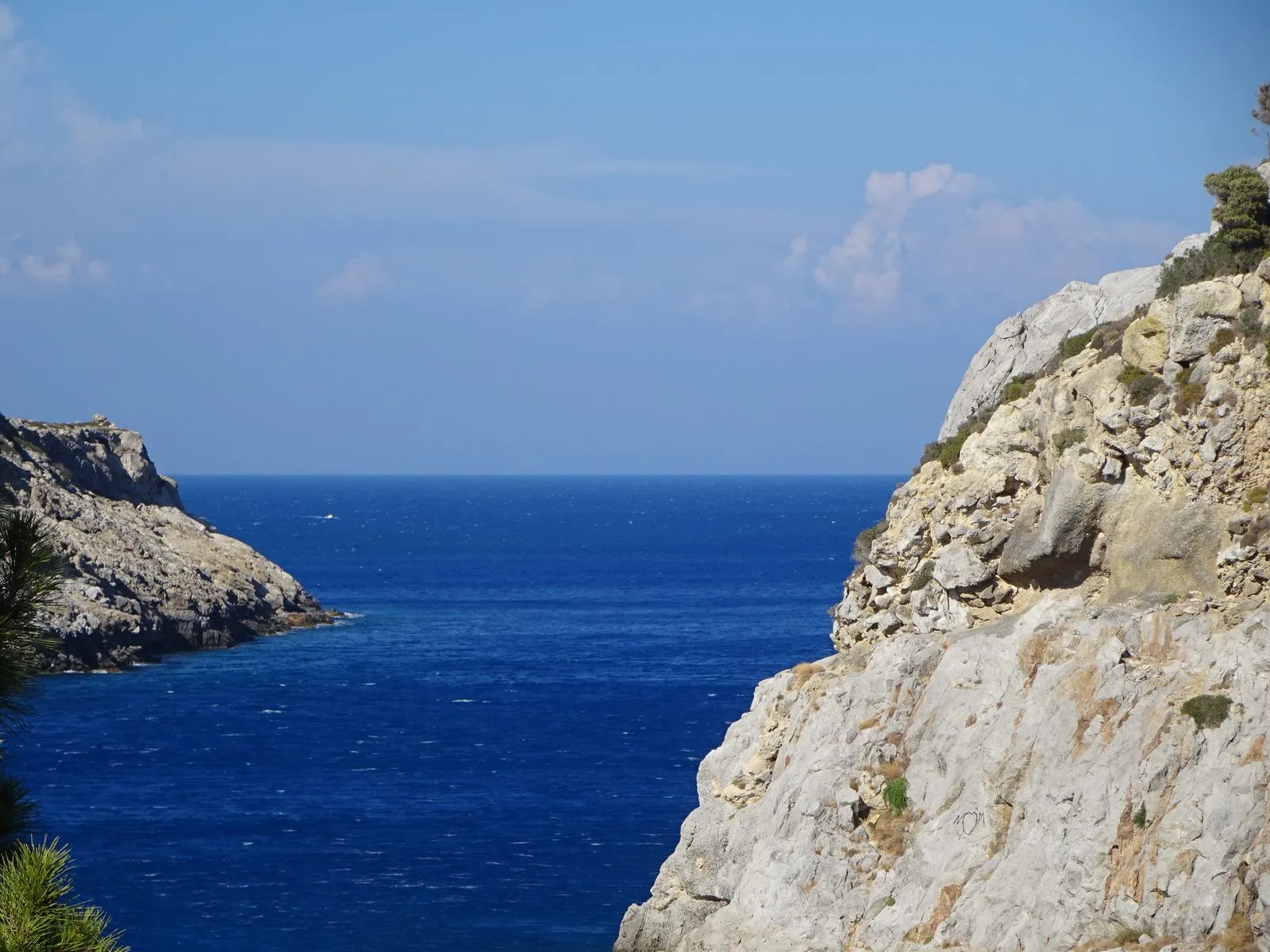
Rhodes has two coasts with different personalities, and choosing between them is the practical part of a beach day. The east coast, from Rhodes town down past Faliraki, Afandou, and Lindos, faces away from the prevailing northwesterly meltemi wind, so the water is warmer, calmer, and clearer. The west coast around Ixia and Ialyssos takes the wind head-on, which makes it a degree or two cooler, choppier, and the place to windsurf, not to float.
The best-known east-coast stops are Anthony Quinn Bay, a small rocky inlet named after the actor who bought it, and neighbouring Ladiko, both of them pockets of turquoise reached by bus or car north of Faliraki. Further south, Tsambika sits under a monastery hill and is one of the island’s best sandy beaches, while Faliraki is the long, organised, resort-backed one with every water sport going. In town, Elli Beach and the organised strip below the old town walls are the easy swim within walking distance of your room.
At the far south, Prasonisi is the strange one: a thin sand spit that joins a windsurfing beach to the sea, with surf on one side and calm on the other depending on the wind. Kallithea Springs, north of Faliraki, pairs a restored 1930s spa building with a sheltered bay and is worth the small entry for the architecture alone. Two rules cover most days: swim in the morning before the wind builds, and head east when the forecast is breezy.
Rhodes food
Rhodes has its own kitchen, separate from the Cyclades. The dish to order first is pitaroudia, chickpea fritters with onion, tomato, and mint, the island’s signature meze. Alongside it come lakani, chickpeas slow-baked in a clay pot, and a table of the usual Greek starters: tzatziki, fava, grilled octopus, and stuffed vine leaves. The local sweet is melekouni, a sesame and honey bar traditionally handed out at weddings and festivals.
Seafood is the other half of the menu, sold by the kilo and grilled simply, and the island’s inland villages run tavernas that beat the harbour on both price and atmosphere. Eating in the old town is about the setting, and the courtyards around the Street of the Knights are lovely but priced for it. Walk ten minutes into the new town near the market for the better value on the same dishes, and head up to a village like Embona or Apollona if you have a car and want the local version.
Nightlife
Rhodes is livelier than most Greek islands but calmer than Mykonos, and the scene splits by area. In Rhodes town, the nightlife runs along a strip of Orfanidou and the lanes near the harbour, with cocktail bars in the old town courtyards and clubs around the new town. Faliraki, fifteen minutes south, is the young, loud, package-holiday end, with a long bar street, foam parties, and cheap drinks that run until dawn.
Lindos is the polished alternative: rooftop bars over the bay, sunset cocktails, and a more relaxed dress-and-sip crowd rather than a clubbing one. For a quieter evening, the old town after dark is its own thing, with lamplit lanes and tavernas where the day-trippers never reach. The season runs from late May to September, and taxis get scarce after midnight, so agree on a meeting point and a way home before the night starts.
Day trips
The best day trip is Symi, the small island an hour north by ferry. Its harbour at Gialos is a horseshoe of neoclassical houses in ochre and terracotta, and the monastery at Panormitis and the village of Chorio fill the rest of the day. Ferries run several times a day in season, take about an hour, and start from around 5 to 7 EUR, or you can compare times and book on Omio. It is the classic Rhodes day out and worth the early start.
Two more options. Halki, west of Rhodes, is tiny and quiet, with a pretty harbour and almost no traffic, reached by ferry in about an hour. And Turkey is closer than most people realise: daily ferries cross from Rhodes to Marmaris in around an hour in season, which puts a Turkish bazaar and a different cuisine inside a day trip. Bring your passport and check the visa rules for your nationality before you book.
Rhodes or Crete?
They are the two big Greek islands most people weigh up, and they suit different trips. Rhodes is the better first visit for medieval history, with a compact, walkable old town, the acropolis at Lindos, and short ferries to Symi and Turkey. It is also easier without a car, because the highlights sit on one east-coast road and the old town is the base.
Crete is bigger and wilder, better for driving, hiking, and long empty beaches, with the Samaria Gorge, the palace of Knossos, and a food culture that runs deep. If you have a week or more and want to move around, Crete rewards it. If you have four or five days and want walls, knights, and a warm sea on the doorstep, Rhodes is the easier and more concentrated choice. For the wider country, browse the Greece guide and the Santorini guide for how the islands compare.
When to go
May, June, September, and October are the best months. May is warm and green with the island still quiet, June and September pair a warm sea with thinner crowds and falling prices, and early October stays warm enough to swim. July and August are the hottest and busiest, with daytime highs around 33 degrees and cruise ships filling the old town between morning and mid-afternoon.
The sea is the other half of the decision, and Rhodes holds its warmth later than most of Greece because it sits in the warm south-east corner of the Aegean. It is comfortable for swimming from June to October, peaks at about 26 degrees in August and September, and is still around 21 degrees in November, which is the island’s quiet bonus month. Winter is mild and wet, around 15 degrees, and the beach resorts close.
Getting there
Most people fly into Diagoras Airport (RHO), about 14 km southwest of Rhodes town. The local bus runs from outside arrivals to the town bus station in roughly 30 to 40 minutes for about 2.50 EUR, and a metered taxi to the old town costs several times as much. Buses are roughly hourly and can be tight with luggage in summer, so a pre-booked transfer is the easier choice on a late or family arrival. See the airport’s own transport page for current times.
By sea, Rhodes is the southern hub of the Dodecanese. The Piraeus to Rhodes ferry takes 12 to 20 hours depending on the sailing, runs most days, and starts from around 46 EUR, which makes it a slow but scenic option best suited to car travel and island-hopping; Omio compares the sailings. Shorter hops connect Rhodes with Symi, Kos, Halki, and Karpathos, and in season there are daily ferries across to Marmaris in Turkey. For the wider country, browse the Greece guide and all the guides.
Where to stay
Stay in Rhodes old town for a first visit if the history is the point. You sleep inside the walls, walk to the palace and the harbour, and the evenings are the best thing about the place. Rooms in restored stone houses vary from simple to luxurious, and the lanes are car-free in places, so check the access and the luggage route before you book.
The new town around Mandraki harbour is the practical alternative, with more modern hotels, the beach at Elli within walking distance, and easier parking. Faliraki and the east-coast strip suit package holidays and families, with long beaches and every facility. Lindos is the romantic choice, with rooftop views over the bay but steep lanes and a summer crowd. Ixia and Ialyssos are the windier west-coast resorts, and Kiotari and Gennadi in the south are the quiet, all-inclusive end.
Wherever you stay, ask about air conditioning and shade, because July and August are genuinely hot, and a room without it is a bad deal. A car helps if you want the beaches and villages on your own schedule, but the east coast and the old town work well by bus if you would rather not drive.
What a day costs
Planning figures for 2026, per person per day and excluding flights and accommodation: a budget day runs 40 to 60 EUR, a comfortable day 80 to 120 EUR, and a mid-range day 140 to 200 EUR. Rhodes sits in the middle of the Greek island range, cheaper than Santorini or Mykonos but pricier than the mainland. The comfortable number covers the combined old town ticket, a taverna lunch and dinner, a beach day, and transport, while the budget number leans on buses, gyros, and public beaches. These ranges are planning estimates built from the ticket, transport, and food prices cited in this guide, not an official index.
The season moves the numbers more than the budget table does. July and August bring peak hotel rates and cruise crowds in the old town, while May, June, and September and October keep the island quieter and the rooms cheaper. Early autumn is the sweet spot for value, because the sea is still warm from summer and the prices have already started to fall.
Practical information
| Getting around | RODA runs the city buses and KTEL the interurban ones, with a single ticket from about 1.20 EUR in town. Buses reach Faliraki, Lindos, the airport, and most beaches on the east coast, but the west and south are easier by car. The old town is walkable and partly car-free, so leave the car at the edge and go on foot. |
|---|---|
| When to go | May, June, September, and October are the best months, with warm sea and lighter crowds. July and August are hot and busy, around 33 degrees, with cruise ships in the old town and peak prices. The sea is warmest in August and September, about 26 degrees, and still swimmable in November. |
| Money | Greece uses the euro. Cards are widely accepted in hotels, restaurants, and shops, but keep cash for buses, small tavernas, and markets. Buses are run by two different operators with separate tickets, so check before boarding. |
| Health and safety | Rhodes is a safe, well-developed island, and the main risks are the summer sun and the sea. Carry water, use high factor sun cream, and wear shoes with grip for the stone paths at Lindos and the old town. The west coast can be windy and choppy, so swim on the sheltered east side when it blows. |
| Sightseeing rhythm | Do the old town and the Palace of the Grand Master in the early morning or after 18:00, Lindos on the earliest ticket slot you can book, the beach in the middle of the day, and the courtyards in the evening. Book the Lindos slot and any ferry a day or two ahead in July and August. |
Disclosure. This blog post contains affiliate links. If you book through them, Mediterranean Vibes may earn a small commission at no extra cost to you; it is how the site stays up.
._Rhodes,_the_island_of_Rhodes,_the_Dodecanese,_Greece.jpg)


