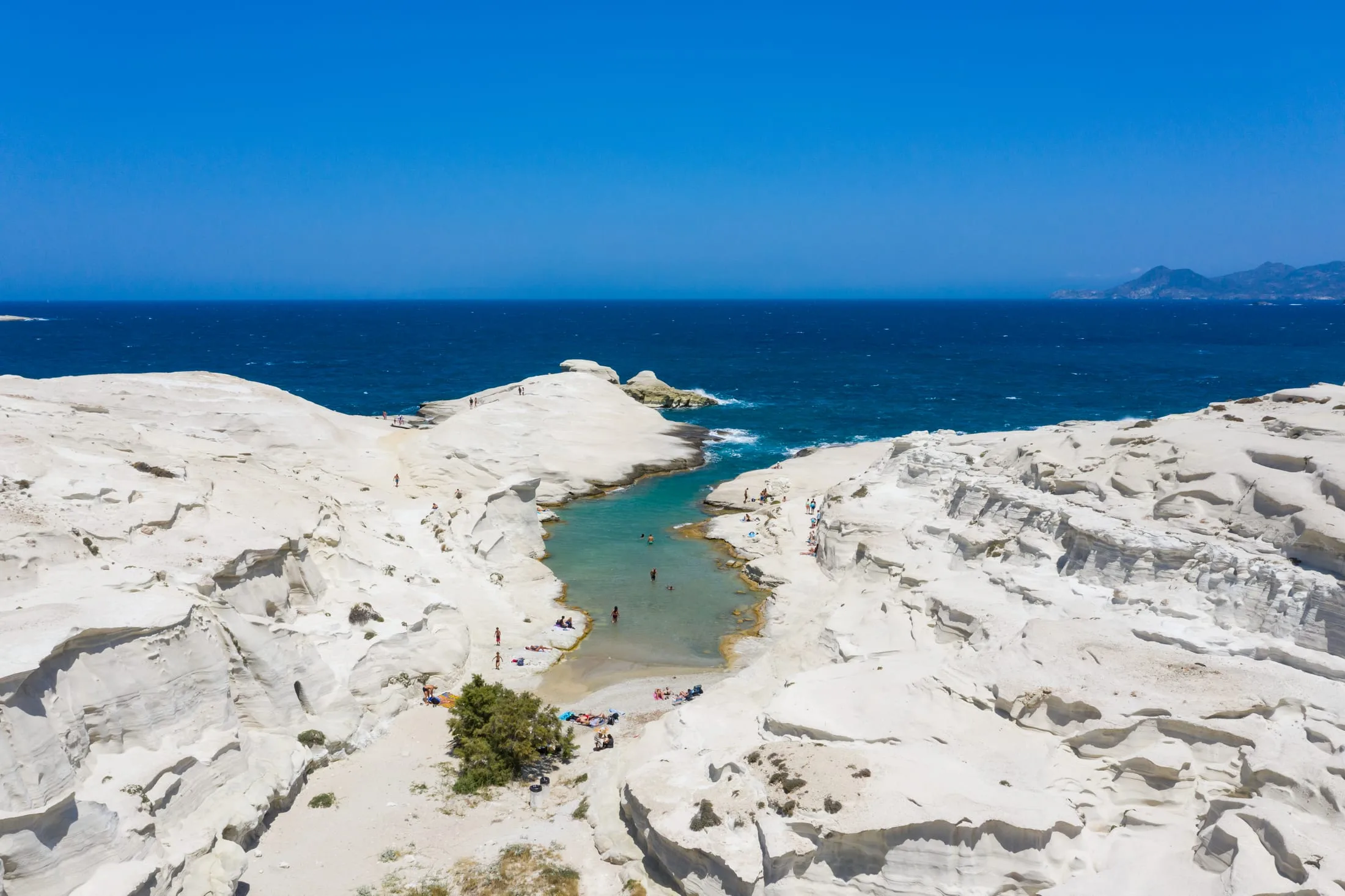
Milos is the Greek island that looks least like Greece and most like the moon, and that is the whole reason to come. The north coast is a field of white volcanic rock at Sarakiniko, worn smooth and hollowed into caves, where the sea is an unnatural turquoise against a landscape with almost no soil. A few kilometres away the same geology gives you hot springs, a mining history, and more than seventy beaches, which is a claim few islands can make honestly.
It is also the island that quietly absorbed the crowds that used to go straight to Santorini. Milos has no caldera sunset circus and no cruise-ship crush in the villages, but it does have the single best boat trip in the Cyclades, a capital that still feels lived in, and a set of beaches that rewards having a car. The trade-off is logistics: the good stuff is spread out, and arriving without a plan means losing a day to the bus timetable.
This guide gives you the numbers that matter for 2026 with the source attached. Ferry and flight times, the real cost of the Kleftiko boat trip, catacomb and museum tickets, bus fares, and a daily budget range, plus the two decisions that shape the whole trip: whether to rent a car, and how many days to give the island. If you are building a longer Greek route, compare it with Santorini and Crete, or start from the Greece country guide.
Plan and book
3 partners- Flights
Find the Athens to Milos hop or a direct route into MLO from wherever you start.
Search flights - Ferries and trains
Book the Athens to Milos crossing and compare it with island hops in one search.
Compare routes - Where to sleep
Rooms in the port of Adamas, the hilltop capital Plaka, and the beach village of Pollonia.
Find a room
Sarakiniko
Sarakiniko is the image that put Milos on the modern map, a stretch of white pumice and limestone on the north coast sculpted by wind and water into smooth ridges, bowls, and caves. It is free, it is about 4.5 km from Adamas, and it is best between sunrise and nine in the morning, when the rock glows and the parking area is still half empty. By midday in August the white stone reflects the heat and the small sandy cove fills up.
The honest advice is to treat it as a landscape rather than a beach day. Bring water, wear shoes with grip because the rock is smooth and the edges are sharp, and swim from the small protected inlet where the water is deep and clear. There is no shade and no taverna, so most people give it two hours and move on. The same coast hides the Papafragas sea cave and the little bay at Mandrakia, both easy to fold into the same morning.
The beaches
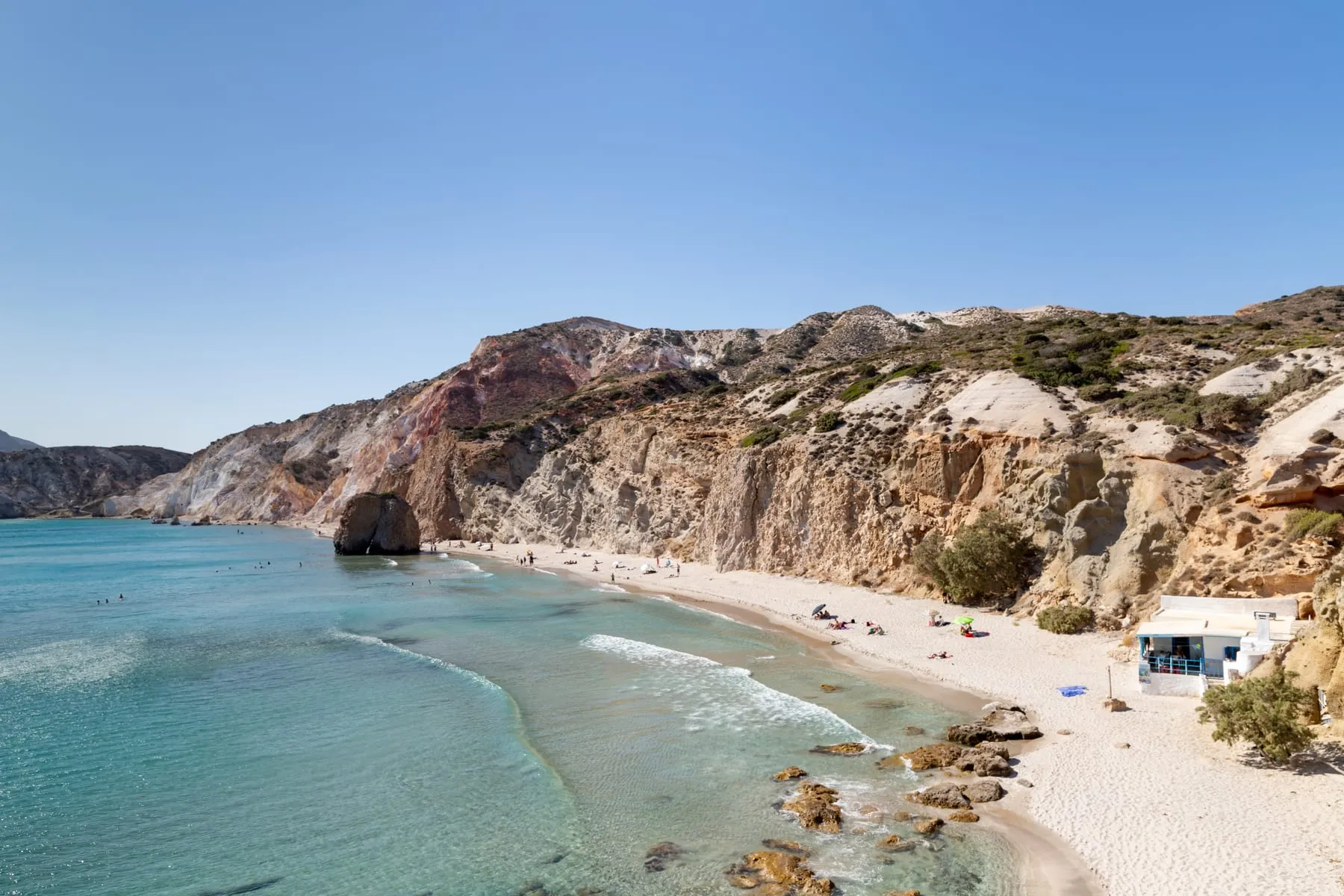
Milos claims more than seventy beaches, and the honest version is that a handful are worth planning around. Firiplaka, on the south coast, is the classic: a wide band of sand and pebble below cliffs streaked red, white, and grey, with a couple of beach bars and the clearest water on the island. Next door is Tsigrado, reached by a steep path and a rope-and-ladder descent through a gap in the rocks, which is fine for confident walkers and genuinely not for anyone carrying a cool box.
For an easier day, Plathiena sits close to Plaka and faces the sunset, while Paliochori on the south coast has the tavernas, the sunbeds, and the warm shallow water. Papafragas and the north beaches are for photographers and swimmers rather than sunbathers. The pattern to remember is that the best beaches are on the south and east coasts and the buses only reach some of them, which is the argument for a car.
Kleftiko and the boat trip
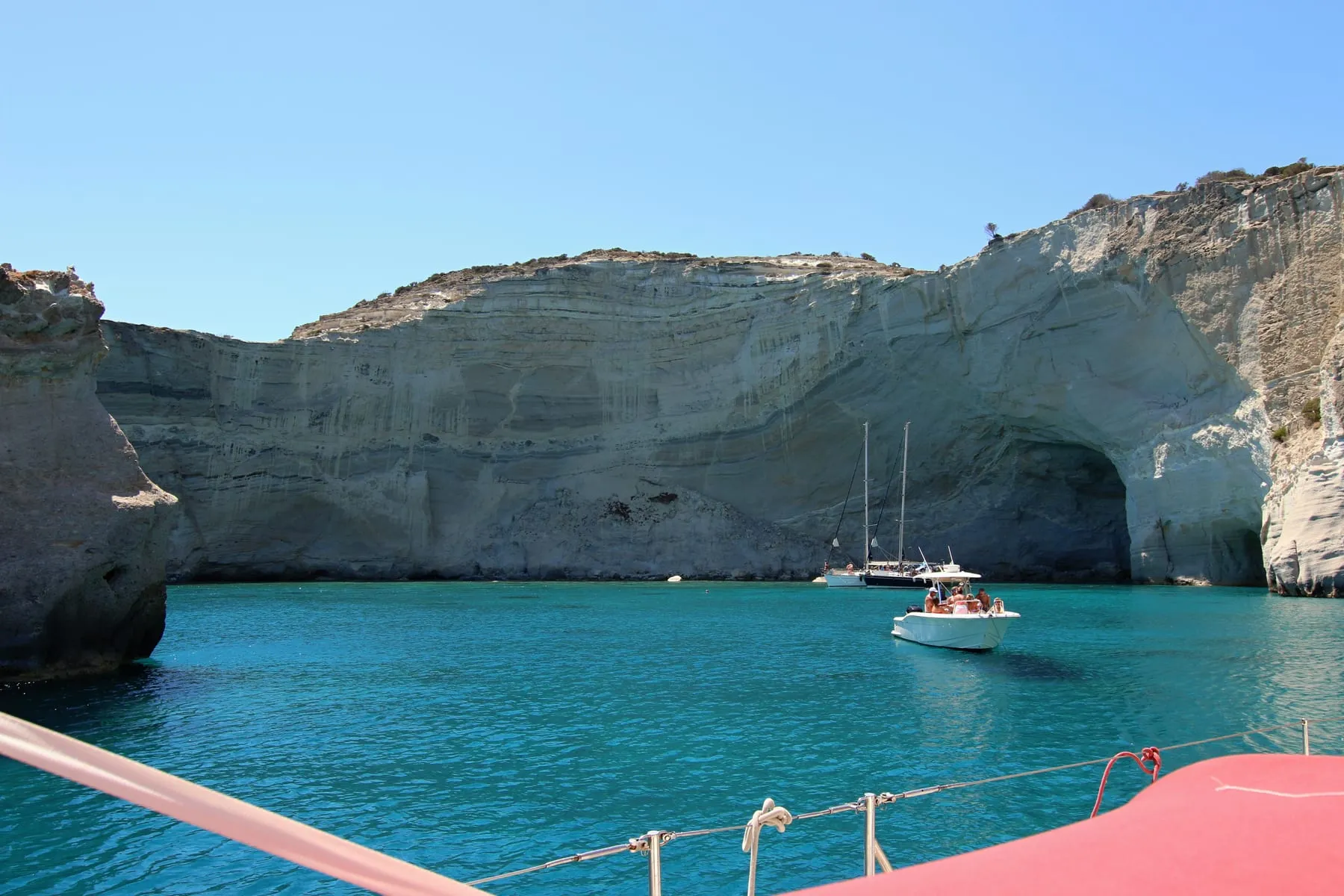
Kleftiko is the reason people sail here, a cluster of white cliffs and sea caves on the southwest coast that once served as a pirate hideout and now serves as the best swimming stop in the Cyclades. There is no road to it. The only way in is by boat, which is what makes the day feel earned rather than bought. The full day cruises leave from Adamas, round the west coast past Cape Vani and the collapsed roof of the Sykia cave, and anchor at Kleftiko for a long swim and snorkel.
On price, the 2026 operator pages list full day sailings from about 110 to 140 EUR per person including lunch, with half day and sunset catamarans starting at a similar figure. The quality of the day depends on the weather and the skipper, and the honest caution is that strong meltemi wind can move the itinerary to the sheltered south side of the island, which is still a good day but not the postcard. Book a day or two ahead in July and August. If this is the one trip you build the visit around, compare the Kleftiko cruises before you commit.
Plaka, Klima, and the villages
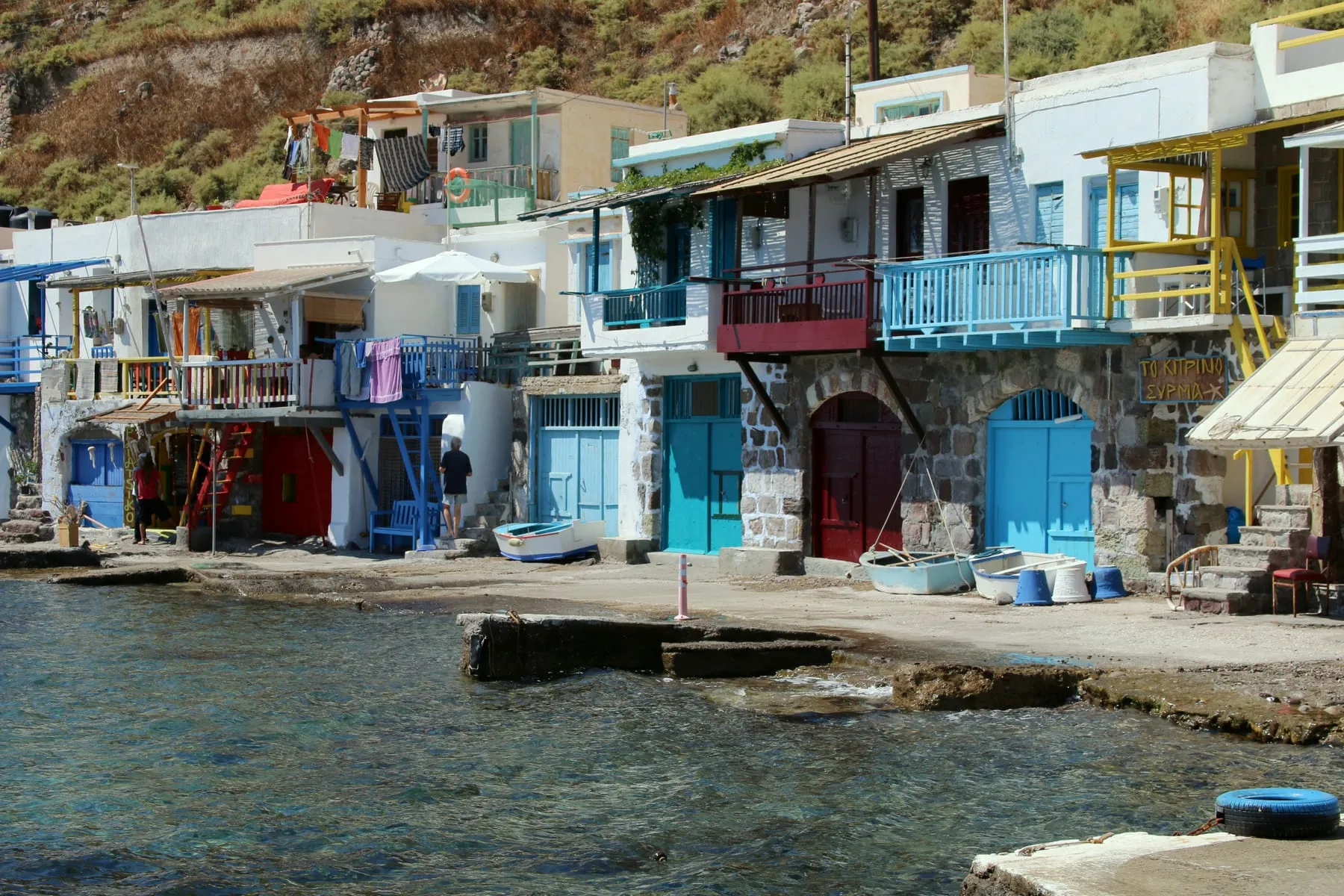
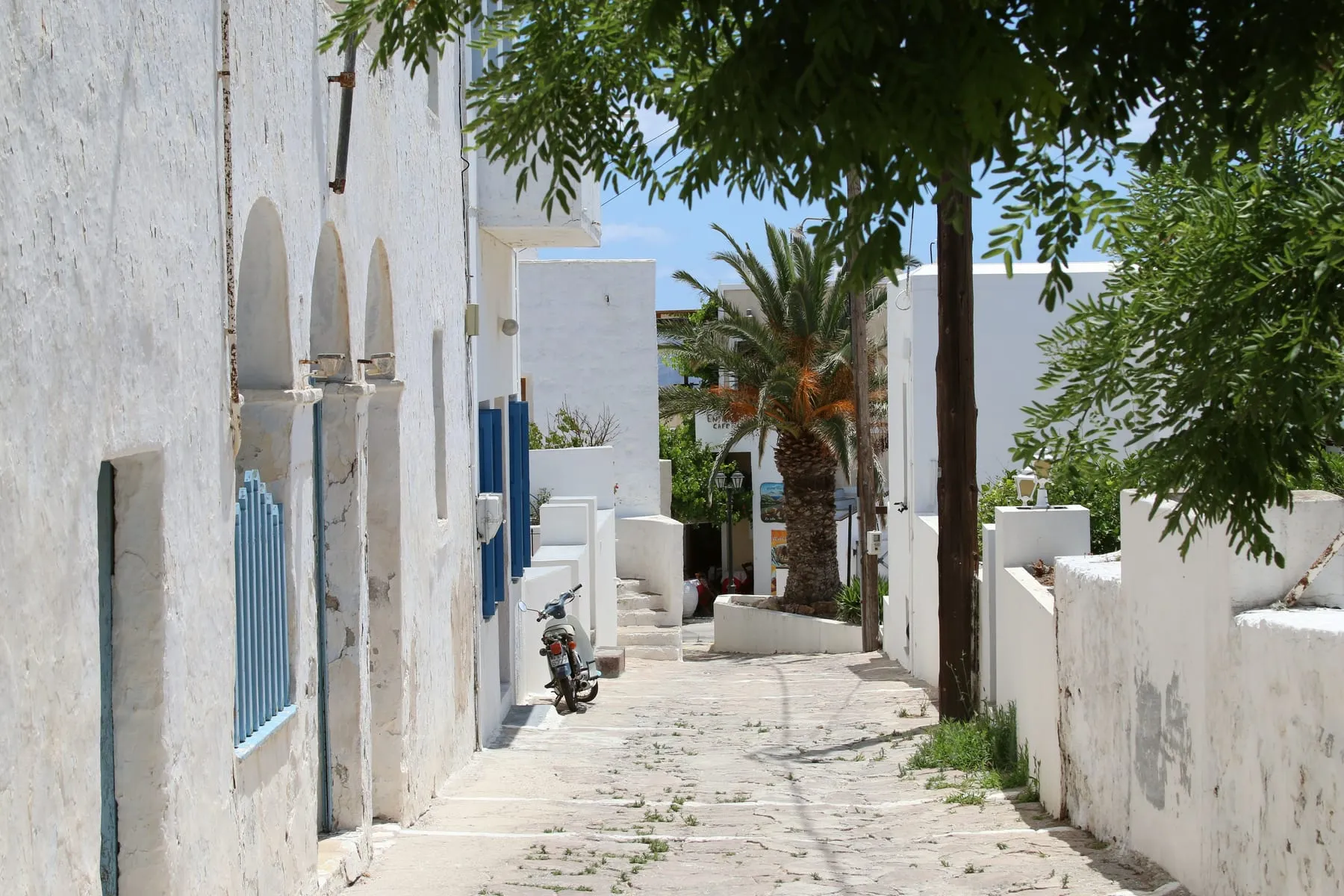
Plaka is the hilltop capital, a knot of white lanes and bougainvillea under a Venetian kastro, and the place to be at sunset. It is small, it is climbed on foot, and it has the best spread of restaurants and bars on the island. Below it, reached by a steep walk or a short drive, is Klima, the fishing village of syrmata: two-storey boathouses painted in bright colours with doors that open straight onto the water, built so the family could live above the boat in winter.
Mandrakia repeats the trick on the north coast with a tighter little harbour, and Pollonia in the northeast is the grown-up version, a working fishing village with waterfront tavernas and a water taxi across to the island of Kimolos. Adamas, the port, is the least charming and the most useful, since every ferry and most boat tours start and end there. A sensible first visit touches Plaka, Klima, and Pollonia, and saves Adamas for logistics.
Catacombs and the Venus de Milo
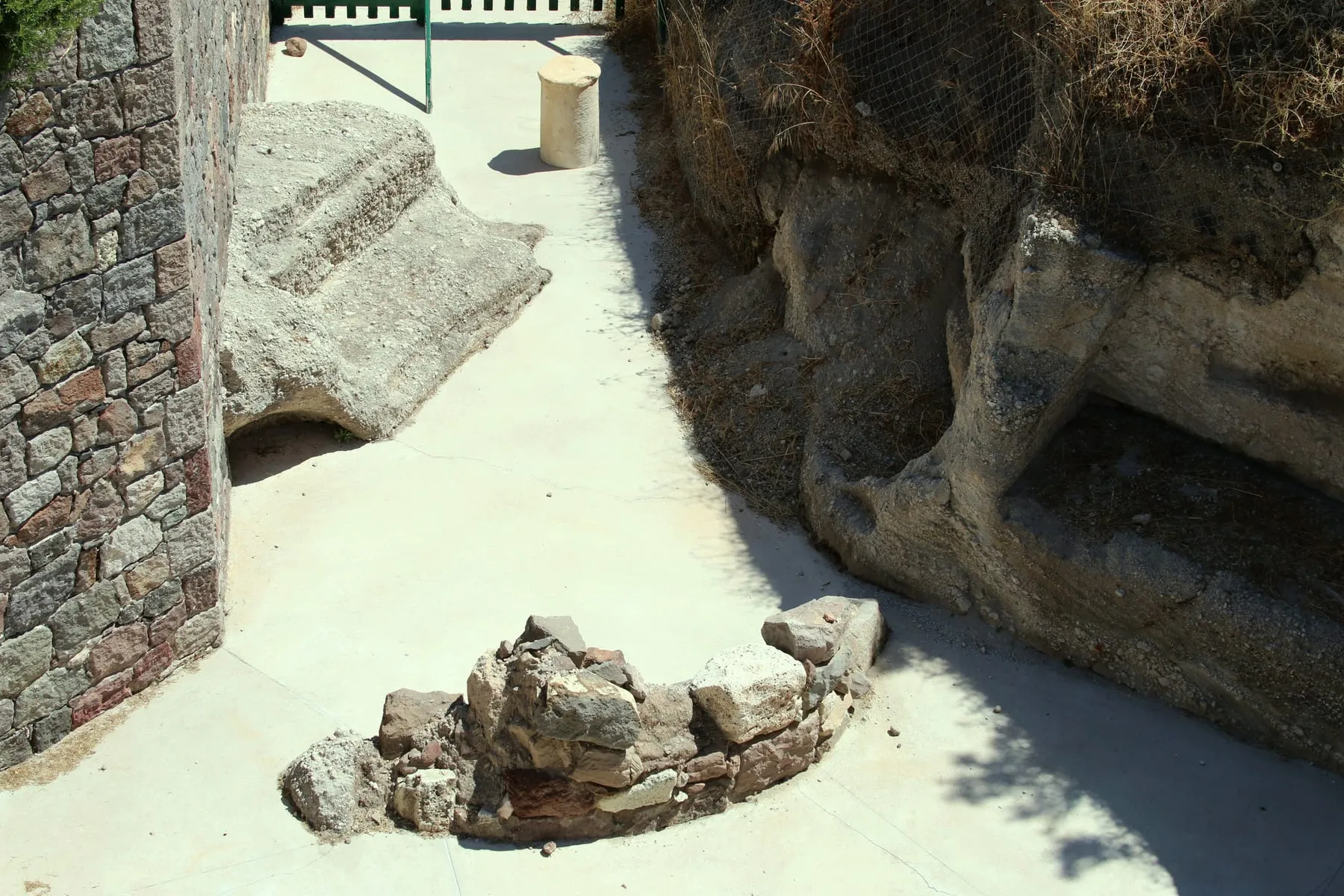
Milos has more depth than its beaches suggest. Above Trypiti, on the road between Plaka and the coast, the Catacombs of Milos are early Christian burial chambers cut into the volcanic rock, used from around the 1st century AD and discovered in 1844. You visit in small guided groups through a network of low corridors lined with carved graves. The 2026 official ticket is 10 EUR full and 5 EUR reduced, and the site closes on Tuesdays.
Two minutes away stands the marble ancient theatre, an open Roman-era site on the hillside with a view down to Klima, and it pairs naturally with the catacombs in a single afternoon. The other name Milos gave the world is the Venus de Milo, found in a field here on 8 April 1820 and sold to France within a year. The original has stood in the Louvre since 1821, and the Archaeological Museum in Plaka holds a replica alongside the island’s obsidian tools and prehistoric finds from Fylakopi. The museum ticket is 5 EUR full and 3 EUR reduced, also closed on Tuesdays.
Food
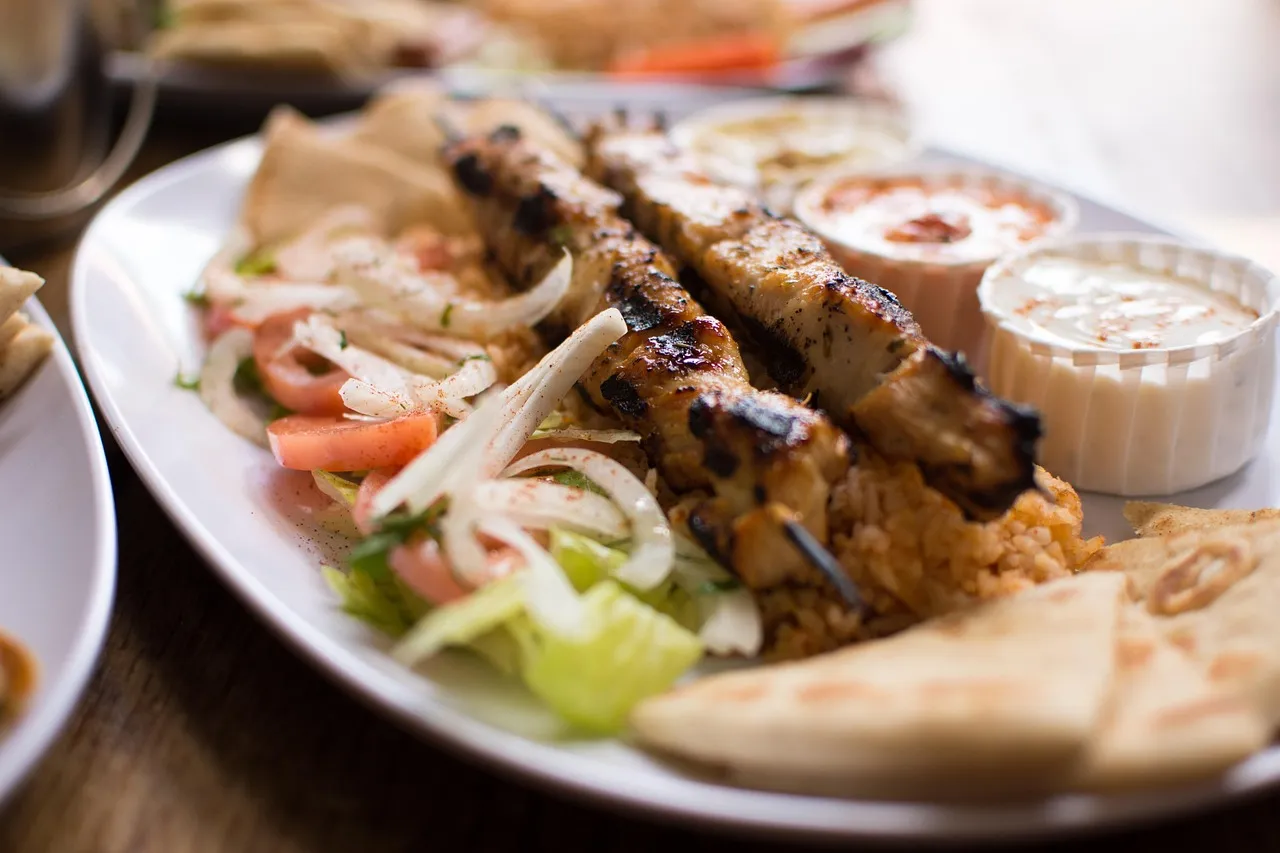
Milos eats like a working island rather than a resort. The local specialities are pitarakia, small half-moon cheese pies fried until the pastry crisps, and karpouzopita, a sweet pie made from watermelon and honey that sounds strange and works. The seafood is the reason to sit by the water in Pollonia or on the Adamas waterfront, and the island grows enough to keep the menus seasonal.
Prices land below Santorini and Mykonos. A gyros is a few euros, a taverna lunch is around 12 to 18 EUR, and dinner with wine by the sea is realistically 25 to 40 EUR a head depending on how much fish you order. Two rules that hold on Milos: eat where the menu is in Greek as well as English, and order the house wine, because the local bottlings are cheap and better than the price suggests.
Getting there
By sea from Athens, the 2026 picture is simple. The Athens to Milos ferry runs on average about four times a day, with the fastest crossing covering the 158 km in roughly 2 hours 30 minutes and the average closer to 4 hours 25 minutes on the conventional boats. Booked early, seats start at around 20 EUR, with the average fare nearer 61 EUR; last minute in August costs more. The fast catamarans leave from Piraeus, and a smaller number of slower boats use Lavrio.
By air, Milos National Airport (MLO) receives domestic flights from Athens only, about 40 minutes with Sky Express and Olympic Air, which is the way to treat the island as a short break. If you are island hopping, Milos sits neatly in a Cyclades loop: the ferry to Santorini takes about 1 hour 50 minutes at its fastest, and boats also connect to Paros, Naxos, Sifnos, and Kimolos. Fares and timetables move with the season, so check the exact route before building a tight connection.
Getting around
This is the decision that makes or breaks a Milos trip. The island is large by Cycladic standards, and the famous beaches are spread around the coast, so a car buys back hours. The bus network is real and cheap, with a single ride at about 2 EUR and everything running through the Adamas hub, but it is built for the headline sights: Plaka, Trypiti, Pollonia, and Sarakiniko. Firiplaka, Tsigrado, and Paliochori are reachable only with your own wheels or a taxi.
The honest split: if you stay in Adamas or Plaka and plan to see Sarakiniko, Plaka, Klima, the catacombs, and one boat trip, you do not need a car and can use the bus and your feet. If the southern beaches are the point of the holiday, rent one, book it early in high season, and expect narrow unmarked roads and limited parking at the popular spots. Taxis are scarce, so do not build an evening around catching one.
Where to stay
Adamas is the practical base and the right default for a first visit: the port, the bus hub, the car rentals, and most boat tours are all here, and you can walk to dinner. It is busier and less pretty than the villages, and it is the only place on the island where not having a car is genuinely fine.
Plaka is the atmospheric choice, a hilltop capital with sunset views and narrow lanes, best for couples and short stays, but it is inland and you rely on the bus or a car to reach the sea. Pollonia is the grown-up beach base in the northeast, with the best dining and calm water, and it suits a slower trip and families. A good compromise for a week is two or three nights in Adamas for the logistics and the boat trip, then a move to Pollonia or Plaka for the rest.
How many days
Three days is the honest minimum. Give day one to Sarakiniko in the early morning, then Plaka, Klima, and the catacombs in the afternoon. Give day two entirely to the Kleftiko boat trip, because it eats the middle of the day and there is no point pretending otherwise. Give day three to the southern beaches, Firiplaka and one more, ideally with a car.
Five days is where Milos starts to feel like a holiday rather than a checklist. That adds the ancient theatre and the archaeological museum in Plaka, a lazy afternoon in Pollonia, the north coast villages of Mandrakia and Papafragas, and a second swim at whichever beach won you over. Anything less than three days and the ferry timetable, not you, decides the itinerary. If you are pairing islands, three nights here plus three on Santorini or Crete is a strong first Greek trip.
What a day costs
Planning figures for 2026, per person per day and excluding flights and accommodation: a backpacker day runs 50 to 70 EUR, a comfortable day 80 to 110 EUR, and a mid-range day 120 to 180 EUR once you fold in a boat trip. The mid-range number is the honest one for most visitors, because Kleftiko alone is 110 to 140 EUR and the car is another fixed daily cost. These are planning estimates built from the ferry, tour, entry, and food prices cited in this guide, not an official index.
The season matters as much as the budget. June and September give warm water, open tavernas, and lower prices, and May and early October are cheaper and quieter with the occasional windy day. July and August bring the meltemi wind, full boats, and peak rates, and the exposed north coast loses its calm water. If the dates are flexible, the shoulder season quietly funds the rest of the trip.
Practical information
| Getting around | Local buses run from the Adamas hub to Plaka, Trypiti, Pollonia, and Sarakiniko at about 2 EUR a ride, cash only. The southern beaches need a car, which is worth booking ahead in July and August. Roads are narrow and some beach access tracks are unmarked. |
|---|---|
| When to go | June and September are the sweet spot: warm sea, everything open, fewer people. May and early October are cheaper and quieter. July and August bring the meltemi wind, packed boats, and peak prices, and the north coast beaches become choppy. |
| Money | Cards work in Adamas, Plaka, and Pollonia, but the buses and some small tavernas are cash only, so carry small notes. Tipping is the relaxed Greek version: a few euros on a good meal is enough. |
| Health and safety | Sarakiniko’s rock is smooth, sharp in places, and has no shade or lifeguard. Tsigrado involves a rope-and-ladder descent that is not suitable for everyone. The meltemi wind makes exposed north-coast swimming rough in August. The catacombs and the archaeological museum close on Tuesdays. |
| Sightseeing rhythm | Give Sarakiniko the early morning, Plaka and the catacombs the late afternoon, and the boat trip the middle of the day. Book Kleftiko a day or two ahead in high season, and keep the last evening fluid because the wind can move ferry and boat schedules. |
Disclosure. This blog post contains affiliate links. If you book through them, Mediterranean Vibes may earn a small commission at no extra cost to you; it is how the site stays up.