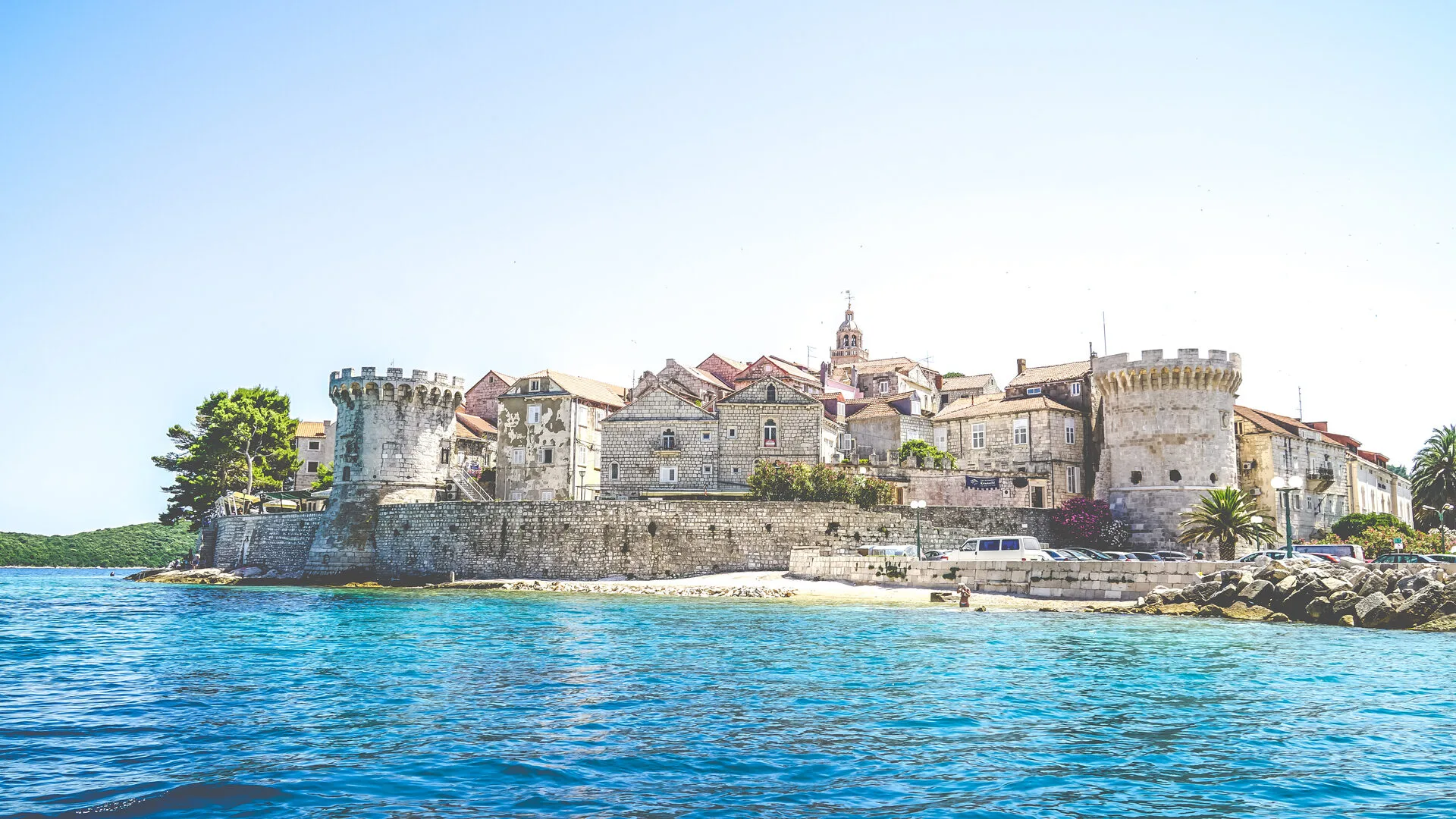
Hvar and Korcula are the two islands most people end up choosing between on the Dalmatian coast, and they are close enough to visit on the same trip. Hvar is the longer island and the busier one, with the famous harbour town, the Pakleni islands offshore, and a nightlife that draws a young international crowd. Korcula is smaller and calmer, built around one of the best-preserved medieval towns in the Mediterranean and a wine tradition that locals are quietly proud of.
The short answer. Pick Hvar for beaches, boat trips and a livelier night, and Korcula for the old town, the wine and a slower pace. If you have five days or more, do both: a catamaran connects Hvar Town and Korcula Town in about an hour, and the two islands feel different enough to justify the hop. This guide compares them on what to see, what it costs, how you get there and which one fits the trip you are actually planning.
Plan and book
3 partners- Flights
Fly into Split or Dubrovnik, then take the ferry or catamaran to either island.
Search flights - Ferries and catamarans
Compare the Split to Hvar crossing and the island hops between Hvar and Korcula.
Compare routes - Where to sleep
Rooms in Hvar Town and around Korcula, sorted by area, price and review score.
Find a room
How to choose
The quickest way to decide is by what you want the island to do for you. Hvar is the one for a holiday with a social edge: a beautiful harbour town, the Pakleni islands a short boat ride away, a wide choice of beaches, and a nightlife that runs from sunset bars to a beach club offshore. It is the more polished and the more expensive of the two, and in August it is busy enough that the town can feel like a stage.
Korcula is the one for a slower, more cultural trip. Its old town is a walled medieval peninsula with a fishbone street plan, a cathedral, and a claim to Marco Polo that the town has never quite let go of. It is quieter, more compact, and easier to cover on foot, with vineyards and fishing villages a short drive away. The nightlife is mild, which is either the appeal or the deal-breaker.
Both islands are in the same corner of the Adriatic, both are reached by catamaran from Split, and both are linked to Dubrovnik and the Peljesac peninsula. The differences are in scale, mood and what fills the days, and the sections below take them one at a time.
One practical difference is size. Hvar is the longer island, so a car or a scooter genuinely helps if you want the south-coast beaches and the villages beyond Hvar Town. Korcula is compact enough that you can base in the old town, walk everywhere, and take a short bus or taxi to the beaches. That makes Korcula the easier island without a car, and Hvar the one where a set of wheels pays off.
Hvar
Hvar is the longest island in Croatia and the sunniest, with an average of 2,800 hours of sunshine a year according to the national meteorological service. That matters more than it sounds: it is why the lavender grows, why the vineyards work, and why the season runs so comfortably from May into October.
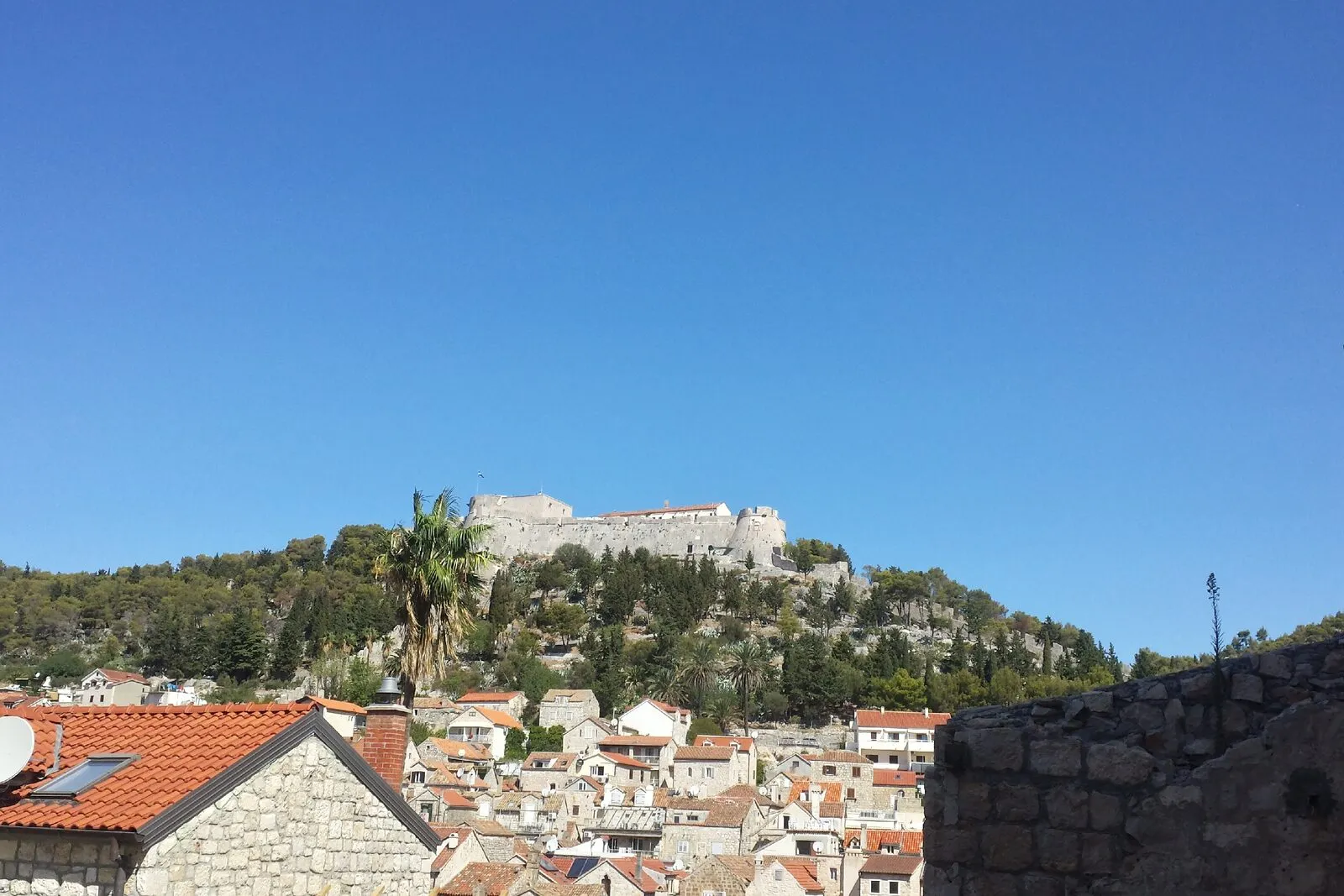
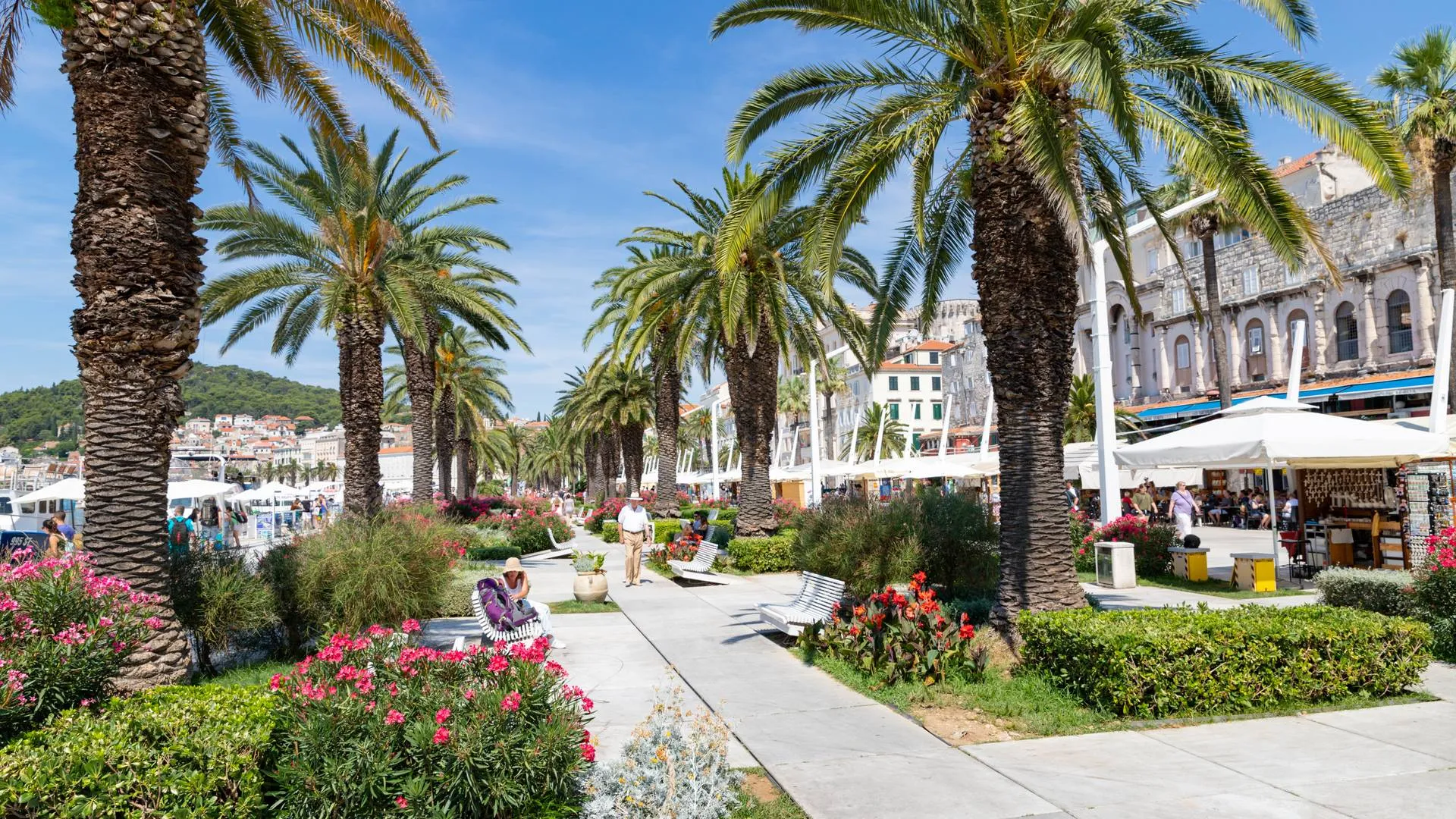
Hvar Town is the centre of gravity. The main square, the largest in Dalmatia, opens onto the harbour and the cathedral, and behind it the lanes climb to the Fortica, the Spanish fortress on the hill, which is the best view on the island and a short, steep walk up. The Arsenal on the square holds the oldest public theatre in Europe, dating to 1612, and the Franciscan monastery at the far end of the waterfront is a quiet counterpoint to the busy harbour.
Just offshore, the Pakleni islands are the reason many people come. The chain of around 20 islands and islets sits across the channel from Hvar Town and is reached by taxi boat in minutes. Jerolim is the closest swimming stop, Palmižana has the sheltered bay and the restaurants, and Stipanska is home to the beach club that keeps the late crowd going. A day here, with a boat, a swim and a long lunch, is the classic Hvar day.
Beyond the town, the island opens up. Stari Grad, on the north coast, is the oldest town in Croatia, founded in 384 BC, and it sits beside the Stari Grad Plain, a UNESCO World Heritage agricultural landscape of dry stone walls and ancient field divisions that has been farmed for nearly 2,400 years. Jelsa and Vrboska are the quieter harbour towns, and the south coast villages of Sveta Nedjelja and Ivan Dolac drop straight into the sea below the vineyards.
Getting around Hvar is easiest by bus, taxi or scooter. The island road runs the length of Hvar, linking Stari Grad, Jelsa and the south-coast turnoffs, and buses cover the main towns in season. For the beaches at Dubovica, Zarace and the south coast, a scooter or a car makes the day much simpler, and there are water taxis between Hvar Town and the Pakleni islands. A rental car is worth it for a day if you want the vineyards and the quiet villages, but not for the town itself, where parking is scarce and the streets are pedestrian.
Korcula
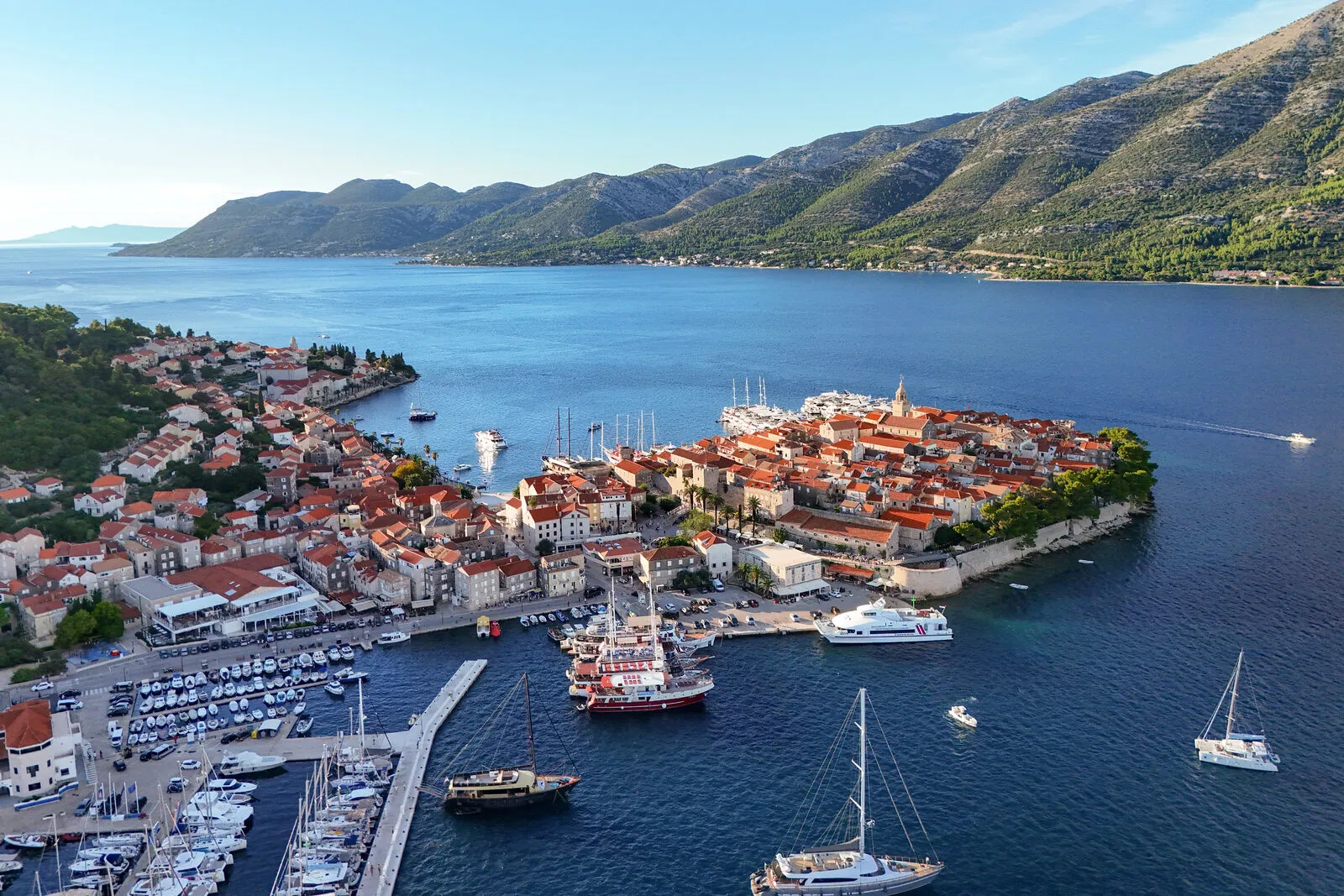
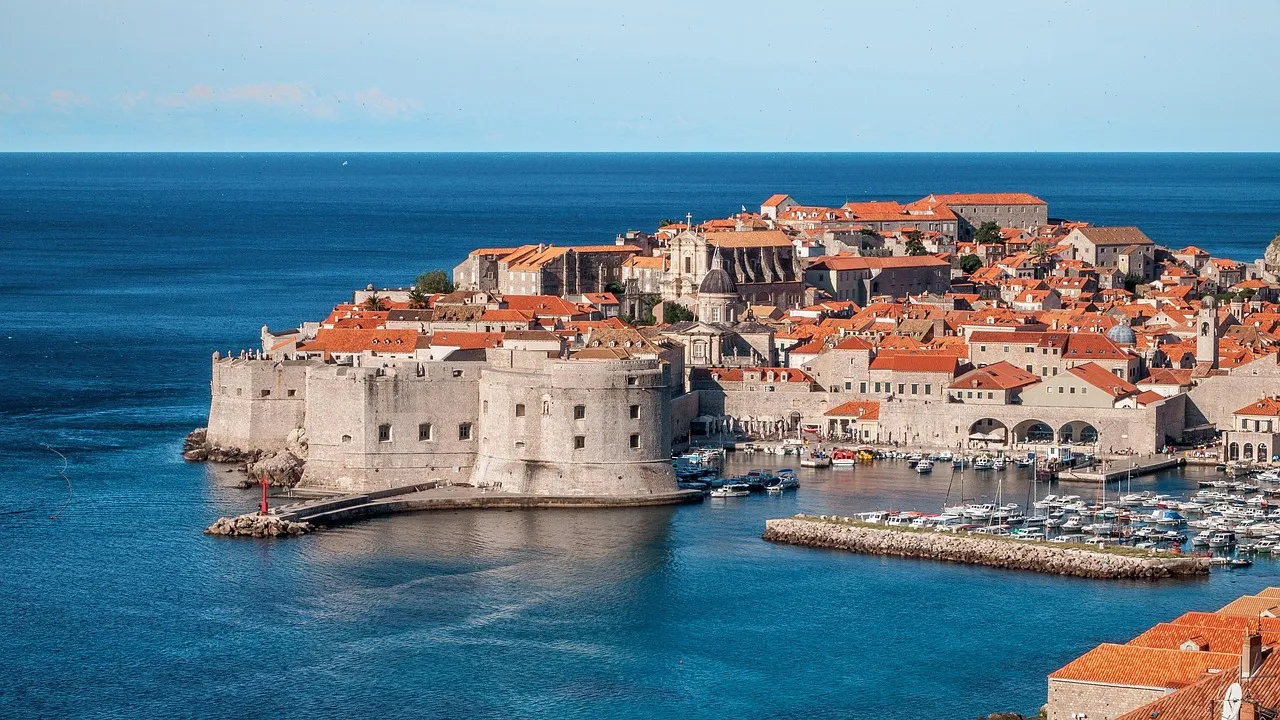
Korcula is the more compact island, and its old town is the single best reason to come. It sits on a small peninsula ringed by walls and towers, with a street plan laid out in a fishbone pattern that channels the summer breeze and blocks the winter wind. It is often called a mini-Dubrovnik, and the comparison holds: the same pale stone, the same red roofs, the same sense of a town built for defence and trade.
Inside the walls, St Mark’s Cathedral and its bell tower anchor the main square, with the Bishop’s Treasury, the Arneri Palace and the Town Museum close by. The house said to be Marco Polo’s birthplace is the other stop everyone makes, and the town has leaned into the association for centuries. In summer the old town also stages the Moreska, a sword dance with a history that stretches back to the medieval Mediterranean and is performed by local families.
Outside the town, the island is green and agricultural. Lumbarda, a few kilometres east, is the wine village, with sandy beaches and the Grk grape grown on its sandy soils. Vela Luka, at the western end, is the main car ferry port and a quieter base. The interior is vineyards, olive groves and small stone villages, and the whole island is small enough to cross in under an hour by car or scooter.
Korcula is also the better jumping-off point for Mljet, the national park island to the east, which is about 40 minutes away by catamaran and worth a day for its saltwater lakes and forest. And it sits close to the Peljesac peninsula, which is where the red wines Dingac and Postup come from, reachable via the Orebic ferry.
Korcula is the easier island to cover without a car. The old town is entirely walkable, Lumbarda is a short bus or taxi ride east, and Vela Luka is reachable by bus along the island road. A scooter is enough for a day of beaches and wineries, and the Orebic ferry makes the Peljesac wine country a realistic half-day. Because the island is small, you can see the highlights in two days and still have time to slow down.
The beaches
Hvar has the wider choice. In town, Pokonji dol is the largest city beach, about 1.5 km from the centre, and Mekicevica is a short walk east. Along the south coast, Dubovica is the postcard, a white pebble bay with a stone house on the water, and further east the coves at Zarace, Lucisce and Jagodna are quieter and wilder. The Pakleni islands add another layer: Jerolim and Mlini are the ones to swim from, and the water there is the clearest on the island.
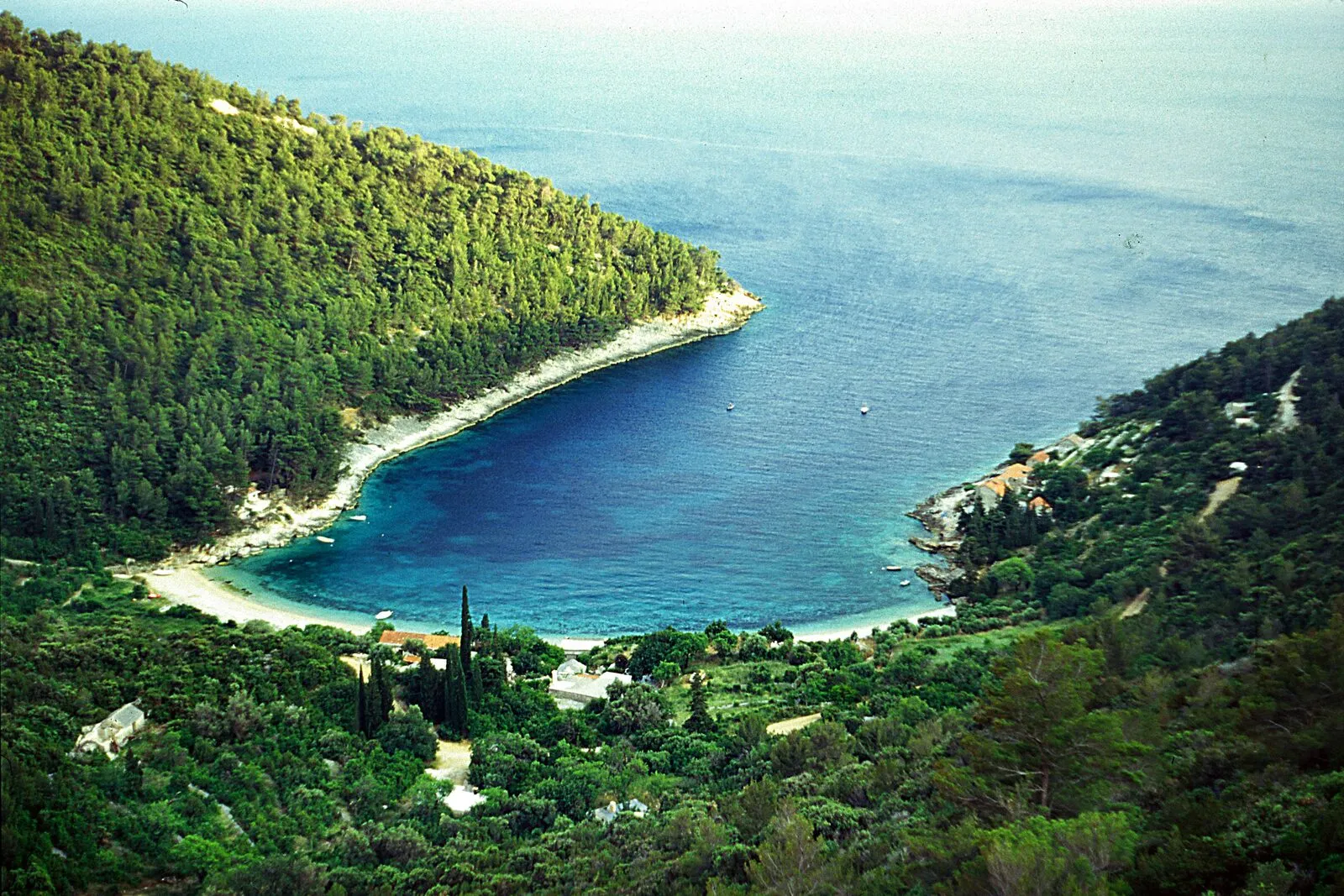
Korcula has fewer beaches but two that stand out. Pupnatska Luka, on the south coast below the village of Pupnat, is the island’s signature beach, a pine-backed pebble bay with calm, shallow water and a couple of beach bars. At Lumbarda, Vela Przina is one of the rare genuinely sandy beaches in Dalmatia, which makes it the family choice. In the old town itself there are swimming spots at Zakerjan and Puntin, right against the walls, which is a fine way to end an afternoon.
The honest comparison is that Hvar wins on variety and on the Pakleni islands, while Korcula wins on the single best family beach and on having swimmable spots inside the town itself. If beach-hopping by boat is the plan, Hvar is the better base. If you want one good sandy beach and a swim before dinner, Korcula is enough.
Food and wine
Both islands eat the same Dalmatian food: grilled fish, octopus salad, black risotto, lamb, and vegetables cooked in olive oil. The difference is in the wine, and here Korcula has the stronger story. It grows Posip, a white grape that has become Croatia’s calling card, and Grk, a rare white grown almost only in the sandy soils around Lumbarda. The reds come from the Peljesac peninsula across the water, Dingac and Postup, and a wine tasting is one of the best-value afternoons on the island.
Hvar counters with lavender and its own reds. The island is famous for lavender fields and lavender products, and the Plavac Mali grape makes the full-bodied reds of the south coast. Hvar Town has the wider restaurant choice, from konobas in the back lanes to waterfront tables, while Korcula’s old town is packed with small restaurants and wine bars, and the quality is high if you check the menu prices before you sit down.
On cost, the two are close, but Hvar Town in peak season is the more expensive of the pair for the same meal. Korcula’s restaurants and wine bars tend to be a little gentler, and the wine tasting in particular is better value. If food and wine are the point of the trip, Korcula edges it. If you want choice and a scene, Hvar has the edge.
Nightlife
This is the clearest difference between the two. Hvar is a party island: sunset drinks on the rocks at Hula Hula, harbour bars and Carpe Diem in town, then a boat out to Carpe Diem Beach on Stipanska for the late dancing. It has tightened up in recent years, with stricter noise rules and earlier closing for the loudest venues after local complaints, but it is still the livelier of the two by a wide margin. For the full picture, the party island comparison covers what a night on Hvar costs and how it works.
Korcula is the quiet one. The old town has cocktail bars and a few places with music, and the evenings are built around dinner, wine and a walk along the waterfront rather than a club. That suits couples, families and anyone who wants to sleep, but if the night out is the point of the holiday, Hvar is the island you want.
Getting there
Neither island has an airport, so everyone arrives by sea or via the mainland. From Split, the fast catamaran to Hvar Town takes 50 to 65 minutes and costs about 10 to 30 EUR, with around 19 to 20 sailings a day in peak summer. The car ferry from Split to Stari Grad takes about two hours and costs 8.40 EUR for a foot passenger, and it lands on the far side of the island, about 20 km from Hvar Town.
For Korcula, there are three main routes. A catamaran runs from Split to Korcula Town in a little over two hours, calling at Hvar on the way, and from Dubrovnik the catamaran takes about two hours from around 10 EUR. The third is the Orebic crossing from the Peljesac peninsula, a car ferry that takes about 30 minutes and runs almost hourly to Domince, a short walk or bus ride from the old town.
The two islands are directly connected. A fast catamaran links Hvar Town with Korcula Town, Prigradica and Vela Luka, taking about 50 minutes to 1 hour 35 minutes with tickets from around 6 EUR and up to 8 crossings a day in high season. There is no direct car ferry, so if you are driving you go via Split or the Orebic crossing, but on foot the hop is easy and cheap.
The choice of mainland gateway matters. Split is the better arrival point for Hvar, with the most frequent and fastest crossings, and it is where most people start. Dubrovnik is the better arrival point for Korcula, with a two-hour catamaran and the option of the Orebic ferry from the Peljesac peninsula. If you are doing both islands in one trip, the natural route is Split to Hvar, Hvar to Korcula by catamaran, and Korcula to Dubrovnik, which avoids doubling back.
Where to stay
On Hvar, Hvar Town is the base for a first visit: the harbour, the restaurants and the Pakleni boats are all on the doorstep, and the nightlife is walkable. It is also the most expensive and the busiest. Stari Grad is the calmer alternative, a quieter harbour town with the UNESCO plain behind it, and Jelsa and Vrboska suit anyone who wants a slow week by the water.
On Korcula, Korcula Town is the place to be, with the old town, the swimming spots and the restaurants inside the walls. It is small, so book early in summer. Lumbarda is the family and beach choice, with the sandy beach and the wineries close by, and Vela Luka is the quieter, more local option at the western end, handy for the car ferry from Split.
When to go
June and September are the best months on both islands. The sea is warm, the days are long, and the crowds are thinner than in the peak. Hvar is at its busiest in July and August, when the harbour fills and prices peak, and it runs from May into October. Korcula is at its best in September, when the grape harvest is on and the town is still lively but calmer.
Two timing notes. Hvar has been shortlisted for a European island award for 2026, which has kept its profile high, so book accommodation early for July and August. And on both islands the shoulder months are the value play: late May, June and September give you the same sea and the same towns with fewer people and lower prices.
What it costs
The two islands sit in the same price band, with Hvar Town at the top of it in peak season and Korcula a little gentler. On Hvar, a simple day runs about 70 to 100 EUR per person, a comfortable mid-range day about 120 to 180 EUR, and a luxury day 250 EUR and up, excluding flights and accommodation. Korcula is comparable, with lower peak prices in the old town for meals and wine.
| Hvar | Korcula | |
| Split catamaran | 50 to 65 min, 10 to 30 EUR | about 2 hours, from around 10 EUR |
| From Dubrovnik | about 3.5 hours, 50 to 55 EUR | about 2 hours, from 10 EUR |
| Between the islands | 50 min to 1h 35, from 6 EUR | same crossing, from 6 EUR |
| Daily budget | 70 to 180 EUR mid-range | similar, lower in peak |
| Best base | Hvar Town or Stari Grad | Korcula Town or Lumbarda |
The transport line is the one to plan around, because the crossings are where the two islands differ most. Hvar is the easier reach from Split, Korcula the easier reach from Dubrovnik, and the direct catamaran between them is cheap enough that doing both is a realistic plan rather than a luxury.
Which one fits you
Choose Hvar if you want beaches, boat trips and a proper night out. It is the more complete holiday island: the Pakleni islands, the south-coast coves, the fortress above the town and the party after dark. It is also the busier and the pricier of the two, and in August the town can feel crowded.
Choose Korcula if you want the old town, the wine and a calmer trip. The medieval peninsula is the more beautiful single place, the Posip and Grk wines are the better story, and the island is compact and easy. It is the better choice for families and couples, and the better base for Mljet and the Peljesac wine country.
If you cannot decide, do both. The catamaran connects them in about an hour, the two islands feel genuinely different, and a week split between Hvar and Korcula is one of the best short itineraries on the Adriatic. Start in Split, take the catamaran to Hvar, hop to Korcula, and finish in Dubrovnik.
Practical information
| Getting there | No airport on either island. Hvar: catamaran from Split to Hvar Town, 50 to 65 min, 10 to 30 EUR; car ferry to Stari Grad, about 2 hours, 8.40 EUR. Korcula: catamaran from Split or Dubrovnik, or the Orebic car ferry to Domince, about 30 min. |
|---|---|
| Between the islands | Direct fast catamaran, Hvar Town to Korcula Town, 50 min to 1h 35, from about 6 EUR, up to 8 a day in high season. No direct car ferry. |
| Getting around | Hvar Town and Korcula Town are walkable. Buses, taxis, scooters and boats cover the rest; a car helps on Hvar, which is the longer island. Korcula is compact enough to cross in under an hour. |
| Season | May to October. June and September are the best balance of weather and crowds. Hvar peaks in July and August; Korcula is at its best in September for the harvest. |
| Money and rules | Croatia uses the euro. Cards are widely accepted but carry cash for small konobas and boats. The drinking age is 18, the drink-driving limit is 0.5 g/l (0.0 for under-24 and professional drivers), and since 2026 towns can restrict late-night alcohol sales in shops. Carry ID. |
Disclosure. This blog post contains affiliate links. If you book through them, Mediterranean Vibes may earn a small commission at no extra cost to you; it is how the site stays up.

.jpg)
